

Blog

blog

Blog

blog

Blog

blog

2026 Best Biodegradable Containers for Global Buyers?

Choosing the 2026 Best Biodegradable Containers requires more than comparing attractive shapes and green claims. Global buyers need evidence, not packaging optimism. Material composition, food-contact safety, shelf life, transport strength, and end-of-life conditions all matter.

Professor Ramani Narayan, a leading polymer scientist at Michigan State University, states, “Biodegradability is not a material property. It is an environmental property.” This principle should guide every purchasing decision. A container certified for industrial composting may not decompose in a home compost pile. Some products need controlled heat, moisture, and microbial activity. Others may perform poorly after long exposure to frozen storage or hot soup.

Small details reveal real quality. Does the lid remain tight during a humid sea shipment? Can the base support 500 milliliters of curry without softening? Are coatings and adhesives included in the certification? Buyers should request laboratory reports, traceability documents, and clear disposal instructions from suppliers. Independent standards and region-specific certifications also strengthen credibility.

There is no universal winner.

A sugarcane-fiber tray may suit takeaway meals, while molded pulp may serve fresh produce or retail packaging. Bio-based plastics can offer clarity, but their environmental value depends on sourcing and disposal systems. This article compares leading Biodegradable Containers for global buyers through practical testing, verified claims, and supply-chain realities. The process is not perfect. Certification rules differ, infrastructure remains uneven, and some supplier data may still require deeper checking. That uncertainty deserves honest attention before large-scale procurement.
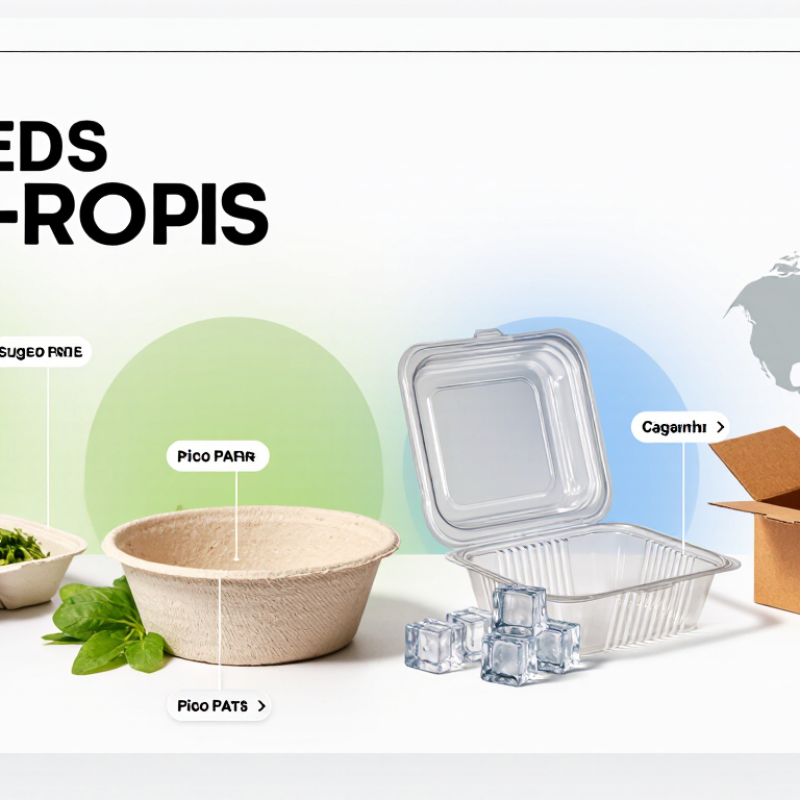
2026 Best Biodegradable Containers for Global Buyers?

2026 Buyer Framework: Biodegradable Container Types, Uses, and Trade Terms

For global buyers, biodegradable containers should be selected by use, disposal route, and trade terms. PLA containers suit cold foods and clear presentation, while bagasse fiber handles hot meals and moderate grease. PHA may offer better biodegradation potential, but supply consistency and price can vary. Paper containers need barrier coatings, which can change recyclability and composting outcomes.

The OECD Global Plastics Outlook reports that only 9% of plastic waste was recycled in 2019. UNEP’s Turning off the Tap report adds that global plastic waste could nearly triple by 2060 without major intervention. These figures support lower-impact packaging, but “biodegradable” is not a complete specification. Buyers should request test conditions, composting standards, food-contact documents, shelf-life data, and migration results. Certification under EN 13432 or ASTM D6400 helps, yet local acceptance still matters.

Trade terms can change the real purchase cost. FOB may suit buyers controlling freight, while CIF simplifies ocean transport. DDP can reduce customs work, but duties and destination compliance must be checked carefully. Ask for container loading plans, moisture protection, carton dimensions, and minimum order quantities. A 20-foot container may hold fewer units than expected when bulky fiber packaging is nested poorly. That detail is often missed. I would also compare leakage rates after transit, not only the unit price. Reports provide direction, but field trials reveal the uncomfortable gaps.

Material Benchmark: PLA, PHA, Bagasse, and Paper Across Key Applications

Material Benchmark: PLA, PHA, Bagasse, and Paper Across Key Applications

Global packaging demand is becoming more material-specific. The OECD reported 353 million tonnes of plastic waste in 2019, with packaging a major source. European Bioplastics forecasts global bioplastics capacity will rise from about 2.47 million tonnes in 2024 to 5.03 million tonnes by 2029. These figures show momentum, not automatic sustainability.

PLA performs well in clear cups, cold-food trays, and transparent lids. It offers good appearance and industrial compostability, but usually needs controlled heat and humidity. PHA is more flexible for films, coated papers, and selected food-service items. Its environmental breakdown can be broader, though performance depends on formulation and local conditions. PHA also remains less available and more expensive. That matters for large-volume buyers.

Bagasse suits takeaway boxes, bowls, and molded plates. It feels sturdy in the hand, yet prolonged contact with oily or watery foods can expose barrier weaknesses. Paper works well for cartons, sleeves, and dry-food packaging. Its recycling advantage may decline when plastic coatings, inks, or food residues complicate sorting. The 2024 Global Commitment progress report from the Ellen MacArthur Foundation also stresses that material choice must match real collection and recovery systems. I still see a gap between laboratory composting claims and municipal practice. Buyers should test heat, leakage, shelf life, and end-of-life routes with local operators. Perfect material choices are rare. Data needs context.

2026 Best Biodegradable Containers for Global Buyers? - Material Benchmark: PLA, PHA, Bagasse, and Paper Across Key Applications

Comparative benchmark for foodservice, takeaway, fresh-food, and general packaging applications

Indicative material performance ranges. Actual performance depends on grade, wall thickness, additives, coatings, forming process, and certification.
Benchmark Dimension PLA PHA Bagasse / Molded Fiber Paper / Paperboard
Primary feedstock Usually fermented plant-derived sugars or starches; chemically converted into polylactic acid Microbially produced polyhydroxyalkanoates; feedstocks vary by grade Recovered sugarcane fiber, also called bagasse; agricultural residue Cellulosic wood fiber or recycled paper fiber
Typical container formats Clear cups, cold-food trays, lids, clamshells, films, and thermoformed containers Films, coated papers, molded articles, sachets, and selected food containers Plates, bowls, clamshells, trays, takeaway boxes, and produce packaging Cups, cartons, folding boxes, bakery boxes, wraps, trays, and shipping packs
Industrial compostability High when certified
Requires controlled commercial composting conditions; many conventional PLA items do not break down rapidly in soil or home compost.
High for certified grades
Biodegradation can occur in industrial and, for some grades, natural environments; certification remains product-specific.
High when uncoated or suitably coated
Fiber itself is biodegradable; binders, wet-strength agents, inks, and barriers must also comply.
High when uncoated or certified
Cellulose fiber is biodegradable, but plastic laminates and some coatings can change the result.
Home composting potential Generally low
Do not assume home compostability unless the finished product is specifically certified.
Grade-dependent
Some PHA products biodegrade in home compost or soil, while others require defined conditions.
Often suitable
Best results occur with uncoated fiber and sufficient moisture, heat, oxygen, and microbial activity.
Often suitable when uncoated
Heavily coated, laminated, dyed, or wet-strengthened products require separate verification.
Approximate continuous-use temperature About 40–60°C for standard unmodified PLA; heat-resistant grades can be higher Approximately 60–100°C for selected grades; formulation and crystallinity are decisive Typically suitable for hot foods around 80–100°C for short service periods; moisture and coating affect strength Typically suitable for ambient to hot dry foods; liquid and heat performance depends strongly on the barrier system
Cold-food performance Excellent
Good clarity and dimensional stability for chilled foods and cold beverages.
Very good
Suitable for chilled food, fresh produce, and many flexible-packaging formats.
Very good
Rigid fiber structure supports salads, bakery items, produce, and takeaway meals.
Very good
Strong option for dry, chilled, and bakery products when moisture barriers are correctly selected.
Moisture resistance High
Good water resistance in rigid and film formats; sealing and condensation may affect performance.
High
Usually strong moisture resistance, but properties vary significantly by polymer grade.
Medium to high
Uncoated fiber absorbs liquid; compostable or water-based barriers improve short-term resistance.
Low to high
Performance ranges from absorbent uncoated paper to high-barrier coated board.
Grease and oil resistance High
Generally suitable for oily foods, subject to seal design and temperature.
High
Commonly suitable for fatty foods when the selected grade provides adequate barrier performance.
Medium
Often needs a compliant barrier coating for fried, sauced, or oily foods.
Low to high
Uncoated paper is limited; grease-resistant coatings improve performance but can affect recycling or composting.
Transparency and appearance Excellent clarity
Closest visual alternative to conventional clear plastic in many applications.
Grade-dependent
Can be transparent, translucent, or opaque depending on formulation and processing.
Opaque, natural appearance
Typically molded with a visible fiber texture and off-white or beige color.
Opaque to semi-transparent
Printability is strong; appearance depends on fiber grade, brightness, and coating.
Mechanical performance Good stiffness and dimensional accuracy; can be brittle at low temperatures or under impact. Ranges from flexible to rigid; toughness is often better than standard PLA, depending on grade. Good compression strength and rigidity; edge strength decreases when saturated with liquid. Good stiffness-to-weight ratio; strength declines with moisture and repeated handling.
Common application fit Cold beverages, chilled desserts, clear lids, fresh food, retail display, and transparent packaging Flexible packaging, food-contact films, specialty containers, agricultural films, and products requiring biodegradation beyond industrial composting Hot meals, takeaway boxes, plates, bowls, produce trays, catering, and institutional foodservice Bakery, dry foods, cartons, secondary packaging, wraps, cups, and lightweight takeaway packaging
Existing recycling compatibility Limited
Usually requires a dedicated PLA recycling stream; mixing with PET can contaminate conventional recycling.
Limited
Dedicated collection and processing infrastructure is uncommon in many markets.
Limited after food use
Clean fiber may be recyclable, but wet or heavily contaminated foodservice items are often unsuitable.
Generally established
Clean, fiber-based paper is widely recyclable; wet-strength additives and plastic barriers can reduce compatibility.
Typical supply-chain considerations Requires access to industrial composting or dedicated recycling; avoid heat exposure during storage and transport. Confirm grade availability, food-contact compliance, composting pathway, and end-of-life claims in each target market. Lightweight and widely available in foodservice formats; moisture protection and dimensional consistency should be tested. Broad global converting capacity and strong printability; barrier selection is critical for wet or greasy foods.
Best buyer profile in 2026 Buyers prioritizing clear appearance, cold-food performance, and access to certified industrial composting. Buyers seeking broader biodegradation potential and willing to validate grade-specific cost and availability. Foodservice buyers needing rigid, fiber-based containers for hot meals and high-volume takeaway use. Buyers prioritizing low weight, printability, established recycling systems, and dry or moderately wet applications.
Overall selection guidance Choose for cold and clear applications where certified industrial composting is available; do not market it as universally biodegradable. Choose when biodegradation flexibility is strategically important and the exact polymer grade has been independently certified. Choose for hot, rigid foodservice containers when a natural fiber appearance and composting route are preferred. Choose for paper-dominant packaging where recycling infrastructure is stronger than composting infrastructure.
Data and compliance note: Temperature values are indicative service ranges rather than guaranteed limits. Compostability claims should be verified against the finished product and the relevant market standard, such as EN 13432, ASTM D6400, ASTM D6868, or an applicable equivalent. Food-contact compliance, labeling rules, and collection infrastructure vary by destination country.

Certification Check: EN 13432 Requires 90% Disintegration Within 12 Weeks

For global buyers, biodegradable containers should be judged by test evidence, not green-colored packaging. EN 13432 certification checks whether packaging disintegrates by at least 90% within 12 weeks under controlled industrial composting conditions. The test does not mean the container disappears in every backyard compost pile. Temperature, moisture, oxygen, and microbial activity matter.

Ask suppliers for the complete conformity documents. Check the tested material, coating, ink, adhesive, and thickness. A certified lid cannot automatically validate an uncertified container body. In practical purchasing, I would also compare the certificate with the production specification and recent batch records. Small changes in barrier layers can affect performance.

Details matter here. Very thick fiber may remain visibly intact after the test period. That is a warning sign. A laboratory result also cannot guarantee smooth performance at every composting facility. This part is often misunderstood. Buyers should request clear test conditions, laboratory identity, and certificate validity before approving a shipment. My own checklist would include migration safety, food-contact suitability, and disposal instructions in the destination market. Certification is useful, but it is not a substitute for responsible product verification.

Performance Testing: ASTM D6400 Targets 90% Biodegradation Within 180 Days

2026 Best Biodegradable Containers for Global Buyers?

For global buyers, ASTM D6400 testing offers a practical starting point. The standard evaluates whether a container can biodegrade under controlled industrial composting conditions. A common target is 90% biodegradation within 180 days, measured against an approved reference material. This does not mean the container disappears in every environment. Soil, seawater, and home compost behave differently.

Reliable performance testing checks more than weight loss. Laboratories monitor carbon dioxide release, temperature, moisture, oxygen, and microbial activity. They also inspect visible disintegration. A container may look broken after several weeks but still contain resistant fragments. That difference matters. Testing should also review compost quality, including potential ecotoxicity and restricted substances.

Material thickness can change the result. A thin lid may pass faster than a thick food tray made from similar material. Printing, coatings, adhesives, and heat-sealed layers can affect breakdown. Buyers should request complete test reports, sample descriptions, conditioning records, and laboratory accreditation details. A certificate without matching production samples deserves caution.

Industrial composting access remains an overlooked issue. Many containers meet controlled test conditions but lack suitable local facilities. That is a supply-chain weakness, not merely a technical detail. Pilot testing with the actual container design can reveal warping, leakage, or slow breakdown. Some failures are useful. They expose assumptions before large shipments begin.

2026 Best Biodegradable Containers for Global Buyers

ASTM D6400 performance testing targets 90% biodegradation within 180 days under controlled composting conditions.

The chart shows two key ASTM D6400 thresholds: at least 90% biodegradation within 180 days, measured against a cellulose reference material, and no more than 10% residual material retained on a 2 mm sieve after the disintegration test period. Actual results depend on the container material, formulation, and composting conditions.

Global Sourcing Scorecard: Barrier Life, MOQ, EPR, Cost, and Carbon Data

2026 Best Biodegradable Containers for Global Buyers? The answer depends on evidence, not labels. A useful sourcing scorecard compares barrier life, minimum order quantity, EPR readiness, landed cost, and carbon data. In factory audits, request oxygen and moisture transmission results under stated temperatures. A container lasting six months on a dry shelf may fail within weeks during humid transit. Barrier performance needs product-specific testing.

MOQ changes the commercial risk. A 50,000-unit minimum can create dead stock before demand becomes predictable. Ask about pilot quantities, tooling fees, lead times, and rejected-unit handling. EPR documentation should identify material composition, disposal routes, and reporting responsibilities in each destination market. Requirements differ widely. Do not treat a generic certificate as complete compliance.

Cost should include freight, storage, filling adjustments, and end-of-life handling. Carbon data is stronger when it states system boundaries, energy sources, transport distances, and verification methods. Supplier estimates may still contain gaps. That is normal, but it needs disclosure.

Our first cost model underestimated humidity protection and warehouse waste. A second review exposed the error. Buyers should record assumptions, test samples in realistic conditions, and update the scorecard after commercial trials. “Biodegradable” sounds simple. Procurement is not.