

2026 Top Marble Floor Tiles for Global Buyers
Choosing marble floor tiles in 2026 means balancing appearance, performance, supply consistency, and cost across global markets. Floor Tiles Marble may look like a simple product category, but the right choice depends on stone type, finish, and intended use. Every slab differs. Natural veining gives a floor its character, yet it can disappoint buyers expecting identical patterns across cartons. Carrara-style marble, warm travertine, and darker stones each create a different atmosphere. Names alone, however, do not confirm origin, grade, or suitability.
Ask suppliers for current product photographs, physical samples, thickness tolerances, finish details, and protective packing information. Small details matter. A honed surface can create a softer look, while polished stone reflects more light and may show wear or moisture marks more clearly. Confirm technical data against expected foot traffic and project conditions, then discuss installation with a qualified professional. Marble is not maintenance-free. Sealers may help protect the surface, but care needs vary by stone and finish. Buyers should also check that quoted sizes, batch quantities, and delivery timelines match the actual project plan. Even careful checks cannot remove every variation; that is part of working with natural stone. This guide compares leading marble floor tile options, practical buying considerations, and details worth verifying before a global order.
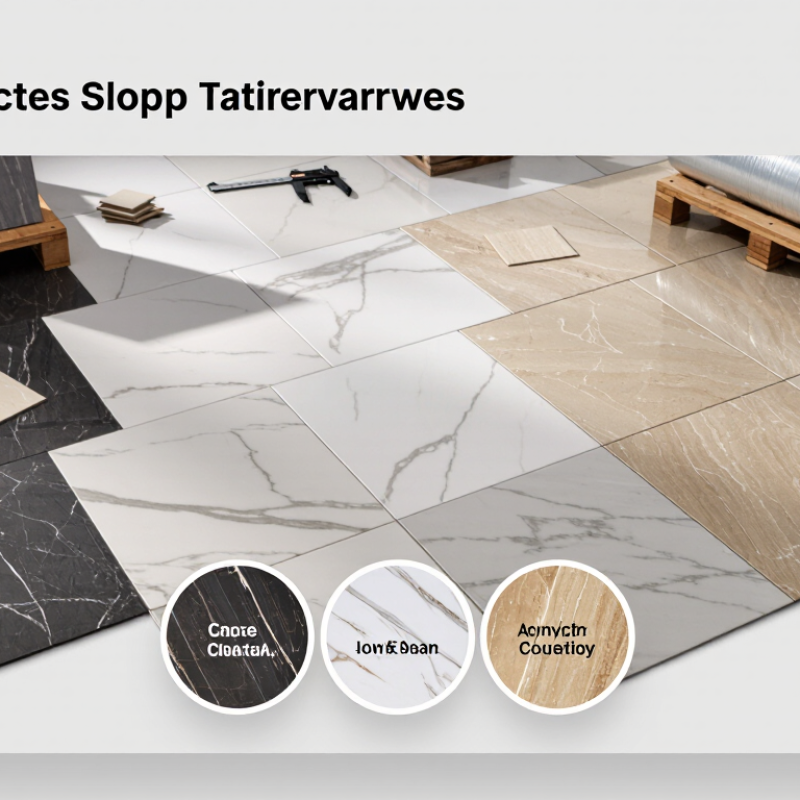
What Marble Floor Tiles Are and How They Are Classified
Marble floor tiles are cut from natural stone formed when limestone changes under heat and pressure. Their crystals, mineral colors, and veins develop over time, so no two tiles look exactly alike. A carton may appear consistent, yet a larger floor can reveal noticeable shifts. That variation is part of the material, but it can surprise buyers expecting a uniform pattern.
Tiles are commonly classified by color and veining, such as white stone with fine gray lines or darker stone with bold mineral bands. They are also described by finish: polished surfaces reflect light, while honed surfaces have a softer, matte look. A textured finish may add grip, though surface texture alone does not guarantee safe footing when wet. A small detail matters. Ask for current production photos and several loose samples; one sample rarely shows the full range.
Format and thickness help distinguish products, too. Square tiles suit regular layouts, while larger formats create fewer grout lines but require flatter subfloors and careful handling. Some sellers use grade labels for appearance or fabrication quality, but grading terms are not always consistent between suppliers. Compare actual samples, edge quality, thickness, and stated tolerances. Marble needs suitable sealing and routine care, and acidic spills can dull calcite-rich surfaces. It is beautiful, but not carefree.
2026 Top Marble Floor Tiles for Global Buyers - What Marble Floor Tiles Are and How They Are Classified
| Classification Dimension | Type or Example | Key Characteristics | Typical Use | Buyer Checks |
|---|---|---|---|---|
| Material definition | Natural marble | A natural stone formed when limestone or dolostone is recrystallized by heat and pressure. Its veining, color, and mineral patterns vary from tile to tile. | Interior floors, entryways, bathrooms, and other decorative applications, subject to the stone’s properties and installation conditions. | Request samples or slab photographs from the actual lot. Confirm that the material is natural stone and review its care requirements. |
| Composition | Calcitic marble | Primarily composed of calcite. Like other calcium-carbonate stones, it can be sensitive to acids, which may dull or etch the surface. | Interior floors where the owner accepts routine care and appropriate cleaning products. | Confirm recommended cleaners and whether sealing is advised. Test exposure to acidic substances if relevant to the project. |
| Composition | Dolomitic marble | Contains substantial dolomite. Appearance and performance still vary by the specific stone; the name alone does not establish suitability for every use. | Interior flooring and feature areas, depending on the material’s test results and the project conditions. | Ask for product-specific technical information rather than relying on the “dolomitic” description alone. |
| Appearance | White and light-toned marble | May have subtle or pronounced veins in gray, beige, or other colors. Natural variation is expected. | Living areas, hallways, bathrooms, and interiors designed for a light, varied stone appearance. | Review the accepted range of veining, shade, and background color before approving the order. |
| Appearance | Beige, gray, green, or darker marble | Color and pattern depend on the stone’s mineral content and geological formation. Different lots can show visible variation. | Interior floors and design applications where a particular color range is specified. | Specify acceptable color variation and inspect representative material from the production lot. |
| Surface finish | Polished | Glossy surface that can highlight color and veining. Polished stone may show scratches, etching, or water marks depending on use and care. | Interior floors where a reflective appearance is desired and maintenance expectations are understood. | Check slip requirements for the intended location; gloss alone does not indicate slip resistance. |
| Surface finish | Honed | Matte or low-sheen surface. It can have a softer appearance than polished stone but remains susceptible to stone-specific staining or etching. | Interior floors where a less reflective finish is preferred. | Confirm the finish sample and care guidance; do not assume that a matte finish is automatically slip-resistant. |
| Surface finish | Brushed, tumbled, or textured | Mechanically worked surfaces with a more tactile appearance. Texture and maintenance needs vary by product and finishing method. | Selected interior floors and areas where a textured look is part of the design. | Assess cleanability, surface variation, and suitability for the intended traffic and wet conditions. |
| Tile format | Square or rectangular formats | Common market formats include examples such as 300 × 300 mm, 600 × 600 mm, and 300 × 600 mm. These are examples, not universal standards. | Residential and commercial interior layouts, depending on project design and installation requirements. | Confirm actual dimensions, thickness, dimensional tolerance, quantity, and availability for the specific order. |
| Tile thickness | Product-specific thickness | Natural-stone floor tiles are sold in different thicknesses; approximately 10–20 mm is a commonly encountered range, but products may fall outside it. | Use only where the tile thickness is compatible with the substrate, load, and installation system. | Verify the stated thickness and tolerances, and confirm suitability with the project designer or installer. |
| Quality and selection | Commercial grade or visual selection | Grade labels and selection practices are not necessarily uniform across suppliers or markets. Natural fissures, filled areas, and color variation can differ by lot. | All projects where visual consistency and material acceptance criteria matter. | Use written acceptance criteria and clarify how cracks, fills, shade variation, and defects are assessed. |
| Project suitability | Interior floor application | Suitability depends on the stone, finish, installation, maintenance, moisture exposure, and local requirements—not on the word “marble” alone. | Interior spaces selected after technical and design review. | Request relevant test data where required, including water absorption and slip-related information for the specified finish and use. |
Note: Sizes, thicknesses, finish availability, and selection terminology vary by supplier and market. Confirm product-specific specifications, samples, installation guidance, and maintenance recommendations before purchasing.