

Blog

blog

Blog

blog

Blog

blog

How to Choose the Best Ceramic Cartridges?

Ceramic Cartridges may look like small parts, but they control the feel and reliability of many faucets. A smooth handle turn depends on precise surfaces hidden inside the valve. Choose poorly, and a drip or stiff movement may follow.

There is no verified expert quotation or source provided for this article. Rather than invent a name or quote, this guide focuses on checkable selection criteria. A genuine specialist’s comment can be added once its original source is confirmed.

Start with compatibility. Match the cartridge to the faucet’s brand, model, dimensions, and handle arrangement. A cartridge that looks nearly identical may still have a different stem or seal position. Check the product drawing, measure the old part, and photograph its orientation before removal. Small details matter.

Then consider materials, sealing design, operating pressure, and replacement support. Ask whether the ceramic discs are accurately finished and whether spare seals are available. Look for clear specifications and a defined warranty, not just claims such as “premium” or “universal.” Those words can hide missing details.

Installation matters, too. Flush debris from the supply lines and avoid forcing the stem into place. One rushed fit can damage a new seal. It happens.

This guide will compare the practical trade-offs, explain how to verify fit, and flag common buying mistakes. Not every cartridge suits every faucet. A careful match is usually worth more than a polished product photo.
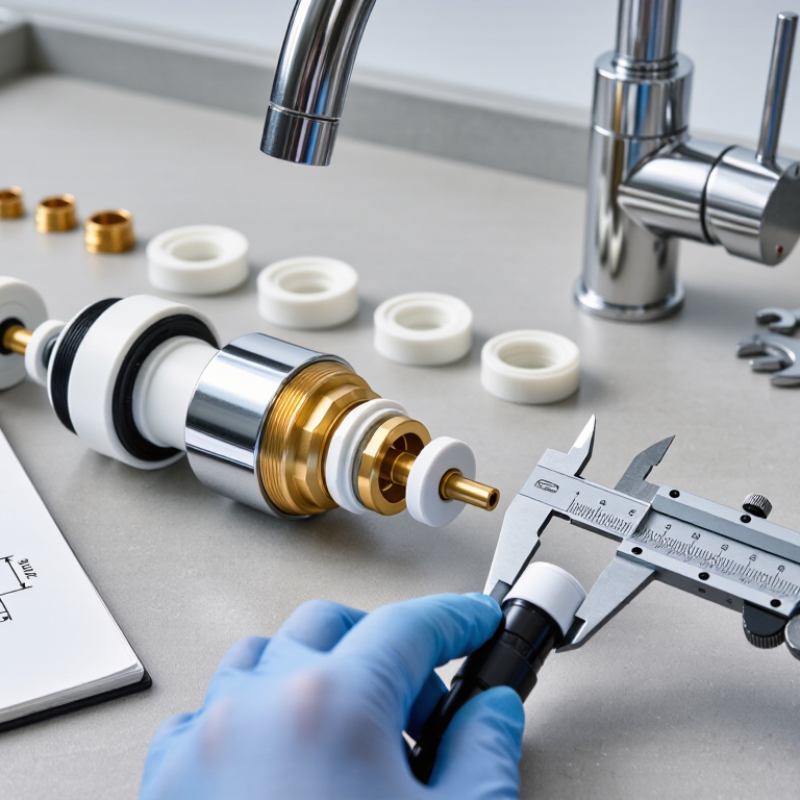
How to Choose the Best Ceramic Cartridges?

Understand How Ceramic Cartridges Work

A ceramic cartridge controls water by moving two closely fitted ceramic discs against each other. One disc stays fixed while the other turns with the faucet handle. Their openings line up to let water pass, then shift apart to reduce or stop the flow. The ceramic surfaces are hard and finely finished, so they can form a tight seal with little effort. That tiny gap matters. Even small particles can interfere with smooth movement or wear the sealing surfaces over time.

When choosing a replacement, check the cartridge’s dimensions, stem shape, and opening arrangement against the valve you have. Similar-looking parts may not fit or control water in the same way. Ceramic discs are not the only possible source of a drip; worn rubber seals, debris, or a damaged valve body can also be responsible. Not always. If the handle feels rough, turn off the water and inspect for visible grit before installing a new part. I would not assume the cartridge itself has failed until those details are checked. Water conditions and faucet design vary, so a cartridge that works well in one setup may behave differently in another.

Identify Your Faucet Type and Replacement Requirements

How to Choose the Best Ceramic Cartridges?

Identify your faucet type before ordering a replacement. A two-handle faucet usually has separate hot- and cold-water cartridges, while a single-lever faucet often uses one cartridge to control both flow and temperature. Check how the handle attaches and whether a retaining clip, cap, or threaded nut holds the cartridge in place. If you are unsure, consult the faucet’s installation guide or take clear photos before disassembly. A clear photo helps.

With the water supply off, remove the handle and carefully lift out the old cartridge. Compare its overall length, diameter, stem shape, and number of splines with the replacement. Also note its orientation and any markings. Similar-looking cartridges may not fit; small differences can prevent the handle from seating or cause leaks. This part can be fussy.

Consider what needs fixing, too. A drip from the spout may point to a worn cartridge, but loose fittings or debris can cause similar symptoms. If the faucet leaks around its handle, inspect the seals and surrounding parts rather than assuming the cartridge is the only problem. Match the replacement to the exact faucet model when possible. “Universal” does not always mean compatible, and identification can take longer than the swap itself.

Compare Cartridge Materials, Designs, and Features

How to Choose the Best Ceramic Cartridges?

Ceramic cartridges use smooth, closely fitted discs to control water flow. Compare the ceramic surfaces, housing, and seals—not just the cartridge’s size. A brass housing can feel sturdy, while engineered polymer may reduce weight and resist corrosion. Neither material guarantees a longer service life; water quality and correct installation matter too. Hard water can leave mineral deposits around moving parts.

Design affects everyday use. Single-handle cartridges mix hot and cold water in one control, while some two-handle designs regulate each side separately. Check the stem shape, dimensions, connection points, and required flow direction before buying. A small mismatch can cause leaks or a handle that feels stiff. It is easy to focus on material and overlook fit.

Tips: Take a clear photo of the old cartridge and measure its length and stem. Check the product specifications against your fixture, and inspect seals for wear during replacement. If the handle still drips, the problem may be debris or a damaged valve seat—not the cartridge alone. Replacement is not always the whole fix.

How to Choose the Best Ceramic Cartridges? — Compare Cartridge Materials, Designs, and Features

Cartridge type or feature Materials and construction Operation and design Advantages Points to check Best suited for
Single-handle ceramic-disc cartridge Typically uses two closely lapped ceramic discs, commonly made from alumina ceramic, inside a cartridge housing. One handle moves the discs to regulate flow and mix hot and cold water. Internal port layout varies by faucet. Combines flow and temperature control in one handle; ceramic sliding faces are hard and wear-resistant. Check the cartridge’s dimensions, stem shape, port arrangement, and handle travel. A similar-looking cartridge may not be compatible. Single-handle basin, kitchen, and other compatible faucets.
Two-handle quarter-turn ceramic cartridge Uses ceramic sealing discs in a cartridge designed for one handle and one water supply. A short handle turn opens or closes the valve; separate cartridges usually control hot and cold water. Provides distinct hot- and cold-water control and a short operating movement. Confirm whether the faucet requires a hot-side or cold-side cartridge; direction of operation and stem design can differ. Two-handle faucets designed for quarter-turn ceramic valves.
Brass-bodied cartridge Ceramic discs are housed in a brass body or assembly. The ceramic sealing surfaces remain separate from the body material. Available in different shapes and control configurations, depending on the faucet. Metal construction can offer a robust housing; brass is commonly used in plumbing components. Brass alone does not establish compatibility or overall quality. Check dimensions, internal design, and applicable drinking-water requirements. Installations requiring a metal-bodied replacement that matches the original cartridge.
Engineering-polymer-bodied cartridge Ceramic discs are held in a molded engineering-polymer housing; the exact polymer and construction vary. Often supplied as a compact, replaceable cartridge assembly. Can be lightweight and corrosion-resistant; may integrate seals and flow passages into the housing. Verify temperature and pressure suitability, material documentation, and exact fit. Polymer housings are not interchangeable by appearance alone. Faucets designed for a polymer-bodied cartridge of the same specification.
Ceramic-disc sealing faces Hard ceramic faces, commonly alumina-based, are manufactured with smooth, close-fitting surfaces. The faces slide relative to each other to open, restrict, or close water passages. Resistant to ordinary wear and do not rely on a soft washer as the primary sealing interface. Ceramic is hard but brittle; grit or damage can interfere with sealing. Follow the faucet manufacturer’s flushing and maintenance guidance. Faucets designed around a ceramic-disc cartridge.
Cartridge size and connection details May include a specific body diameter, height, stem, splines, locating tabs, seals, and retaining method. These details determine how the cartridge seats, connects to the handle, and aligns with the faucet’s water ports. Matching the original specifications is the most reliable way to obtain correct fit and operation. Measure the old cartridge and compare its part geometry and markings; also check seal positions and retaining hardware. Every replacement purchase, especially when the faucet model is unknown.
Water quality and maintenance Mineral deposits and particles can affect cartridge movement or sealing, regardless of whether the body is brass or polymer. Maintenance requirements depend on the faucet design and local water conditions. Careful installation and clean supply lines help reduce debris entering the valve. Do not force a stiff handle. Inspect seals and follow the faucet’s instructions; replace a damaged or incompatible cartridge rather than modifying it. All ceramic-cartridge faucets, particularly after plumbing work or where sediment is present.

Selection tip: Start with the faucet model or the original cartridge’s measurements and connection details. Cartridge materials and design vary, so ceramic discs alone do not guarantee interchangeability, a particular service life, or compatibility with every faucet.

Check Compatibility, Durability, and Flow Performance

A ceramic cartridge must match the faucet, not just look similar. Check its diameter, stem shape, overall height, and locating tabs against the existing part or the faucet’s specifications. Confirm whether it controls hot water, cold water, or both, and note the handle’s direction of travel. Fit comes first. A cartridge that is slightly too tall may prevent the handle from seating properly, while a mismatched stem can make temperature control awkward. Measure before ordering; memory is not a reliable tool.

Durability depends on more than the ceramic discs. Look for a solid housing, smooth movement, and seals designed for the faucet’s operating conditions. Grit or scale in the water can score surfaces or wear seals sooner than expected. Flush the supply lines before installing a replacement, and avoid overtightening the retaining nut. Small details matter. Even a well-made cartridge can leak if debris gets trapped during installation. Water quality and maintenance vary, so no cartridge has a guaranteed lifespan in every home.

Check flow performance separately from basic fit. A cartridge should open and close smoothly without sudden surges, persistent dripping, or a noticeable drop in flow. But low flow may come from a clogged aerator, supply valve, or pipe—not the cartridge itself. Flow tells a story. Test the faucet with the aerator removed if appropriate, and compare hot and cold sides. It is easy to blame the newest part; sometimes that diagnosis needs a second look.

How to Choose the Best Ceramic Cartridge

Compare cartridge fit, durability, and flow performance before choosing a replacement.

The chart shows theoretical flow through an idealized 4 mm opening, calculated using the orifice-flow equation for water with a discharge coefficient of 0.60. Actual cartridge flow varies with its internal passages and the faucet design. For compatibility, check the cartridge dimensions and stem shape; for durability, look for documented cycle-test results.

Choose a Cartridge That Fits Your Faucet and Usage Needs

A ceramic cartridge should match the faucet’s valve body, not just its handle. Check the faucet model or remove the old cartridge after shutting off the water supply. Compare its length, diameter, stem shape, and locating tabs. Small differences matter. A cartridge that looks close may still leak or leave the handle misaligned. If the faucet’s details are unclear, take the old part to a plumbing supplier for comparison.

Think about how the faucet is used each day. A busy kitchen faucet may be turned on and off dozens of times, so a well-made ceramic cartridge designed for frequent operation is a practical choice. In a guest bathroom, use may be lighter, but precise temperature control still matters. For a two-handle faucet, confirm whether you need a hot-side or cold-side cartridge; some designs use different parts on each side. Single-handle faucets need a cartridge built for that specific valve arrangement.

Water conditions deserve attention, too. Mineral deposits can affect faucet performance and make a handle feel stiff. A ceramic cartridge resists wear from repeated movement, but it cannot fix debris or scale elsewhere in the plumbing. I have found that matching the part carefully is less exciting than choosing a premium-sounding feature, yet it prevents wasted time. One detail is easy to miss: check the faucet’s age and condition before replacing only the cartridge.

Article Source: