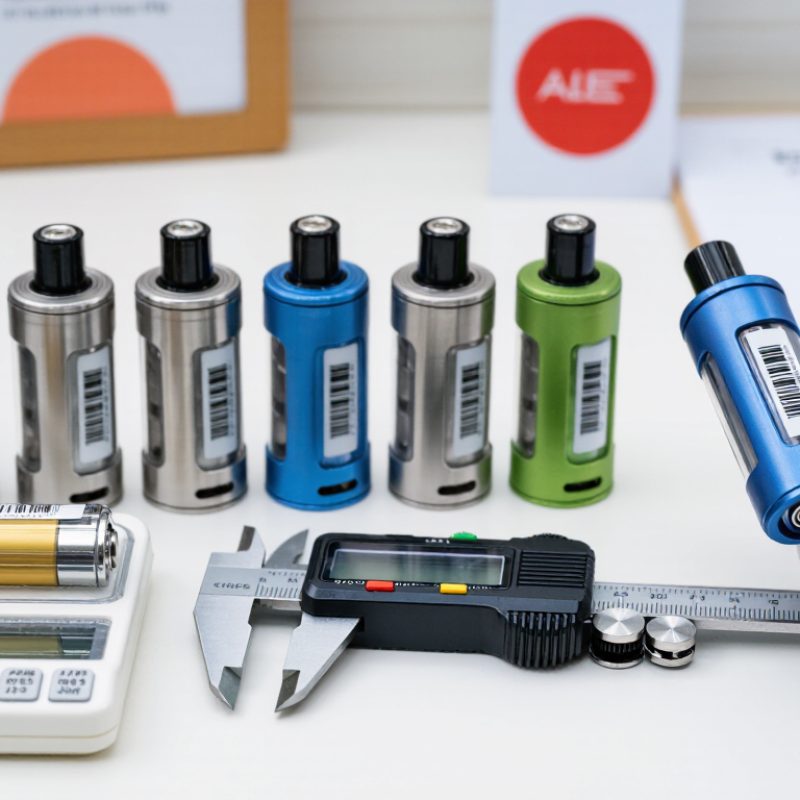
| Battery Chemistry | Rechargeable lithium-ion cells, commonly using lithium-nickel-manganese-cobalt oxide or lithium-manganese oxide cathode systems. | The chemistry must match the approved product specification, safety data sheet, and test reports. No unexplained chemistry substitution is acceptable. | Battery specification sheet, Safety Data Sheet, material declaration, and relevant laboratory test report. | Compare the declared chemistry with the cell model, label, electrical limits, and technical documents before shipment. |
| Cell Format | Common cylindrical formats include 18650 and 21700. Dimensions, terminal design, and casing construction must be consistent across the lot. | Cell diameter, length, terminal configuration, and weight should remain within the approved drawing tolerances. | Mechanical drawing, approved sample, dimensional inspection record, and batch traceability information. | Measure samples from each production lot and reject mixed-format or visibly altered cells. |
| Nominal Voltage | Most standard rechargeable lithium-ion cells are rated at approximately 3.6 V or 3.7 V nominal voltage. | The nominal voltage must match the intended device design and charger specification. | Product specification sheet and electrical test data. | Use a calibrated meter to verify open-circuit voltage on sampled cells after a controlled rest period. |
| Maximum Charging Voltage | Many conventional lithium-ion cells use a 4.20 V maximum charging voltage; alternative chemistries may use different limits. | The charger and battery-management system must not exceed the cell manufacturer's specified charging voltage. | Cell datasheet, charging profile, charger specification, and protection-circuit specification where applicable. | Confirm the charger cut-off voltage and verify overcharge protection during sample testing. |
| Capacity Rating | Capacity is normally stated in milliampere-hours, such as 2,000–3,500 mAh for many cylindrical cell configurations. The exact value depends on format and chemistry. | Measured capacity should meet the agreed contract value under the specified discharge current, temperature, and cut-off voltage. | Capacity test method, cell datasheet, production test report, and independent laboratory report for high-value orders. | Perform sample capacity testing using a calibrated battery analyzer and record the test conditions. |
| Continuous Discharge Rating | The continuous discharge rating must be stated in amperes and defined by the manufacturer's test conditions. It should not be inferred from a marketing label. | The rating must support the device's maximum continuous current without excessive heating, voltage instability, or protection trips. | Continuous discharge test report, thermal data, datasheet, and clearly defined test temperature and cut-off voltage. | Verify current capability with controlled testing; do not rely solely on a printed high-current claim. |
| Pulse Discharge Claims | Pulse-current values may be published for short-duration loads, but pulse duration, rest time, temperature, and cut-off voltage must be specified. | Pulse claims should never be used as a substitute for a continuous discharge rating. | Pulse test protocol, oscilloscope or data-logger records, and thermal measurements. | Reject specifications that provide only an unexplained peak-current figure. |
| Internal Resistance | Low and consistent internal resistance generally supports better voltage stability and lower heat generation. The acceptable value depends on cell format and design. | Resistance should remain within the agreed batch range and show no abnormal outliers. | AC or DC internal-resistance test method, instrument calibration record, and batch test results. | Measure a statistically representative sample at the same state of charge and temperature. |
| Protection Circuit | Protected and unprotected cells are different products. A protection circuit may provide overcharge, over-discharge, over-current, and short-circuit protection, depending on its design. | The product must clearly state whether protection is included. Protection thresholds must be compatible with the device. | Protection-circuit schematic, threshold test report, component list, and failure-mode test record. | Verify overcharge, over-discharge, over-current, and short-circuit response on approved samples. |
| UN 38.3 Transport Testing | Lithium-ion cells and batteries offered for transport generally require evidence of compliance with the applicable UN Manual of Tests and Criteria, Part III, Sub-section 38.3. | Test evidence must correspond to the exact cell or battery type, configuration, and revision being shipped. | UN 38.3 test summary, applicable transport classification, packaging instructions, and shipping declaration. | Check that the test summary identifies the same product configuration and manufacturer information as the purchase order. |
| IEC 62133-2 Safety Testing | IEC 62133-2 is a widely used safety standard for portable sealed secondary lithium cells and batteries containing alkaline or other non-acid electrolytes. | The report should cover the relevant cell or battery assembly and include the applicable safety tests. | IEC 62133-2 test report from a competent laboratory, scope of accreditation, and sample identification. | Confirm report authenticity, model matching, laboratory scope, and report date before approving bulk production. |
| Electrical Safety Tests | Relevant tests may include overcharge, forced discharge, external short circuit, abnormal charging, and thermal abuse, depending on the applicable standard and product configuration. | No leakage, rupture, fire, or hazardous failure should occur beyond the limits specified by the applicable test method. | Full test report rather than a certificate cover page only; include test conditions and results. | Review failure criteria and verify that the tested sample represents the production design. |
| Mechanical and Environmental Tests | Typical evaluations may include vibration, shock, crush, impact, heating, temperature cycling, and altitude simulation, as required by the applicable standard. | The cell must remain safe and must not show unacceptable leakage, deformation, fire, or explosion under the specified conditions. | Mechanical and environmental test records, laboratory photographs, and sample identification. | Request test conditions, not only pass/fail statements, and compare them with the intended transport and use environment. |
| Short-Circuit Protection | Protection may be provided by a protection circuit, device-level electronics, or both. Unprotected cells require appropriate device and handling controls. | The complete battery-device system must limit hazardous current and recover safely after a short-circuit event where applicable. | Short-circuit test report, protection-circuit specifications, and device-level safety design information. | Keep battery terminals isolated during storage and shipping; never accept loose cells with exposed terminals in bulk cartons. |
| Physical Condition | Cells should have clean insulating wraps, intact terminals, no dents, no corrosion, no electrolyte odor, and no swelling. | Zero tolerance for punctured casing, damaged insulation, visible leakage, severe dents, swollen cells, or loose terminals. | Pre-shipment inspection checklist, defect photographs, and sampling report. | Conduct visual inspection before packing and segregate damaged or suspect cells immediately. |
| Voltage Matching | Cells supplied for multi-cell packs or matched device sets may require grouping by voltage, capacity, and internal resistance. | Matching limits must be defined in writing and applied consistently to every production batch. | Cell-matching procedure, measurement records, and batch-level distribution data. | Verify matched-cell data and prevent mixing cells from different lots without technical approval. |
| State of Charge for Shipping | Lithium-ion cells are commonly shipped at a controlled partial state of charge rather than fully charged, subject to applicable transport rules and carrier requirements. | State-of-charge limits, packaging method, and transport classification must follow the current applicable regulations and carrier instructions. | Shipping declaration, packing instruction, state-of-charge record, and carrier approval where required. | Measure and record sampled voltage or state of charge before carton sealing. |
| Packaging and Terminal Protection | Each cell should be protected against movement, crushing, moisture, and accidental short circuit. Terminals must be isolated from conductive materials. | Packaging must prevent contact between cells and protect against damage during normal transport handling. | Packaging specification, carton drop-test record where applicable, and transport packaging review. | Inspect inner trays, insulating caps, dividers, carton strength, labels, and package quantity. |
| Traceability | Each shipment should be traceable to a production lot, production date, cell type, test record, and packaging batch. | Lot codes must be legible, unique, and linked to retained samples and quality records. | Batch certificate, production record, lot-code format, and retained-sample policy. | Record lot numbers on the purchase order, inspection report, warehouse receipt, and complaint file. |
| Incoming Inspection Sampling | A documented sampling plan should cover appearance, dimensions, weight, voltage, internal resistance, capacity, and protection performance where applicable. | The sampling level and acceptance limits must be agreed before production and should reflect order value and safety risk. | Approved inspection plan, acceptance-quality-limit method, inspection checklist, and calibration records. | Use an independent inspection process for first orders, new lots, and any specification change. |
| Change Control | Changes to chemistry, electrode materials, separator, casing, protection circuit, factory, or production process can affect safety performance. | No material or process change should be made without written notification and technical re-approval. | Change-notification procedure, revised datasheet, updated test report, and new sample approval record. | Add a no-substitution and no-change clause to the wholesale purchase agreement. |
| Recommended Wholesale Decision | Prioritize consistent electrical performance, complete safety documentation, traceability, reliable packaging, and verified production controls over headline capacity or peak-current claims. | Approve only products whose specifications, test evidence, samples, and bulk inspection results are consistent. | Complete technical file, inspection report, transport documents, and signed quality agreement. | Use a pilot order, retain samples, conduct pre-shipment inspection, and define remedies for non-conforming goods. |