

Blog
Blog
Blog
7 Best Paper Cylinders for Global Buyers in 2026?
Global buyers are rethinking Paper Cylinders in 2026. These formats protect products, reduce shelf space, and support stronger brand presentation. They appear in coffee, cosmetics, snacks, candles, supplements, and specialty goods.
The timing is significant. FAO forestry statistics place global paper and paperboard production above 400 million tonnes annually. Smithers’ The Future of Paper Packaging to 2028 identifies e-commerce, renewable materials, and improved barrier performance as major market forces. Mordor Intelligence also reports continued growth in the global paper tubes market, although forecasts vary by region and application. That difference matters. A cylinder made for dry food cannot automatically serve cosmetics or industrial components.
Performance comes first. Wall thickness, winding quality, moisture resistance, closure design, and print accuracy affect real purchasing outcomes. A weak seam can ruin a premium product. A poor inner coating can create odor or migration concerns. Packaging strategist Mike Ferrari expresses the principle simply: “Packaging must protect the product before it promotes the brand.”
This guide compares seven Paper Cylinders for global buyers in 2026. The evaluation considers material sourcing, structural strength, customization, filling efficiency, shipping practicality, and supplier reliability. FSC-certified paper may support responsible sourcing, but certification alone does not prove overall sustainability. Buyers should request test reports, sample units, coating details, and production tolerances.
No ranking is perfect. Market conditions change. Local recycling systems differ. A lighter cylinder may reduce freight emissions, yet fail under humid storage. The best choice is therefore practical, documented, and matched to the product’s actual journey.
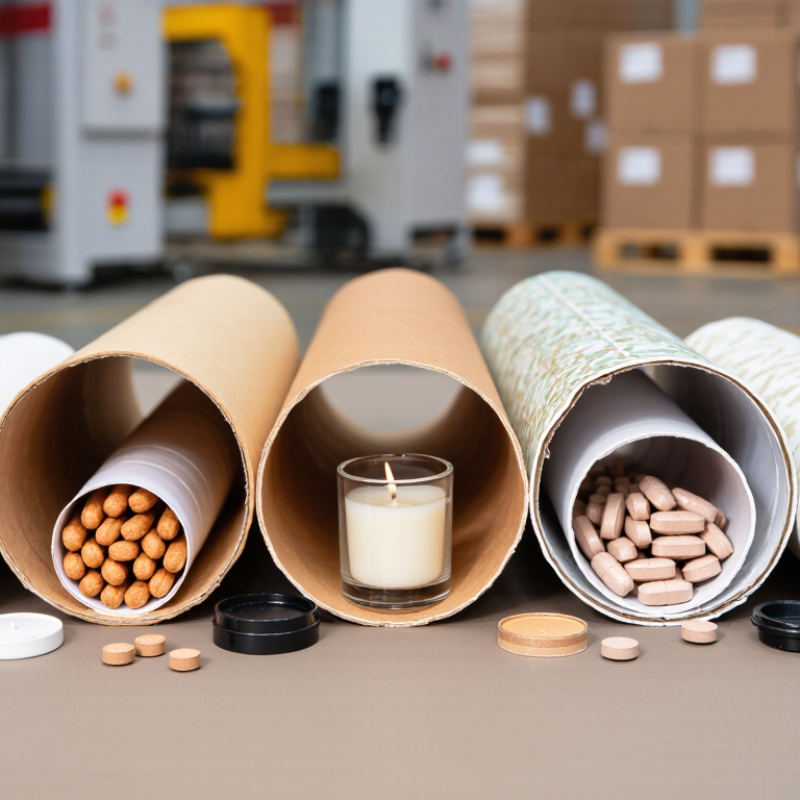
What Are Paper Cylinders and Why Do Global Buyers Need Them in 2026?
Paper cylinders are rigid tubes made from spiral-wound or convolute-wound paperboard. They can serve as packaging, protective sleeves, or winding cores for industrial materials. Common designs include open tubes, capped canisters, and telescoping containers. Their round structure resists crushing while using relatively little material.
Global buyers need them because packaging priorities are changing quickly. Smithers’ 2024 packaging forecast expects the global packaging market to approach 1.2 trillion dollars by 2028. Fiber-based formats are gaining attention because they are lightweight, printable, and easier to source from renewable materials. FAO forestry statistics also place annual global paper and paperboard production above 400 million tonnes. This large supply base supports international purchasing, although regional quality can vary.
The practical advantage is visible on a warehouse floor. A well-designed cylinder stacks neatly, protects edges, and reduces empty space during transport.
However, “sustainable” is not automatic. Plastic liners, metal closures, heavy inks, or difficult adhesives may reduce recycling value.
The European Commission’s Packaging and Packaging Waste Regulation, applying from 2026, also makes material design and documentation more important for cross-border buyers.
I would not select a cylinder from appearance alone. Buyers should request compression tests, moisture resistance data, wall-thickness tolerances, fiber composition, and recycling guidance. Small differences matter. A tube that fails after condensation can damage goods and create unnecessary waste. Performance still deserves more attention than attractive claims.
How to Evaluate Paper Cylinders by Material, Strength, Size, and Use
Choosing among the 7 best paper cylinders for global buyers in 2026 requires more than comparing prices. Start with the material. Recycled kraft paper lowers resource use, while virgin fiber may provide cleaner surfaces and steadier strength. Check paper thickness, moisture resistance, adhesive quality, and fiber direction. A cylinder stored near a humid port can soften quickly. No paper grade is perfect.
Tips: Request a technical data sheet and a production sample. Test compression, edge damage, and winding consistency. Measure the inner diameter with calipers, not assumptions. Confirm whether dimensions refer to the core, wall, or finished package.
Strength depends on the load and handling route. Heavy rolls need high crush resistance and firm end protection. Lightweight products may need smoother interiors instead. Ask for compression results under realistic stacking conditions. Laboratory figures help, but warehouse experience matters more.
We once saw a strong cylinder fail because its diameter was slightly oversized. Small errors become expensive during automated packing.
Size should match the machine, product, and transport method. Check internal diameter, outside diameter, length, wall thickness, and tolerance. For chemical, cosmetic, or food-related packaging, verify suitable material declarations and traceability records. Also review pallet stability, storage temperature, and recycling instructions. A reliable supplier should explain test methods clearly, provide consistent samples, and admit limitations when data is incomplete. That honesty is useful.
Seven Leading Paper Cylinder Types for Different Global Packaging Needs
7 Best Paper Cylinders for Global Buyers in 2026?
Seven Leading Paper Cylinder Types for Different Global Packaging Needs
Paper cylinders now serve more than mailing and storage. Grand View Research projects the global paper tubes market to grow at about 6% annually through 2030. The opportunity is real, but selection still depends on product weight, moisture, and transit distance. Kraft mailing tubes suit posters, documents, and rolled textiles. Spiral-wound tubes handle stronger shipping loads. Rigid-wall tubes provide a cleaner, premium feel for cosmetics and dry goods. Telescopic tubes adjust length, reducing empty space during fulfillment.
Paper cores support films, labels, fabrics, and other wound materials. Conical tubes fit powders, snacks, and presentation-focused products. Composite paper cans combine a sturdy body with metal or plastic closures. Smithers’ paper-based packaging outlook shows continued demand for fiber formats, especially where recyclability and lightweighting matter. However, a paper body does not automatically mean easy recycling. Foil layers, coatings, adhesives, and mixed closures can complicate recovery.
In practical testing, I would compare crush resistance after humidity exposure, not only in dry warehouses. Edge damage often begins near the cap. A 10-kilogram load may look safe on paper, yet fail after vibration and temperature changes. Buyers should also check internal diameter tolerance, winding quality, printing accuracy, and pallet efficiency. One overlooked issue remains sealing. A beautiful tube with a weak closure can create costly returns. The best choice is rarely the most decorative one.
7 Best Paper Cylinders for Global Buyers in 2026
Seven leading paper cylinder types for different global packaging needs
The chart compares indicative midpoint wall thicknesses commonly specified for major paper cylinder formats. Thicker constructions generally support heavier loads and higher stacking strength, while thinner formats are better suited to lightweight retail, mailing, and presentation packaging. Actual specifications vary by diameter, fiber grade, winding method, moisture resistance, closure design, and end-use requirements.
How Sustainability, Customization, and Compliance Shape Buyer Choices
7 Best Paper Cylinders for Global Buyers in 2026?
Global buyers are judging paper cylinders beyond appearance. Sustainability now includes fiber sourcing, coatings, adhesives, and end-of-life separation. The American Forest & Paper Association reported a 60.1% paper recycling rate in the United States in 2023. However, a cylinder with a plastic lining may not follow the same recycling path. That detail is easy to miss.
Customization still matters, but excessive decoration can weaken environmental claims. Buyers should compare wall thickness, recycled content, moisture resistance, and printing coverage. A lighter cylinder may reduce transport emissions, yet it can fail during stacking. I have seen attractive samples crush under warehouse pressure. Small pilot tests are wiser than relying on digital drawings. The European Union’s Packaging and Packaging Waste Regulation, Regulation (EU) 2025/40, raises expectations for recyclability and packaging information. Global suppliers should request material declarations, migration data, test results, and traceable sourcing records.
Tips: Ask for a separated-component sample. Test it after humidity exposure, compression, and repeated handling. Confirm whether the lid, liner, and adhesive require different disposal routes. CEPI’s European paper industry data also shows that recycled fiber is valuable but limited by collection quality and fiber degradation. That means “recyclable” is not always “recycled.” Buyers should challenge unclear claims and document every specification. Reflect on the full journey, not just the factory sample.
How to Select the Right Paper Cylinder Supplier and Product for Your Market
Choosing among the seven best paper cylinders starts with your market, not a supplier’s catalogue. Define the product’s diameter, height, wall thickness, closure style, and expected filling weight. A candle tube needs different protection from a tea, cosmetic, or gift tube. Measure twice. Small size errors can damage shelves, labels, and packing lines.
Ask suppliers for material specifications, production tolerances, moisture resistance, print samples, and realistic lead times. Recycled paper may support sustainability goals, but its surface can vary between batches. Request a physical sample before approving thousands of units. Check whether the supplier can maintain color consistency, clean edges, and secure lids during transport. Factory photos are useful, but inspection records and customer references are stronger evidence.
Global purchasing also requires careful review of export packaging, communication speed, payment terms, and documentation. Confirm whether the cylinder survives compression, humidity, and long-distance handling. A supplier should explain limitations clearly instead of promising everything. That matters. I would also test the filled package on your actual packing line, because a tube that looks excellent may jam equipment. My own preference would be to compare two or three samples under identical conditions, then record defects, costs, and delivery performance. The cheapest option may become expensive after rework. Supplier selection is rarely perfect, and early assumptions deserve another review.