

Blog
Blog
Blog
What Are the Best Spring Jackets for Men in 2026?
Spring weather changes its mind quickly. A clear morning can turn into drizzle before lunch, so the best Spring Jackets Men choices need more than a sharp silhouette. They should feel light over a knit, resist a brief shower, and still look right with jeans or tailored trousers. Tom Ford’s often-cited reminder, “Dressing well is a form of good manners,” offers a useful lens: a jacket should suit both the wearer and the occasion. Practical style matters.
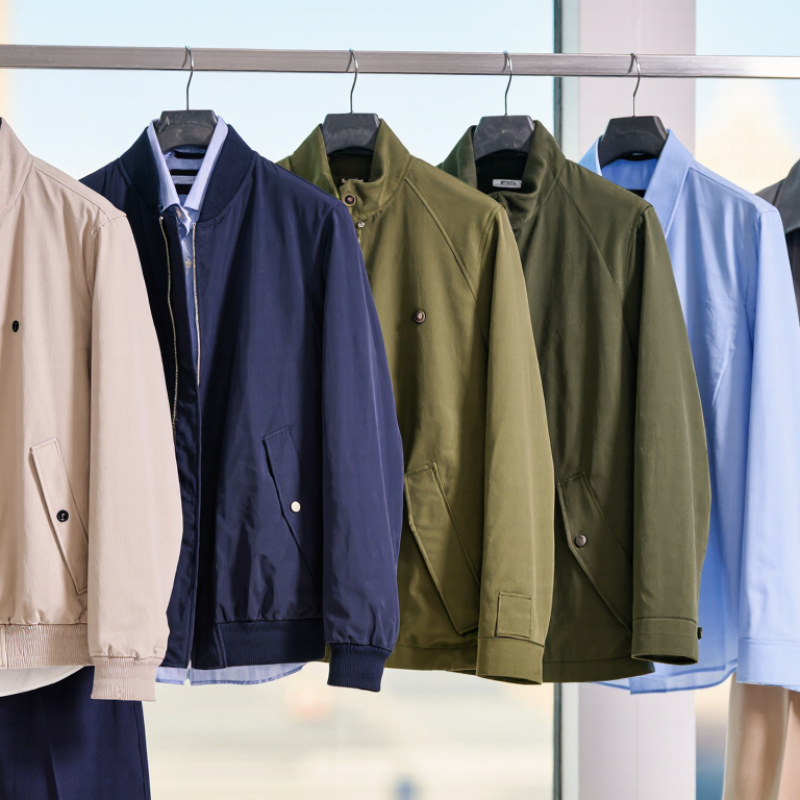
This guide explores spring-ready options, from clean Harrington jackets and field coats to lightweight bombers and versatile macs. It considers fabric, fit, layering, weather protection, and everyday value—not just what looks new. Picture a cotton jacket over an Oxford shirt, with enough room at the shoulders to move comfortably. Small detail. Big difference. A water-resistant finish can help in a passing shower, but it is not a substitute for proper rainwear. That distinction is easy to overlook.
The right choice depends on your climate, commute, and wardrobe. Some men need a packable layer for train platforms; others want a structured jacket for dinners and office days. No single style wins every time. Even a well-made jacket can feel wrong if its sleeves bunch or its fabric traps heat. The sections ahead compare useful options for 2026, with straightforward guidance on choosing a jacket you will actually reach for. A little uncertainty remains: spring rarely follows the forecast.
Map Spring Weather Needs to EN 343 Rainwear Protection Classes 1–4
Spring weather can turn from dry sunshine to a cold shower within one walk. Choose a jacket by the rain you expect, not by its weight alone. EN 343 rates protective clothing for rain, with separate classes for water penetration and water-vapour resistance. Class 4 is the highest level in each scale; the two numbers describe different properties.
Read both numbers on the garment label. A jacket marked 4,1 offers strong resistance to rain but lower breathability than one marked 4,4. That difference matters on a damp commute: you may stay dry outside but feel clammy after climbing stairs. For light showers and brief trips, a lower water-resistance class may be enough. For hours outdoors in steady rain, look for a higher one.
Check the pair.
Also consider cuffs, hood adjustment, and whether the hem covers your waist when you bend to lock a bicycle. These details affect comfort, though they do not replace the EN 343 rating. A high class cannot guarantee comfort in every spring downpour; fit, movement, and layering matter too. I would rather reassess my needs than assume the highest rating is always the best choice.
Compare Shell, Bomber, Field, and Denim Jackets by Intended Use
In spring, choose a jacket for the weather you actually face, not just the forecast. A lightweight shell suits wet commutes and gusty walks. A hood, sealed seams, and adjustable cuffs help keep drizzle out. It can feel clammy over a thick sweater, though. A bomber works better for dry days, short trips, and casual outfits. Its ribbed cuffs block some breeze but usually offer little rain protection. Fit matters.
A field jacket is useful when you want pockets for a phone, keys, and gloves, plus room for a light layer. It often feels more substantial, so check that the fabric does not feel too warm indoors. Denim is an easy choice for mild, dry afternoons and pairs well with a T-shirt or thin knit. It offers little protection from rain. I still sometimes reach for denim when the sky looks uncertain; that is not always a clever choice.
Tips: Try each jacket with the layer you plan to wear underneath. Raise your arms and sit down to check mobility. If spring showers are common, carry a compact shell instead of expecting denim or a bomber to do its job.
Verify Water Resistance with ISO 811 Hydrostatic-Pressure Testing
What Are the Best Spring Jackets for Men in 2026?
A spring jacket may shrug off a drizzle but soak through during a longer walk. To judge its fabric, look for results from ISO 811 hydrostatic-pressure testing. In this lab method, water pressure is applied to a fabric sample until water penetrates. The result indicates how well that material resists water under test conditions. Higher pressure resistance generally means a tougher barrier. That matters.
Check the test result, not just the phrase “water-resistant.” Ask whether the tested sample matches the jacket’s actual fabric and construction. ISO 811 evaluates material, not every finished-jacket detail. Seams, zippers, pockets, and the hood can still let water in. A jacket can perform well in a test and disappoint in a windy shower. That distinction is easy to miss.
For everyday spring wear, pair the test result with practical checks. Look for sealed or carefully finished seams, a secure front closure, and a hood that stays put when you turn your head. Consider care instructions, too; washing or wear may affect a fabric’s surface treatment. I would not treat one pressure figure as a promise of all-day dryness. It is useful evidence, but the jacket’s full design and your typical weather matter just as much.
What Are the Best Spring Jackets for Men in 2026? — Verify Water Resistance with ISO 811 Hydrostatic-Pressure Testing
A practical comparison of spring-jacket types and suggested fabric water-resistance targets. The pressure figures below are selection guidelines, not test results for specific jackets or ISO-defined performance grades.
| Jacket type | Typical construction | Suggested ISO 811 fabric target | Best suited to | Key trade-off or check |
|---|---|---|---|---|
| Lightweight wind shell | Light woven fabric; often unlined | About 500–1,500 mm | Windy, mostly dry days and light drizzle | Usually packs small; not intended as dependable protection in sustained rain. |
| Water-resistant everyday jacket | Tightly woven or treated shell, sometimes with a light lining | About 1,500–5,000 mm | Commutes and short outings in light to moderate showers | Water-repellent surface treatments can wear down; check care instructions and seam construction. |
| Softshell jacket | Stretch woven fabric, often with a brushed inner face | Check the individual fabric; performance varies widely | Active use, breezy conditions, and brief showers | Comfort and movement are often priorities; do not assume every softshell is waterproof. |
| Two-layer rain shell | Outer fabric bonded to a waterproof coating or membrane, usually with a separate lining | About 5,000–10,000 mm | Regular showers and everyday wet-weather use | Check whether seams are sealed; the fabric result alone does not establish whole-garment waterproofness. |
| Three-layer rain shell | Face fabric, waterproof membrane, and inner protective layer bonded together | About 10,000 mm or higher | Prolonged rain, travel, and outdoor activity | Often more protective than a light shell; ventilation and comfort depend on design and activity level. |
| Light insulated, water-resistant jacket | Insulated lining with a treated or coated outer fabric | Check the individual fabric; insulation does not indicate water resistance | Cool spring mornings and dry or lightly wet conditions | Useful for warmth, but insulation and shell water resistance are separate performance properties. |
How to verify: ISO 811 measures a fabric’s resistance to water penetration under hydrostatic pressure; results are commonly expressed as millimetres of water column. Ask for the test report and check the tested fabric, conditioning, and result. ISO 811 fabric testing does not by itself verify seams, zippers, or the finished jacket, so look for garment-level construction details as well.
Compare Breathability Using ISO 11092 RET Measurements
What Are the Best Spring Jackets for Men in 2026?
Spring weather shifts quickly: a sunny walk can turn into a cool, damp commute. For jacket breathability, look beyond marketing terms and check the RET value, measured in m²·Pa/W. ISO 11092:2014 describes the sweating guarded hotplate test, which measures resistance to water-vapor transfer. Lower RET means vapor can escape more easily. Hohenstein’s published guidance places values below 6 in the very breathable range, 6–13 as breathable, and values above 20 as offering limited breathability. These are useful reference bands, not a guarantee of comfort in every situation.
For everyday spring wear, a tested RET near or below 13 is a practical target, especially when walking briskly or carrying a backpack. A lightweight shell with a soft mesh lining may feel airy, yet its seams and lining can still trap warmth. Check whether the test covers the fabric alone or the finished garment; those results are not interchangeable. A low RET helps, but fit, humidity, and your pace matter too. The number is helpful, not magic.
Tips: Ask for an independent ISO 11092 test report, including the tested sample and date. Compare like with like. If you run warm, choose lower RET and test the jacket on a short walk before relying on it all day. Part of the answer is personal.
Assess Lightweight Down by Fill Power: 600–800 cuin
For spring, fill power is a useful starting point, not a warmth score. It describes how many cubic inches one ounce of down can loft under a test. A 600-cuin jacket can feel comfortable on a cool morning, especially with a close fit and snug cuffs. An 800-cuin fill lofts more per ounce, allowing a jacket to use less down for comparable insulation. That can reduce weight, but it does not guarantee greater warmth. Not the whole story.
Check the fill weight, baffle layout, and how evenly the down sits across the chest and shoulders. Thin spots become noticeable while waiting at a windy bus stop. A roomy cut may let warm air escape, while a very close fit can leave little space for a sweater. Try the jacket over the layers you actually wear. Small detail, big difference.
For changeable weather, consider the shell and your routine. Down can lose loft when damp, so a water-resistant face fabric helps in brief drizzle but cannot replace a rain shell. The 600–800 cuin range suits many spring needs: 600 often makes sense for everyday wear, while 800 favors lower weight and packability. It is easy to overvalue the number; compare the whole jacket, including its fit and construction.