

Top 10 Types of Bulk Bamboo Toilet Paper for Global Buyers
Bulk Bamboo Toilet Paper is moving from a niche sustainable product toward a serious global procurement category. Grand View Research valued the worldwide bamboo market at approximately USD 68.8 billion in 2022. Its report also projects continued growth through 2030. Meanwhile, Smithers identifies tissue hygiene as a large, competitive industry shaped by sustainability, convenience, and private-label demand.
This article examines ten practical types for international buyers. These include standard two-ply rolls, jumbo rolls, individually wrapped packs, embossed designs, recycled-paper blends, and fragrance-free options. Each format suits a different purchasing environment. Hotels may prefer compact retail-ready packs. Factories and public facilities often require high-capacity jumbo rolls. Distributors usually compare carton dimensions, roll length, ply strength, core size, and pallet efficiency.
Bamboo is fast-growing. That is not the whole story. Dr. Hans Friedrich, former Director General of the International Bamboo and Rattan Organisation, described bamboo as “a fast-growing, renewable resource with many uses.” His observation supports bamboo’s commercial potential, but buyers still need evidence. Responsible sourcing, bleaching methods, water consumption, packaging materials, and transport emissions deserve careful review. The Forest Stewardship Council and ISO-related supply-chain practices can help verify supplier claims, although certification coverage varies by region.
Some assumptions remain imperfect. Bamboo does not automatically mean low impact. Manufacturing quality can also differ sharply between factories. A reliable buyer should request product samples, laboratory testing, certificates, and recent audit records. This guide compares the leading Bulk Bamboo Toilet Paper formats through those practical purchasing lenses, helping global buyers choose with fewer surprises.
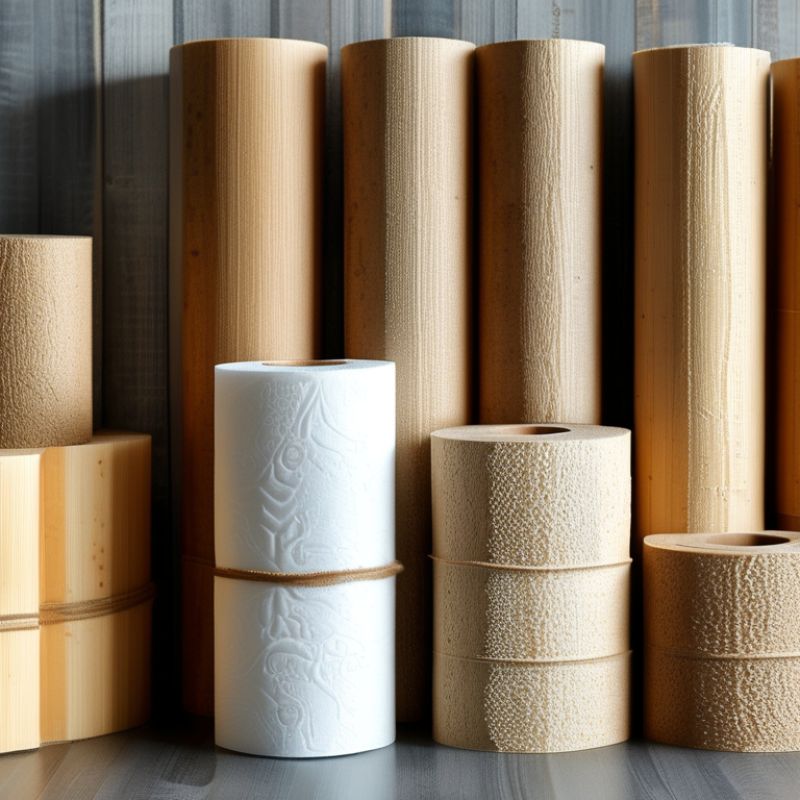
Bamboo Toilet Paper Types by Fiber Composition and Manufacturing Method
Bulk bamboo toilet paper is not one uniform product. Its performance depends on fiber composition and manufacturing method. Common types include 100% virgin bamboo pulp, bamboo and recycled-fiber blends, bamboo and wood-pulp blends, and bamboo tissue with a small proportion of agricultural fiber. Virgin bamboo usually offers a smoother surface and more consistent strength. Recycled blends may reduce resource use, but their softness can vary between production batches. Agricultural-fiber blends sound promising, yet buyers should request durability and skin-contact test results.
Manufacturing creates another ten practical categories: unbleached bamboo tissue, elemental-chlorine-free bleached tissue, totally-chlorine-free tissue, air-dried bamboo tissue, creped tissue, embossed tissue, perforated jumbo rolls, compact two-ply tissue, three-ply tissue, and high-absorbency commercial rolls. Wet-laid production remains widely used because it forms an even sheet from diluted pulp. Creping adds flexibility by scraping the dried sheet from a large heated cylinder. Embossing improves texture, although excessive pressure can weaken thin paper.
For global purchasing, inspect fiber declarations, ply count, roll length, tensile strength, wet disintegration, and packaging moisture resistance. Ask for recent laboratory reports, not only catalog claims. A sample may feel soft in a showroom but tear during warehouse handling. I have seen specifications miss practical details, especially core diameter and carton compression. Those details matter. Buyers should also compare whiteness, dust release, recycled content, and wastewater controls across suppliers. The cheapest roll is not always the lowest-cost option.
Top 10 Types of Bulk Bamboo Toilet Paper for Global Buyers - Bamboo Toilet Paper Types by Fiber Composition and Manufacturing Method
| No. | Bamboo Toilet Paper Type | Fiber Composition | Typical Manufacturing Method | Bleaching Option | Typical Ply | Main Performance Profile | Suitable Bulk-Buyer Applications |
|---|---|---|---|---|---|---|---|
| 1 | 100% Virgin Bamboo Kraft Tissue | 100% virgin bamboo pulp | Bamboo is chipped, chemically pulped through an alkaline kraft process, washed, refined, formed into tissue, pressed and dried. | Elemental chlorine-free (ECF) or totally chlorine-free (TCF) | 2 or 3 ply | Good softness, absorbency and wet strength when properly refined; consistent appearance. | Hotels, offices, retail private labels and institutional distributors seeking a bamboo-only fiber claim. |
| 2 | Unbleached Bamboo Toilet Paper | Usually 100% virgin bamboo pulp; shade varies from natural beige to light tan. | Chemical pulping followed by washing, screening, refining and tissue-machine formation without a whitening stage. | No intentional brightening; natural pulp color retained | 2 or 3 ply | Natural appearance, moderate softness and a slightly more visible fiber tone than white tissue. | Eco-focused stores, hospitality facilities and buyers prioritizing reduced processing and natural color. |
| 3 | ECF-Bleached Bamboo Tissue | 100% bamboo pulp | Kraft pulping followed by oxygen delignification and a chlorine-dioxide bleaching sequence; tissue is then creped and converted. | ECF; elemental chlorine is not used | 2 or 3 ply | Brighter white color with a balanced combination of softness, strength and absorbency. | Mainstream supermarkets, commercial washrooms and export markets requiring a white appearance. |
| 4 | TCF-Bleached Bamboo Tissue | 100% bamboo pulp | Chemical pulping with oxygen, ozone or peroxide-based bleaching stages, followed by refining, tissue forming and creping. | TCF; no chlorine-based bleaching compounds are used | 2 or 3 ply | Clean white appearance and a chlorine-free bleaching profile; final softness depends on refining and creping. | Specialty retailers, sustainable procurement programs and buyers with strict chemical-processing requirements. |
| 5 | Bamboo and Recycled Fiber Blend | A blend of bamboo pulp and recycled office or post-consumer paper fiber; the exact ratio is product-specific. | Recovered paper is repulped and cleaned, then blended with bamboo pulp before sheet formation and creping. | Often ECF or peroxide-based; recycled fiber may require additional de-inking and cleaning. | 2 ply | Lower virgin-fiber demand with generally moderate softness, strength and brightness. | Institutional supply, public procurement, offices and buyers balancing sustainability goals with cost. |
| 6 | Bamboo and Virgin Wood Pulp Blend | Bamboo pulp blended with virgin hardwood or softwood kraft pulp; the proportion varies by specification. | Separate pulps are refined and blended before wet forming, pressing, drying and creping. | Usually ECF; TCF options may be available | 2 or 3 ply | Softness and bulk can be adjusted through the hardwood/softwood ratio and refining conditions. | Large-volume distributors seeking stable machine performance, reliable strength and flexible pricing. |
| 7 | Bamboo-Cottonelle Style Premium Tissue | Bamboo pulp combined with a small proportion of long, soft cellulose fibers such as cotton lint fiber; composition must be verified by specification. | Blended wet-laid tissue manufacturing with controlled refining, multi-ply bonding and decorative embossing. | ECF, TCF or unbleached depending on the product design | 3 ply | Enhanced softness and surface smoothness; higher material cost and more complex fiber sourcing. | Premium hospitality, boutique retail and private-label products positioned above basic tissue. |
| 8 | High-Bulk Embossed Bamboo Tissue | Usually 100% bamboo pulp or a bamboo-dominant blend. | Conventional tissue forming followed by deep embossing, ply bonding and controlled creping to increase caliper and bulk. | ECF, TCF or unbleached | 2 or 3 ply | Pillow-like texture, improved perceived thickness and good absorbency; embossing can influence tensile strength. | Retail rolls, hospitality amenities and buyers seeking a premium appearance without increasing ply excessively. |
| 9 | Bamboo Water-Soluble Rapid-Dispersing Tissue | Primarily bamboo pulp, normally manufactured with a lower proportion of wet-strength additives than durable premium tissue. | Lightly refined pulp is formed into a low-basis-weight sheet and creped to promote rapid wet disintegration; dispersibility must be tested. | ECF, TCF or unbleached | 1 or 2 ply | Designed to break down quickly in water while maintaining adequate dry strength for normal use. | Older plumbing systems, recreational vehicles, marine facilities and locations requiring verified dispersibility. |
| 10 | Bamboo Airlaid or Hybrid Dry-Laid Tissue | Bamboo pulp fibers combined with other cellulose fibers; not all airlaid products are designed for sewer disposal. | Fibers are air-formed or layered, bonded mechanically or with a limited binder, and converted into a soft, highly absorbent sheet. | Unbleached, peroxide-bleached or ECF depending on the pulp specification | Single thick sheet or laminated multi-layer format | High absorbency and bulk; usually less suitable for flushing unless the product has passed recognized dispersibility testing. | Industrial washrooms, composting-toilet systems, camping facilities and applications using dedicated waste collection. |
Note: Specifications such as fiber ratios, ply, brightness, wet strength and flushability vary by production line and buyer requirements. Global buyers should request a technical data sheet, fiber-composition declaration and relevant biodegradability or dispersibility test results before placing a bulk order.