

Blog
Blog
Blog
7 Tips for Buying Round Elastic Cord in Bulk
Bulk purchasing Round Elastic Cord can lower unit costs, but only when the specification matches the job. A cord that looks identical on a supplier’s sample card may stretch differently, fray sooner, or feel too thick in a finished product. Those small differences become expensive across thousands of metres.
The wider textile supply chain makes material selection increasingly important. Textile Exchange’s Materials Market Report 2024 estimates global fiber production reached 124 million tonnes in 2023, highlighting the scale of sourcing decisions across the industry. That figure covers fibers broadly, not elastic cord specifically, so it should not be mistaken for cord-market data. Still, it points to a practical need: buyers should ask what materials make up the cord and how suppliers verify consistency.
A useful bulk order starts with clear measurements. Confirm diameter, stretch range, recovery, core construction, sheath material, color, and roll length. Then request a production sample and compare it with the intended use, whether for garments, drawstrings, crafts, or outdoor gear. Details matter. Ask about minimum order quantities, lead times, packaging, and acceptable tolerances before approving the purchase. A low price is not the whole calculation.
Even experienced buyers can miss something. I would not assume that a sample proves every production batch will match. These seven tips help buyers check quality, supplier reliability, and total cost before placing a larger order.
Understanding Round Elastic Cord and Its Common Uses
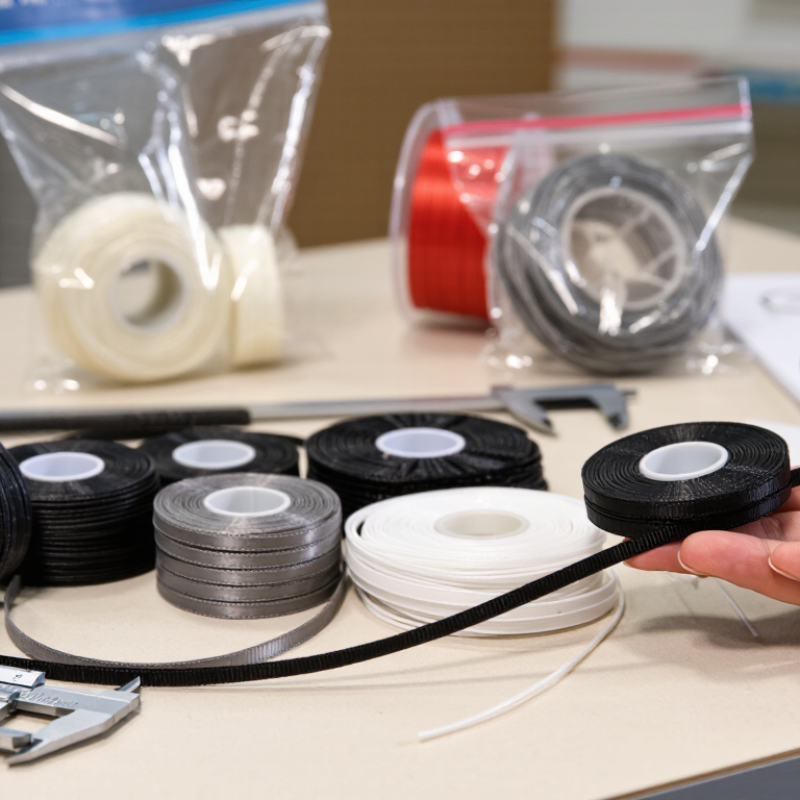
Round elastic cord is a flexible core, often rubber or another elastomer, wrapped in a woven or braided textile sheath. The core provides stretch; the cover helps resist abrasion and gives the cord a grippable surface. You’ll see it in hoodie drawstrings, shoe laces, craft projects, and adjustable closures on bags or outdoor gear. Small details matter. A cord that feels springy in a short sample may behave differently when repeatedly stretched or exposed to sunlight and moisture.
Material choices reflect a much larger textile industry. Textile Exchange’s Materials Market Report 2024 estimates global fiber production reached 124 million tonnes in 2023, with polyester making up 57 percent. That figure describes the fiber market, not elastic-cord sales, but it helps explain why polyester-covered cords are widely available. For bulk purchasing, check diameter, sheath material, stretch range, and recovery after repeated pulls. Match the cord to its job: a garment drawstring and a gear closure do not face the same wear. Ask suppliers for test details, and try samples in the finished product. I would not rely on a color swatch alone; feel and recovery can vary between batches.
Defining the Cord Specifications Your Project Requires
Before ordering round elastic cord in bulk, define the finished diameter your project can accept. Measure the channel, holes, or fittings the cord must pass through. A cord that looks close on a product sheet may bunch inside a narrow casing. Small differences matter. Specify a target diameter and an acceptable tolerance, rather than relying on “standard size.” Also describe the construction you need, such as a braided outer sheath or a smooth finish. If the cord will be visible, name the color and note whether slight shade variation is acceptable.
Stretch and recovery deserve a practical check. State how far the cord needs to extend under normal use, and whether it must return promptly to its original length. Request a sample from the same specification before approving a large order. Measure it, stretch it repeatedly, and test it in the actual opening or assembly. A quick hand pull is not enough. This is easy to overlook. I would also record the intended use, exposure to sunlight or moisture, and storage conditions; these details can affect material choice and performance. Even a careful specification cannot predict every real-world variation, so leave room to reassess after testing.
Common Round Elastic Cord Diameters
Commonly listed nominal diameters range from 1 mm to 6 mm. Before buying in bulk, confirm the diameter and tolerance your project needs, along with material, stretch and recovery, color, cut length, and packaging.
Comparing Materials, Diameter, Stretch, and Durability
When buying round elastic cord in bulk, compare the fiber and the construction, not just the price. Polyester sheaths generally resist sunlight and moisture better than many untreated natural fibers, while nylon can feel softer and stretch readily. Rubber or elastane cores provide the spring, but the outer braid affects abrasion resistance and handling. Textile Exchange’s Materials Market Report 2024 estimates global fiber production reached 124 million tonnes in 2023, with polyester making up 57%. That scale signals broad availability, not a guarantee of cord quality. Ask for the core and sheath composition.
Diameter changes grip, fit, and working load. A 2 mm cord may pass through a small channel but can be harder to handle; thicker cord may not fit the same hardware. Check measured diameter across several samples, since braid compression can affect readings. Then compare stretch under a stated load, plus how much the cord recovers after repeated extension. A sample that feels springy in hand may still lose tension in use. Not every batch behaves alike.
For durability, request breaking-strength data and the test method used, then test samples in the actual application. Record cord length before and after cycling, and inspect for fraying, core exposure, or uneven recovery. ASTM D4964 describes tension testing for elastic fabrics, but it is not a substitute for testing the finished cord. Ask suppliers how their cord is tested. Verify the method fits your product. Bulk samples can reveal inconsistencies that a specification sheet misses.
Evaluating Bulk Suppliers, Pricing, and Minimum Order Quantities
When buying round elastic cord in bulk, compare landed cost, not just the quoted price. Request a written specification covering diameter tolerance, material, color, spool length, and stretch recovery. Ask how each property is tested. A neat sample is not proof that every production batch will match it.
McKinsey’s 2020 survey of supply-chain executives found that 93% planned to make supply chains more resilient, while 44% planned greater regionalization. These figures cover multiple industries, not elastic cord specifically, but they underline the value of checking production location, backup capacity, and lead-time history. Request samples and confirm whether the supplier can provide batch records. Small details matter.
Compare price breaks at several order volumes, then include tooling or setup charges, freight, packaging, and the cost of rejected goods. Confirm whether the minimum order quantity applies per color, diameter, or total order. A low MOQ may mean a higher unit price; a large MOQ can tie up cash and leave unused stock. MOQ is not a quality signal. One trade-off is easy to miss: a cheaper cord may stretch differently after repeated use. Test it in the finished product before committing to a large run.
7 Tips for Buying Round Elastic Cord in Bulk - Evaluating Bulk Suppliers, Pricing, and Minimum Order Quantities
| Tip | What to Evaluate | Useful Comparison Points | Indicative MOQ to Ask About | Illustrative Bulk Price Range (USD per meter) | Checks Before Ordering |
|---|---|---|---|---|---|
| 1. Specify the cord construction | Confirm whether the cord has a natural-rubber or synthetic-elastomer core and whether its cover is polyester, nylon, or another fiber. | Fiber type, number of core strands, cover construction, color, and intended use. | Ask for the MOQ by construction and color; standard colors may have lower MOQs than custom colors. | About $0.02–$0.20, depending on diameter, materials, order size, and specifications. | Request a written specification and samples. Do not compare prices for cords with different materials or constructions as if they were equivalent. |
| 2. Match diameter to the application | Check the stated diameter and its tolerance. Round elastic cord is commonly sold in sizes such as 1 mm, 2 mm, 3 mm, and 5 mm. | Measured diameter, tolerance, stretch, recovery, and fit through the intended channel or fitting. | Ask whether MOQs apply separately to each diameter and color. | Smaller diameters generally cost less per meter; larger diameters and tighter tolerances can cost more. | Measure samples with suitable tools and test them in the actual product. Ask how diameter is measured and what tolerance is allowed. |
| 3. Compare suppliers on like-for-like terms | Evaluate relevant experience, production capability, communication, quality controls, and the supplier’s ability to meet your specification. | Sample consistency, stated lead time, defect-handling process, traceability, and availability of test documentation. | Request MOQs for samples, trial orders, and repeat orders separately. | Compare quotations only after aligning material, diameter, color, packaging, quantity, and delivery terms. | Ask for samples from the production specification, not just a similar stock item. Confirm how nonconforming goods are handled in writing. |
| 4. Request price breaks by quantity | Ask for tiered quotations at several quantities rather than relying on a single unit price. | For example, compare 500 m, 1,000 m, and 5,000 m where those quantities suit the project. | MOQs vary by supplier, construction, color, and whether the item is stocked or made to order. | Higher order quantities may reduce the per-meter price, but setup, packaging, and freight can offset savings. | Check whether the quoted price includes spools, labels, taxes, tooling, and any color or setup charges. |
| 5. Calculate landed cost, not just cord price | Include shipping, insurance, import duties, taxes, handling, and any local delivery charges. | Compare the same delivery term, destination, shipment method, and order weight or volume. | Confirm whether the MOQ is based on meters, rolls, cartons, colors, or total order value. | A low quoted unit price may not be the lowest total cost once freight and fees are included. | Request a fully itemized quotation and confirm which party is responsible for shipping, customs clearance, and duties. |
| 6. Verify quality and test requirements | Agree on acceptance criteria for stretch, recovery, diameter, color consistency, and surface defects. | Test method, sample size, inspection stage, acceptable defect level, and documentation available. | Ask whether testing or inspection has a separate minimum quantity or fee. | Special testing, custom specifications, or additional inspection may add cost. | Use a representative sample and document the approved sample and tolerances before production begins. |
| 7. Confirm lead time, packaging, and reorder terms | Check production time, packing format, storage needs, and the process for repeat purchases. | Roll length, spool or carton quantity, moisture protection, labeling, production schedule, and reorder availability. | Ask whether repeat orders can use the original MOQ and whether multiple colors can be combined. | Custom packaging or short production runs can affect the total price and lead time. | Confirm the promised ship date, packaging details, and how changes to specifications or delivery schedules are approved. |
Pricing note: The price range is an illustrative budgeting guide, not a current market quotation. Actual prices and MOQs vary by material, diameter, color, order volume, specification, supplier, and destination. Obtain current written quotes before purchasing.
Checking Samples, Quality Standards, and Delivery Terms
For round elastic cord, request samples from the actual production lot, not only a sales sample. Check diameter at several points with calipers, then compare relaxed length, stretch, and recovery across multiple pieces. A polished sample can still hide uneven tension. Ask the supplier to record test conditions, including extension and recovery time, so comparisons are meaningful. Specify acceptable diameter and length tolerances, color, and any relevant material or restricted-substance documentation. Textile Exchange’s Materials Market Report 2024 estimates global fiber production reached 124 million tonnes in 2023. That broad market figure is not a cord-quality measure, but it underlines why traceable material records matter.
Put acceptance criteria in the purchase order. Agree on a sampling plan and a response if goods fail inspection; ISO 2859-1 provides a recognized framework for attribute-based lot sampling. Keep a retained sample, labeled with the lot number. Small details matter. Confirm the production lead time, dispatch date, packaging, and whether the order may ship in partial lots. State the delivery term using the named place and Incoterms 2020, and clarify who pays for freight, insurance, and import clearance. A cheap quote can become costly when these points stay vague. Review the supplier’s recent on-time delivery records, but treat forecasts cautiously; I would not rely on a verbal promise alone.