

Blog
Blog
Blog
China Best PU Leather Material Supplier for Global Buyers?
Choosing the China best PU Leather Material supplier requires more than comparing catalog photos or low quotations. Global buyers need stable quality, transparent specifications, and dependable communication. The right supplier should explain coating structure, backing fabric, thickness tolerance, colorfastness, abrasion resistance, and production capacity clearly.
Polymer scientist Dr. L. H. Sperling emphasized a practical principle: “Structure controls performance.” This idea applies directly to PU Leather Material. A soft handbag surface may look impressive, yet its backing fabric can determine tear strength and dimensional stability. A glossy finish may attract attention, but poor hydrolysis resistance can cause cracking in humid environments. Testing matters more than appearance.
Experienced buyers should request recent laboratory reports, production samples, and batch records. They should also compare the sample with the delivered roll, not only with digital images. Small differences matter. A supplier may promise customization, but unclear minimum order quantities can create unnecessary cost. Some factories offer competitive prices while overlooking long-term durability. That weakness deserves attention.
China remains a major sourcing base for coated synthetic leather, with suppliers serving footwear, furniture, automotive interiors, luggage, and fashion markets. However, “best” is not universal. The best partner depends on the product’s climate, usage intensity, design requirements, and target market. Responsible sourcing also requires traceable materials, honest performance claims, and consistent quality control. This guide examines the practical signals that separate a capable PU Leather Material supplier from a merely attractive listing.
What Is PU Leather and Why Does Supplier Selection Matter?
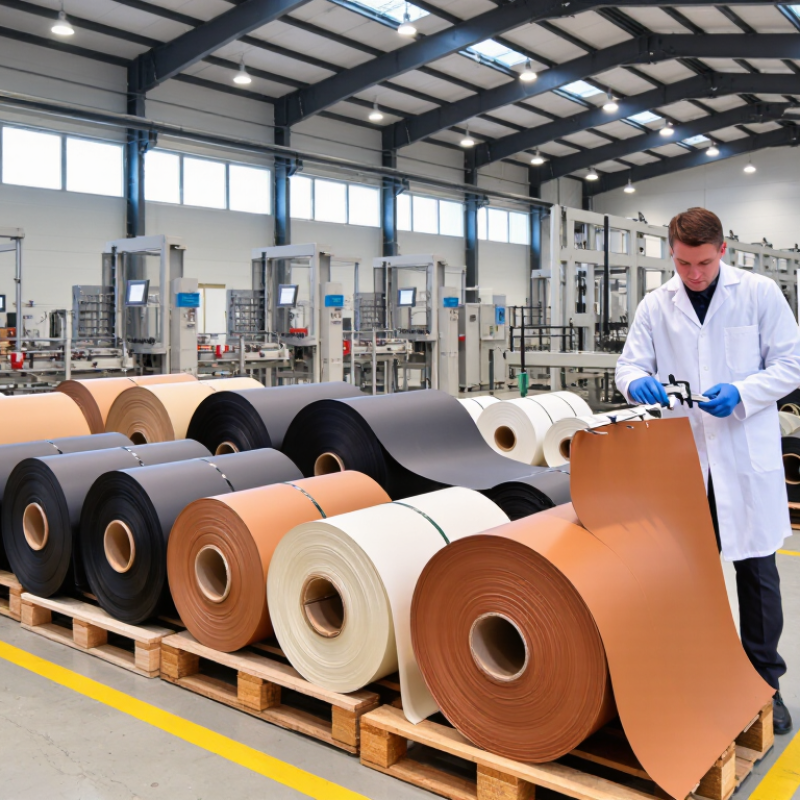
PU leather is a coated textile, not animal hide. A polyurethane layer covers a fabric backing, creating a smooth, flexible surface. It can resemble leather closely. It also offers consistent color, easier cleaning, and lower material variation.
The wider synthetic leather market reflects strong demand. Grand View Research estimates its global value at over USD 30 billion in 2023, with continued growth expected through 2030. However, market growth does not guarantee product quality. A sample may look impressive under showroom lighting, yet crack after repeated bending. Supplier selection therefore matters. Buyers should examine coating thickness, backing strength, abrasion resistance, hydrolysis performance, and surface adhesion. Technical reports should include test methods, not only attractive numbers. In practical sourcing, the cheapest quotation is rarely the complete cost. Rework, odor complaints, and inconsistent batches can quietly damage a product line. Some assumptions need challenging.
Tips: Request production samples from different batches. Check color under daylight and indoor lighting. Ask for test reports from qualified laboratories. Confirm whether the reported results match your intended use, such as upholstery, footwear, bags, or automotive interiors. Suppliers should also explain storage conditions and recommended cleaning methods. A responsible supplier will discuss limitations openly. That honesty is useful evidence of professional competence.
How to Evaluate China-Based PU Leather Manufacturers
China Best PU Leather Material Supplier for Global Buyers?
Evaluating China-based PU leather manufacturers requires more than comparing catalog photos. In factory visits, I check coating uniformity, backing density, edge finishing, and batch records. A glossy sample can hide weak bonding. Ask for test results covering abrasion, peel strength, hydrolysis resistance, colorfastness, and thickness tolerance. These details reveal manufacturing discipline.
Market data also matters. Grand View Research reported that the global synthetic leather market reached about USD 63.3 billion in 2023. It projects continued growth through 2030, driven by automotive, furniture, footwear, and fashion applications. Textile Exchange’s Materials Market Report 2024 also shows synthetic fibers remain dominant in global fiber production. Demand is large, but quality is uneven. That is the uncomfortable part.
Tips: Request three production samples from different batches. Compare them under daylight and warm indoor light. Confirm the testing laboratory and test method. ISO or ASTM references are useful, but paperwork alone is not proof. Visit the facility, or use an independent auditor. Check whether the supplier controls coating, embossing, lamination, and final inspection internally. A perfect sample proves little if production changes later. I would also review packing conditions, moisture protection, complaint handling, and replacement procedures. Some buyers overlook these practical details. That mistake becomes expensive.
Which PU Leather Materials and Finishes Suit Global Applications?
For global buyers, choosing a China PU leather supplier starts with the application, not a catalog photograph.
Car seats need abrasion resistance, low fogging, and stable color under sunlight.
Furniture upholstery may prioritize softness, grain depth, and easy cleaning.
Bags and footwear often require flexible backing, sharp embossing, and reliable folding performance.
Common options include water-based PU, microfiber-backed PU, and standard synthetic leather with textile backing. Each behaves differently during cutting and stitching.
The surface may look excellent, yet crack after repeated bending. That detail deserves testing.
Tips: Request technical data, sample rolls, and test reports before placing a large order.
Check thickness, weight, width, tensile strength, tear strength, peel strength, and color fastness.
For humid markets, examine hydrolysis resistance. For hot regions, test heat aging and surface tack.
Ask how the finish is applied. Matte, semi-matte, metallic, embossed, and aniline-style finishes create different maintenance needs.
Small samples can mislead. Test stitched panels under real pressure.
A reliable supplier should explain tolerances, batch variation, and corrective action clearly. Buyers should define inspection standards before production.
In my experience, matching a reference swatch is not enough; hand feel may change across lots. Request approval samples from several production stages.
Some specifications may need revision after field testing. That is not failure. It is useful evidence.
Choose material by measured performance, intended climate, and expected service life, rather than appearance alone.
How to Verify Quality, Compliance, Pricing, and Production Capacity
China Best PU Leather Material Supplier for Global Buyers?
Choosing a PU leather supplier requires more than comparing catalog photos. Request a physical sample with the same thickness, backing fabric, grain, and color as your intended order. Check surface adhesion, abrasion resistance, flex cracking, odor, and color transfer. A simple bend test can reveal defects that polished images hide. Ask for recent laboratory reports, material composition records, and production traceability. Verify that documents match the actual factory and batch.
Pricing should be reviewed line by line. Confirm raw material grade, width, thickness tolerance, packaging, tooling, inspection fees, and delivery terms. A low quotation may exclude testing or hide unstable quality. Production capacity also needs evidence. Request monthly output, equipment details, lead times, and current order loading. A factory tour, live video inspection, or independent audit can expose unrealistic promises.
Tips: Compare three samples under the same light. Keep written specifications. Ask what happens when defects exceed the agreed limit.
I have seen buyers focus too heavily on unit price. That decision often creates rework, delays, and wasted cutting labor. Even a careful assessment is not perfect. Supplier information can change, and one audit cannot predict every batch. Build a small trial order into your verification process. Track results, then adjust your purchasing decision with evidence.
China Best PU Leather Material Supplier for Global Buyers?
How to verify quality, compliance, pricing, and production capacity
This non-company-specific procurement framework recommends giving the greatest evaluation weight to product quality, followed by regulatory compliance, total pricing, and production capacity. Buyers should confirm the evidence with laboratory reports, restricted-substance documentation, landed-cost calculations, and production records before placing an order.
Reference areas include abrasion and hydrolysis resistance, color fastness, REACH restricted-substance requirements, total landed cost, lead-time records, and production capacity. The percentages are recommended evaluation weights, not market-share or company-performance data.
How to Manage Sampling, Orders, Shipping, and Supplier Partnerships
Choosing a reliable China PU leather material supplier starts with a controlled sample process. In practical sourcing work, I request A4 swatches, full rolls, and a test sheet before discussing volume. Each sample should show thickness, backing fabric, grain, color code, width, and production date. I also test folding, abrasion, odor, and color transfer under realistic workshop conditions. Small details matter. An attractive surface can still crack after repeated bending.
Once the sample is approved, the purchase order must repeat every measurable requirement. Include tolerance ranges, packing method, roll length, inspection level, and the approved reference sample. For larger orders, I prefer pre-production confirmation and photos from the first finished rolls. Quality control should happen before loading, not after arrival. That timing reduces disputes, although it cannot remove every risk. Keep written records. If color variation appears, the supplier should explain its cause and propose a controlled correction.
Shipping needs the same discipline. Confirm roll protection, container loading, documents, delivery terms, and booking dates in writing. Moisture protection matters because damp storage may affect backing and surface feel. Ask for loading photos, packing lists, and tracking updates. Supplier partnerships improve when forecasts are realistic and changes are disclosed early. Trust grows slowly. I have learned that friendly communication is not a substitute for inspection. An occasional mistake may expose a weak process, so review it rather than hiding it. Quarterly reviews can compare defect rates, delivery accuracy, sample consistency, and response time.