China Top 10 Mesh Sieves Suppliers for Global Buyers
Choosing dependable Mesh Sieves is essential for laboratories, mining operations, food processors, and construction-material manufacturers. A sieve may look simple, yet its aperture accuracy can affect an entire test report. Wire diameter, mesh uniformity, frame strength, surface finish, and calibration records all deserve careful review. Small differences can change particle-size results.
Dr. Elena Marquez, an independent particle-analysis consultant, observes, “A sieve is only reliable when its accuracy survives both testing and handling.” That principle guides this overview of China’s leading Mesh Sieves suppliers for global buyers. Reliable manufacturers usually provide stainless-steel or brass frames, certified aperture sizes, inspection reports, and traceable quality documentation. Some also support custom diameters, reinforced edges, laboratory sieve shakers, and replacement screens.
Look beyond the lowest quotation. Check ISO 3310 alignment, material certificates, packaging quality, and export experience. A supplier that protects each sieve in foam and moisture-resistant wrapping shows practical awareness. That detail matters when cartons travel through humid ports or crowded warehouses. Still, supplier claims should not be accepted blindly. Independent sampling and pre-shipment inspection remain sensible.
This guide compares ten Chinese suppliers through product range, manufacturing capability, quality controls, customization options, communication, and buyer feedback. The ranking is not absolute. Requirements differ between a university laboratory and an aggregate plant. Some suppliers may excel in precision, while others offer better production capacity or pricing. Buyers should verify current certificates and specifications before placing orders. Mistakes happen, even in careful procurement. The goal is a clearer, more evidence-based starting point for international Mesh Sieves purchasing.
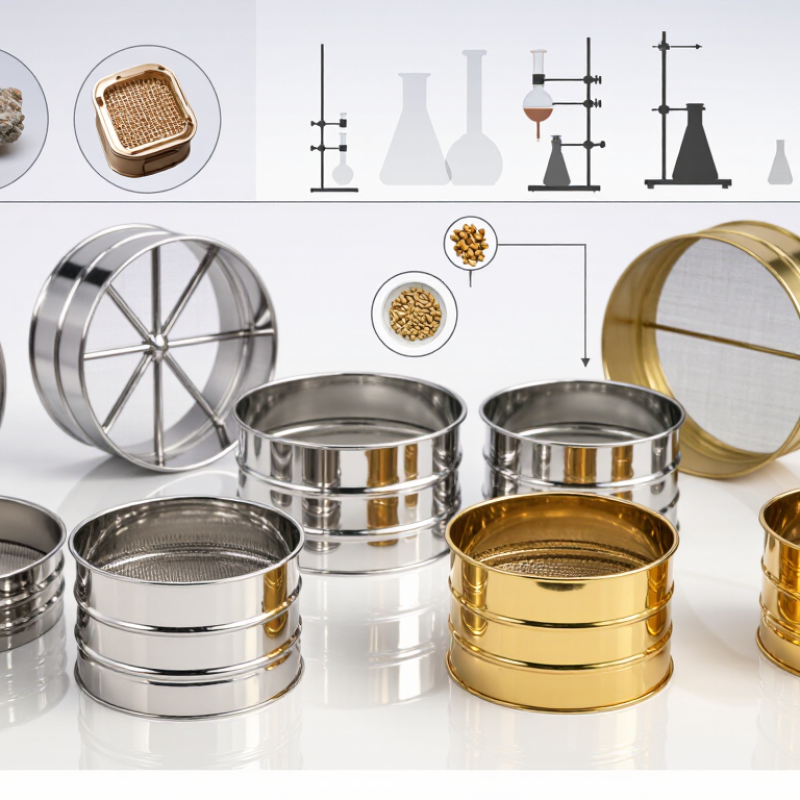
Mesh Sieve Fundamentals: ASTM E11 Sizes from 20 µm to 125 mm
China Top 10 Mesh Sieves Suppliers for Global Buyers
Mesh Sieve Fundamentals: ASTM E11 Sizes from 20 µm to 125 mm
For global buyers, ASTM E11 provides a practical reference for selecting test sieves. Its nominal openings range from very fine 20 µm sizes to coarse 125 mm apertures. A 20 µm sieve can separate fine mineral powder, while a 125 mm sieve handles large aggregate particles. The difference is visible by hand. Fine cloth looks almost solid under normal lighting. Coarse openings resemble a rigid grid.
The aperture size matters more than the mesh number alone. Wire diameter can change the opening and influence material flow. Buyers should specify the ASTM E11 aperture, sieve diameter, frame material, and inspection requirements. Common working diameters include 200 and 300 mm. For powders, finer sieves need careful cleaning and gentle handling. For aggregate testing, strong frames and stable seams are more important. Coarse aggregate needs space to move.
Reliable suppliers should provide dimensional inspection records and clear traceability. Check the certificate date, measured aperture data, and frame identification. I have seen buyers compare only prices, then discover different wire thicknesses. That mistake affects test results. A clean certificate helps, but it cannot replace visual inspection. Hold the sieve against a light source. Uneven tension becomes easier to notice. Even experienced technicians can overlook damaged edges. This is worth admitting. Procurement teams should also confirm packaging, corrosion protection, and replacement availability before shipment.
Supplier Selection Criteria: ISO 3310-1 Accuracy and ASTM E11 Compliance
China Top 10 Mesh Sieves Suppliers for Global Buyers
When evaluating the top ten mesh sieve suppliers, accuracy should lead the discussion. ISO 3310-1 defines key requirements for test sieves, including mesh dimensions, wire diameter, and inspection methods. ASTM E11 provides widely used specifications for sieve construction and performance. A reliable supplier should state which standard applies to each product. Vague claims are not enough.
Ask for current certificates, calibration records, and inspection reports. Check the nominal aperture size, frame diameter, material grade, and certificate traceability. A supplier with technical staff should explain tolerance limits in plain language. During receiving inspection, compare the label with the certificate. Measure selected sieves when possible. Small deviations can affect particle-size results. Paperwork can look perfect, yet practical control may still be weak. That deserves reflection.
Tips: Request a sample before placing a large order. Confirm whether calibration covers the complete sieve or only the mesh cloth. Review packaging quality, because bent frames can change test conditions. Keep records of batch numbers and inspection dates. No checklist is perfect. Recheck critical sizes periodically. A dependable supplier welcomes technical questions, reports limitations honestly, and supports consistent testing across laboratories.
Reference Aperture Sizes for ASTM E11 and ISO 3310-1 Test Sieves
This chart shows commonly used nominal sieve apertures shared by ASTM E11 and ISO 3310-1. Global buyers can use these standardized dimensions when evaluating supplier accuracy, calibration certificates, inspection records, and compliance documentation. Actual conformity should be verified against the latest edition of each standard.
China’s Top 10 Mesh Sieve Suppliers by Materials, Capacity, and Certifications
China’s top ten mesh sieve suppliers differ sharply in materials, production scale, and certification depth.
Stainless steel 304 remains common for food and chemical screening. Stainless steel 316 suits chloride-rich or corrosive environments. Nylon and polyester meshes offer lower weight, but they require tighter temperature controls. Brass is still used in selected laboratory applications, though less often.
Capacity is not just a factory-size claim. Buyers should check monthly output, wire-drawing control, mesh uniformity, and inspection records. The 2024 Grand View Research analysis identifies pharmaceuticals, food processing, and mining as major drivers of industrial screening demand. These sectors need stable apertures, clean edges, and repeatable batch performance. A supplier producing 20,000 frames monthly may still struggle with fine meshes below 100 microns. Numbers can mislead.
Certification separates capable exporters from ordinary workshops. ISO 9001 supports documented quality systems, while ISO 3310-1 and ASTM E11 provide recognized requirements for test sieve dimensions, mesh, and performance. Food-contact projects may also require EU Regulation 1935/2004 or FDA-related material documentation. Testing laboratories should verify calibration certificates, material composition reports, and sieve-size tolerances. Many supplier lists mention certificates without showing scope or expiry dates. That deserves skepticism. Independent sampling remains wise, especially when purchasing mixed mesh sizes, welded frames, or high-volume screening assemblies.
Technical Comparison: 304 Stainless Steel, 316 Steel, Brass, and Nylon Mesh
China Top 10 Mesh Sieves Suppliers for Global Buyers
Technical Comparison: 304 Stainless Steel, 316 Steel, Brass, and Nylon Mesh
Selecting a sieve material depends on the sample, cleaning routine, and working environment. In practical screening work, 304 stainless steel suits dry powders, grains, and general laboratory use. It offers good strength and corrosion resistance at a reasonable cost. 316 stainless steel performs better near salt, moisture, and mild chemical exposure. Its higher molybdenum content improves resistance, but it also increases the purchase price. A common mistake is choosing 316 for every application. That adds cost without always improving results.
Brass mesh provides useful flexibility and a warm, conductive surface. However, it can tarnish and may react with certain materials. Nylon mesh is lightweight, nonmetallic, and gentle on delicate particles. It works well for food, pharmaceutical, and low-abrasion samples when temperature limits are respected. Mesh opening accuracy matters more than appearance. Suppliers should provide aperture tolerance, wire diameter, frame dimensions, and inspection records. A polished frame is not proof of consistent separation.
Tips: Match the mesh to the sample before comparing supplier prices. Test a small batch under real conditions. Check whether the sieve survives washing, drying, and repeated handling. Also, verify packaging quality before international shipment. I would not rely on a catalog photograph alone. Supplier communication can reveal more than a long specification sheet.
Global Buyer Checklist: No. 10 Equals 2.00 mm and No. 200 Equals 75 µm
China Top 10 Mesh Sieves Suppliers for Global Buyers
Global Buyer Checklist: No. 10 Equals 2.00 mm and No. 200 Equals 75 µm
Mesh numbers are not universal size labels without a standard. Under ASTM E11, a No. 10 test sieve has a nominal opening of 2.00 mm. A No. 200 sieve has a 75 µm opening. ISO 3310-1 provides comparable requirements for woven wire test sieves, including aperture tolerances and inspection methods. These figures describe the opening, not the wire diameter. That distinction matters when screening minerals, powders, grains, or laboratory samples.
Check the certificate.
A serious purchasing checklist should request the standard edition, nominal aperture, wire diameter, frame material, and inspection results. Ask whether measurements use calibrated optical equipment or a certified gauge. The American Society for Testing and Materials emphasizes aperture conformity, while laboratory quality systems commonly require traceable calibration records. A supplier may print “200 mesh” on a label, yet offer a different opening under another national convention. This creates false comparability between quotations.
A practical mistake is treating mesh count as a complete specification. It is not. I would compare three samples before placing a large order, especially for No. 200 sieves. Look closely at the frame joint, trapped particles, and visible wire distortion. Even a clean-looking sieve can perform poorly after rough transport. Buyers should also confirm whether “2.00 mm” and “75 µm” refer to nominal openings or measured results. The wording seems minor. It is not.