How to Choose a Perfume Atomizer Supplier for Wholesale?
Choosing a wholesale Perfume Atomizer supplier requires more than comparing unit prices. Packaging affects leakage, spray consistency, perceived quality, and repeat purchasing. The opportunity is substantial. Grand View Research’s Fragrance Market Size, Share & Trends Analysis Report, 2023–2030, describes continued global fragrance-market growth and stronger premium positioning. Circana reported that U.S. prestige fragrance sales increased 12% in 2023, indicating sustained demand for attractive, reliable presentation. These figures do not guarantee every atomizer project will succeed. They do, however, justify disciplined supplier screening.
A dependable supplier should provide material specifications, component drawings, sample approvals, and traceable batch records. Ask whether each bottle survives leak testing, drop testing, and repeated actuator use. Check spray output. A fine mist should feel consistent, not wet or uneven. The Smithers report, The Future of Fragrance Packaging to 2028, also underlines the importance of packaging performance, sustainability, and consumer appeal. However, reports cannot replace factory evidence. ISO 22716 offers cosmetics Good Manufacturing Practice guidance, but it is not a complete packaging qualification standard. That distinction matters when suppliers use compliance language too loosely. Request a pilot order before committing to large volumes. Compare MOQ, lead time, tooling ownership, decoration tolerances, defect policies, and communication speed. Inspect the collar, crimp, dip tube, and cap under bright light. Small flaws become expensive at scale. My practical view is simple: choose the supplier that proves consistency, not merely promises it. This approach may feel slower. It is usually cheaper than managing leaks, returns, and damaged brand trust later.
What Is a Wholesale Perfume Atomizer Supplier?
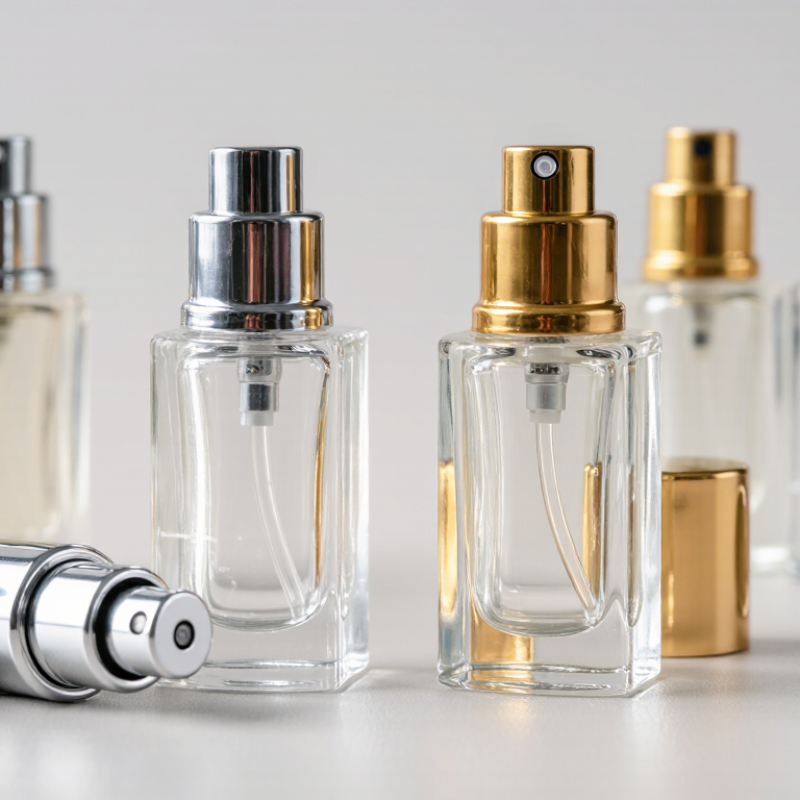
A wholesale perfume atomizer supplier provides spray components in larger quantities to fragrance producers, packaging businesses, and retailers. These suppliers may offer glass or plastic bottles, spray pumps, caps, and protective covers. Some also provide custom colors, printing, or assembly. The exact service varies, so clarify what “wholesale” includes before comparing quotes. A carton of empty bottles is not the same as a finished, assembled atomizer.
A dependable supplier should explain capacity, minimum order quantities, lead times, and quality checks in plain terms. Ask for samples and test the spray pattern, leakage, pump fit, and cap stability. Try the atomizer with the intended formula when possible; a spray that works with water may behave differently with another liquid. Check dimensions against your filling equipment, too. Small mismatches matter.
Request written specifications and confirm how damaged units are handled. Price deserves attention, but it cannot tell you whether each pump will deliver a consistent mist. A low quote may still cost more if defects delay packing. Even careful testing has limits: samples cannot prove that every production batch will match. Agree on inspection criteria before placing a large order, and keep records of sample approvals and batch details.
Which Perfume Atomizer Specifications Match Your Market?
Which Perfume Atomizer Specifications Match Your Market?
The right perfume atomizer depends on how customers carry and use fragrance. For travel-size products, a compact 5–10 ml bottle with a secure cap can fit neatly into a handbag. For daily use, a 50 ml format may feel more practical. Check the spray output, too: a fine, even mist can make application feel controlled, while an inconsistent pump may frustrate buyers. Test samples with your actual formula, since viscosity and ingredients can affect spray performance.
Tips: Compare glass and aluminum options for weight, breakage risk, and shelf appearance. Ask suppliers for pump output per stroke, neck-finish dimensions, and compatibility samples. Confirm that the atomizer does not leak after repeated use and transport. Small details matter.
Market preference is not always obvious. A sleek bottle may photograph well but feel awkward to refill or hold. Gather feedback from target buyers before placing a large order, and verify specifications against a physical sample. I would not rely on a supplier’s standard sample alone; it may differ from the production batch.
How to Evaluate Supplier Quality, Certifications, and Production Capacity
How to Choose a Perfume Atomizer Supplier for Wholesale?
How to Evaluate Supplier Quality, Certifications, and Production Capacity
A reliable atomizer supplier should show more than polished samples. Inspect the bottle, pump, actuator, cap, and crimp separately. Check spray consistency across repeated presses. Test for leakage after storage, transport vibration, and temperature changes. A few attractive samples prove very little. Ask for batch records, inspection standards, and defect limits. Photographs are useful, but physical samples reveal loose collars and uneven spray patterns.
Certifications can support trust, but they require careful checking. Request current certificates, issuing organizations, covered sites, and expiration dates. Quality systems such as ISO 9001 may indicate controlled processes, not perfect products. Ask whether material testing covers the actual glass, plastic, metal, and fragrance-contact parts. Independent reports should include test methods and sample identification. I once treated certification copies as enough evidence. That was too optimistic. Verify every document directly when possible.
Production capacity must match your wholesale schedule. Review machine numbers, mold ownership, daily output, staffing, and maintenance records. Ask how the supplier handles peak orders and component shortages. A factory may promise 100,000 units monthly, yet lack packaging space or inspection staff. Request a pilot run before committing to a large order. Measure output, defect rates, and delivery accuracy. Keep written approval samples. Test before scaling.
How to Compare Pricing, Minimum Orders, and Customization Options
How to Choose a Perfume Atomizer Supplier for Wholesale?
A reliable supplier comparison starts with the complete cost, not the quoted unit price. Ask whether pricing includes the bottle, pump, cap, decoration, packaging, and inspection. Freight and tooling fees can change the final figure quickly. Request a written quotation for several order quantities. A 10,000-unit price may look attractive, but it may not suit your cash flow. Check payment terms, production time, replacement policies, and expected defect rates. Small details matter.
Minimum order quantities should match your sales forecast. Ask about trial orders and mixed colors or capacities. Some suppliers accept a lower first order but charge more per unit. That can still be useful for testing customer response. Customization needs even closer review. Confirm the atomizer’s spray volume, neck size, material, finish, and compatibility with your fragrance container. Request physical samples before approving mass production. Test leakage, spray consistency, cap fitting, and surface scratches.
Customization has hidden limits. A supplier may offer color matching but not every finish or printing method. Confirm artwork requirements, mold charges, sampling fees, and future reorder conditions. Ask how color differences are controlled between batches. I once overlooked this point in a product review, and the visual result was less consistent than expected. That was avoidable. Keep a signed specification sheet with approved samples, tolerances, packaging details, and inspection standards. Clear records make price comparisons more honest and quality decisions more reliable.
How to Verify Samples, Shipping Terms, and Long-Term Reliability
Choosing a perfume atomizer supplier for wholesale requires more than comparing unit prices. Request physical samples before placing a large order. Check the spray pattern, nozzle pressure, cap fit, and bottle stability. Fill several samples with liquid and store them for two weeks. Watch for leaks, clouding, loose parts, or changes in spray quality. Test matters more than polished photos.
Ask for clear shipping terms in writing. Confirm production time, packing methods, carton strength, and the inspection process. Request the exact shipping method, delivery estimate, insurance responsibility, and procedure for damaged goods. A reliable supplier should explain these details without avoiding difficult questions. Check whether replacement parts or defective units are handled fairly. Small details become expensive at wholesale volume.
Long-term reliability appears through consistent communication and records. Ask for recent quality reports, material specifications, and a sample approval document. Compare the approved sample with the first production batch. Differences in color or spray performance should be documented immediately. Keep written agreements, even when communication feels friendly. Trust is useful, but evidence is safer. No checklist is perfect. I would still inspect random cartons after approval, because assumptions can survive several successful shipments. A supplier that accepts reasonable checks is usually easier to work with over time.