How to Choose Safe Ceramic Cooking Ware?
Choosing safe Ceramic Cooking Ware requires more than admiring a smooth finish or attractive color. A bright glaze may look flawless, yet appearance cannot confirm food-contact safety. Check the product description for clear information about materials, glaze composition, temperature limits, and intended use. Reliable manufacturers usually provide traceable details, care instructions, and testing information from recognized laboratories. Vague claims deserve caution.
Look closely at the rim, handles, and cooking surface. Small cracks, pinholes, rough patches, or unexpected odors can signal poor quality or damage. I have learned that a dish surviving one hot oven does not prove it can handle repeated thermal changes. Avoid moving cold ceramic directly into intense heat. Follow the maker’s instructions, and replace pieces with deep chips or spreading cracks. A second look helps.
Safe use also depends on your habits. Match the cookware with the stove, oven, microwave, or broiler only when the manufacturer approves that use. Do not assume every ceramic piece is flameproof. Wash new items before cooking, and inspect them regularly under strong kitchen light. If safety information is missing, choose another product rather than guessing. Independent testing can provide reassurance, but it does not erase poor handling or misuse. No cookware is risk-free. Careful selection, honest product information, and steady inspection create a more dependable cooking routine.
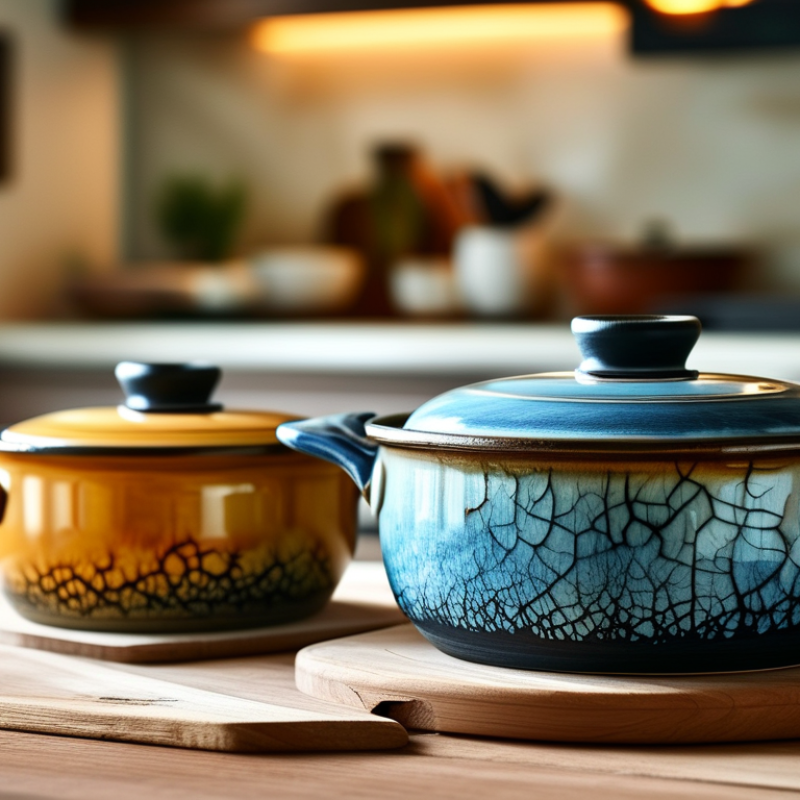
Understanding Ceramic Cookware Materials and Glazes
Choosing safe ceramic cookware starts with understanding its body and glaze. Earthenware is porous and often needs a thicker glaze. Stoneware is denser, while porcelain usually has a highly vitrified body. The glaze creates the smooth, glass-like surface that touches food. It may contain silica, fluxes, and mineral pigments. Lead or cadmium can appear in poorly controlled pigments or glaze ingredients, especially on bright, handmade, or heavily decorated surfaces.
Testing matters more than appearance. ISO 6486-2:2015 evaluates ceramic foodware through acetic-acid extraction, measuring lead and cadmium migration. The U.S. FDA’s Elemental Analysis Manual, Method 4.7, uses laboratory techniques such as ICP-MS for elemental screening. These methods reveal risks that a glossy finish cannot. The World Health Organization’s 2023 lead fact sheet states that no blood lead concentration is known to be without harmful effects. That finding makes casual assumptions uncomfortable, but necessary.
Look for clear food-contact labeling and traceable compliance information. Avoid using chipped, crazed, or strongly acidic-smelling glazed ware for cooking. Tomato sauce, vinegar, and long simmering can increase contact time with the glaze. I would also question vague claims such as “natural ceramic” or “chemical-free.” They describe little about migration safety. A cautious buyer checks the cooking temperature rating, asks for lead-and-cadmium testing, and replaces damaged pieces. Even certified cookware deserves inspection over time.
Checking Food-Safety Certifications and Manufacturer Information
How to Choose Safe Ceramic Cooking Ware?
Ceramic cookware can look perfectly safe, yet appearance cannot confirm food-contact safety. Check the packaging, product page, and underside for clear manufacturer information. A trustworthy maker should provide a legal company name, physical address, contact details, and production location. Batch numbers or traceability codes are useful when questions arise.
Look for food-safety certifications and recent migration test reports. These documents should identify the ceramic item, tested materials, laboratory, test date, and applicable food-contact requirements. A certification logo alone proves little. I once noticed a beautiful bowl with impressive claims but no test reference, which made me reconsider the purchase. Ask whether the glaze and decorative colors were tested, especially on the inner cooking surface. Information may be incomplete, and that deserves attention.
Tips: Compare the certificate with the exact product name and model. Check whether the laboratory appears qualified and independent. Contact the manufacturer if documents are vague or unavailable. Inspect the rim and glaze for chips, pinholes, or uneven patches before use. Avoid assuming that “natural,” “handmade,” or “lead-free” automatically means fully tested. Keep receipts and product details. They may help later.
Inspecting Ceramic Surfaces for Defects, Damage, and Wear
A safe ceramic cooking vessel should have a smooth, continuous surface. Hold it under bright, angled light. Small flaws become easier to see. Run a clean fingertip across the glaze. It should feel even, not sharp or gritty. Look for pinholes, blisters, hairline cracks, and cloudy patches. These defects can collect food residue and may worsen during heating.
Inspect the rim, handles, lid, and base carefully. A tiny chip on the rim can cut skin or expand with repeated temperature changes. Fine crack lines deserve attention, even when the vessel looks attractive. Do not confuse harmless surface variation with damage. A natural color change may be decorative, while a spreading crack is not. I once overlooked a faint scratch beneath a handle, so I now rotate every piece slowly.
Wear matters too. Check whether the glaze has become dull, rough, stained, or visibly thinner in one area. Scratches from metal utensils may not mean immediate failure, but they signal declining surface condition. Stop using cookware with flaking glaze, exposed body material, deep cracks, or a loose handle. Do not test questionable pieces with high heat. Clean them gently, follow the care instructions, and replace them when damage is uncertain. My judgment is not perfect, especially with very fine crazing. When doubt remains, a qualified ceramics professional or the manufacturer’s safety guidance can provide a more reliable assessment.
Matching Cookware Design to Heat Sources and Cooking Methods
Choosing safe ceramic cookware begins with the heat source, not the appearance. I once placed a beautiful ceramic dish on a gas burner and heard a sharp crack. It looked oven-safe, but direct flame heated one small area too quickly. Solid ceramic needs a flame diffuser unless the maker clearly permits stovetop use. On electric coils, choose a flat base that touches the element evenly. Avoid sliding it, because rough contact can damage both surfaces.
Induction requires special attention.
Ceramic alone is not magnetic. The cookware needs an embedded magnetic plate, and the base must remain flat. The U.S. Department of Energy reports that induction transfers about 85% of heating energy to cookware, compared with roughly 32% for gas and 75–80% for standard electric resistance. Efficient heating can also mean faster temperature changes. Use moderate settings first.
Cooking methods matter, too. Thick ceramic suits slow braising and gentle baking, while thin ceramic-coated metal responds faster to sautéing. Never move cold cookware onto a hot burner. Do not pour cold water into a heated dish. The FDA’s 2022 Food Code emphasizes smooth, cleanable food-contact surfaces, so inspect chips, crazing, and worn coatings regularly. I still sometimes overheat an empty pan. That mistake is easy to repeat. Read the temperature limit, handle material, and cleaning instructions before cooking.
Using, Cleaning, and Replacing Ceramic Cookware Safely
How to Choose Safe Ceramic Cooking Ware?
Ceramic cookware is not automatically harmless. “Ceramic” may mean solid glazed clay or metal with a ceramic coating. Check the product description carefully. Choose pieces with intact, food-contact surfaces and clear heat limits. The 2022 FDA Food Code recommends food-contact surfaces that are smooth, corrosion-resistant, and easy to clean. That is a useful safety benchmark.
Use low or medium heat unless the instructions permit higher temperatures. Avoid sudden temperature changes. A hot dish placed on a cold stone counter can crack without warning. Use wooden or silicone utensils, not sharp metal tools. Never heat an empty coated pan for long periods. I have made that mistake. The coating looked fine, but the smell was unpleasant.
Wash ceramic cookware with warm water, mild detergent, and a soft sponge. Avoid abrasive powders and steel wool. Dry it fully before stacking. Inspect the rim, cooking surface, and handles each time. Replace cookware with deep chips, peeling, exposed metal, or hairline cracks. Decorative ceramic dishes require extra caution; some glazes may release lead or cadmium if poorly made or damaged. The World Health Organization reports that lead exposure caused about 1.5 million deaths globally in 2021 and states that no safe level of exposure is known. Do not use unverified pottery for acidic foods, such as tomato sauce or vinegar. Follow the maker’s care instructions, even when they seem overly cautious. Forgetting once is easy. Repeating it is avoidable.
How to Choose Safe Ceramic Cookware
Use a food thermometer when cooking with ceramic cookware. These minimum internal temperatures are based on USDA food-safety guidance.
Choose cookware labeled for its intended heat source, avoid sudden temperature changes, wash according to the care instructions, and replace pieces with cracks, chips, or damaged coatings. Safe cookware does not replace proper food-temperature control.