

Blog
Blog
Blog
How to Choose the Best Granulation Machine?
Choosing the best Granulation Machine requires more than comparing capacity, price, or attractive specifications. The right choice depends on powder behavior, target particle size, moisture sensitivity, production scale, and cleaning requirements. A machine that performs well with pharmaceutical excipients may struggle with fertilizer blends, ceramics, food powders, or recycled materials. That difference matters.
Industry reports show why this decision deserves careful analysis. Grand View Research’s recent pharmaceutical manufacturing equipment studies identify automation, process control, and scalable production as continuing investment priorities. MarketsandMarkets reports similar demand for flexible equipment that improves consistency and reduces material waste. These findings support a practical point: granulation is no longer only a size-reduction step. It affects flowability, compressibility, drying efficiency, packaging performance, and final product quality.
The best equipment should match the process, not merely the brochure. Wet granulation may suit powders needing stronger agglomerates, while dry granulation can reduce thermal exposure and eliminate liquid handling. Roller compaction, high-shear mixing, fluid-bed processing, and extrusion each create different operating conditions. Consider a powder leaving the machine at 2:00 p.m.; if it remains warm, dusty, or uneven, downstream problems may appear hours later.
Look closely.
Reliable selection also requires factory testing, documented validation support, hygienic design, spare-parts availability, and measurable energy performance. ISO quality principles and GMP expectations can guide this review, but compliance alone does not guarantee productivity. Supplier data should be challenged with representative materials and realistic operating loads. No machine is perfect. I would treat impressive throughput claims cautiously, because laboratory results often differ from continuous production. This guide explains how to compare performance, maintenance, controls, and total ownership cost before making a defensible investment.
What Is a Granulation Machine and How Does It Work?
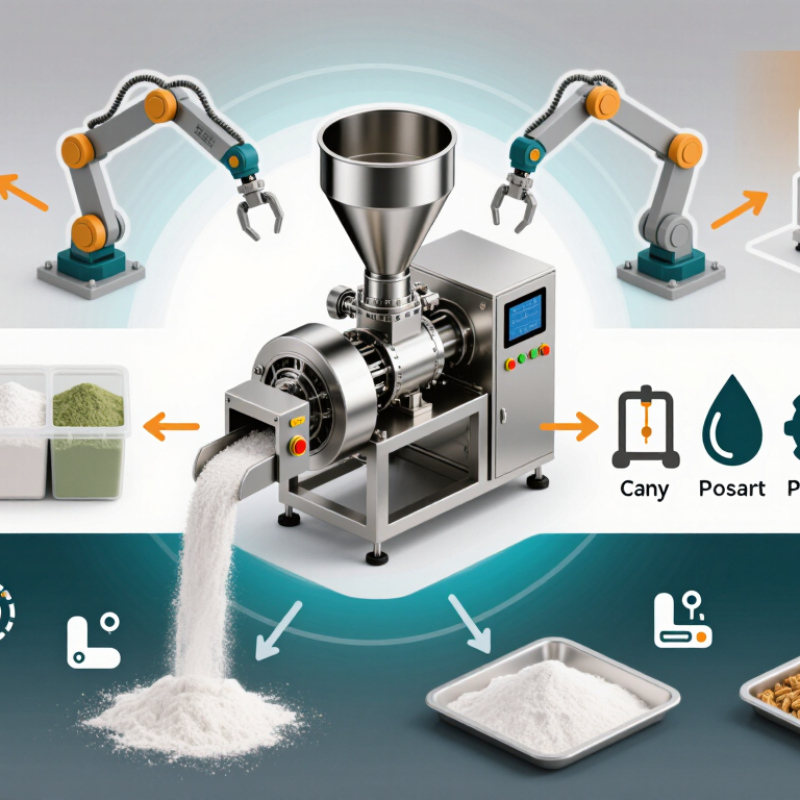
A granulation machine converts fine powders into larger, more uniform granules. This improves flow, reduces dust, and supports consistent filling or compression. The process usually begins with controlled feeding. Blades, impellers, or rollers then combine particles through pressure, moisture, or both. Screens shape the material into a target size.
Wet granulation adds a measured liquid binder before screening and drying. Dry granulation compacts powder without liquid, which suits moisture-sensitive materials. Machine choice depends on formulation behavior, production volume, granule size, and cleaning needs. In practice, operators should examine feeding stability and temperature control, not only the advertised capacity. A machine may process 500 kilograms per hour, yet perform poorly with a sticky powder. That difference matters.
Tips:
Test the actual powder before purchasing. Record moisture content, bulk density, and particle size. Check whether the machine allows quick screen changes and thorough cleaning. Dust extraction should be evaluated during a realistic trial. In regulated production, documented cleaning, validation, and traceability support dependable results. Leave room for adjustment. Granulation is not perfectly predictable. Small changes in liquid rate, pressure, or mixing time can alter hardness and flow. Trial data often reveals weaknesses that specifications hide.
Which Granulation Process Fits Your Material and Product Goals?
How to Choose the Best Granulation Machine?
Which Granulation Process Fits Your Material and Product Goals?
The right granulation process starts with the powder, not the machine. Wet granulation suits powders with weak flow or poor compactibility. A sprayed binder forms larger, stronger granules. Picture a controlled spray meeting a moving powder bed. The moisture level matters greatly. Too much liquid creates sticky lumps and longer drying time. Too little binder produces fragile granules.
Dry granulation fits moisture-sensitive or heat-sensitive materials. Roller compaction uses pressure without adding liquid. It can simplify production, but ribbon density may vary across the roll width. Milling settings then affect particle size and tablet performance. Direct compression may be better when the powder already flows well. It removes granulation steps. However, many formulations do not tolerate that shortcut.
Use measurable product goals before selecting equipment. Define flowability, granule strength, residual moisture, throughput, and cleaning time. The FDA Drug Shortages Task Force report found that manufacturing and quality problems contributed to 62% of drug shortages. That figure supports a practical lesson: process consistency deserves priority over headline capacity. Pilot trials should test the actual formulation, not a similar powder. Market reports can show equipment trends, but they cannot predict your material’s behavior. I would also challenge one common assumption: higher speed is not automatically better. A faster impeller can increase heat, fines, and maintenance demands. Small differences matter.
How to Choose the Best Granulation Machine?
Which granulation process fits your material and product goals? Compare common granulation technologies by their typical suitability for moisture-sensitive materials, heat-sensitive materials, flow and compressibility improvement, and high-dose formulations.
Scores are directional suitability ratings from 0 to 100 based on established process characteristics, not measurements from a specific machine or supplier. Wet and fluid-bed granulation generally improve flow and compressibility effectively, while dry granulation is commonly preferred for moisture-sensitive materials. Melt granulation can reduce liquid use but requires careful temperature control for heat-sensitive formulations.
How to Evaluate Capacity, Particle Size, and Production Efficiency
Choosing a granulation machine starts with measurable production needs, not brochure claims.
Define hourly output, batch size, feed moisture, and acceptable particle-size distribution. Grand View Research’s 2024 pharmaceutical manufacturing equipment report projects market growth of about 6.8% annually through 2030. That expansion reflects pressure for scalable, repeatable processing.
Capacity should include a safety margin of 15–20%, because overloaded equipment often increases heat, fines, and cleaning time.
Particle size needs practical testing.
Ask suppliers for sieve analysis, d10, d50, and d90 results using your actual formulation. A narrow distribution can improve flow and downstream compression, but excessive milling may damage fragile granules.
ASTM E11 sieve specifications help laboratories compare results consistently. The result is not always perfect.
Moisture changes can shift particle size between morning and afternoon runs.
Production efficiency includes yield, changeover duration, energy use, and unplanned stoppages.
PMMI’s 2023 industry trends research identifies labor availability and automation as continuing manufacturing concerns, making simple controls valuable. Track OEE, with availability, performance, and quality measured separately.
A machine producing 500 kilograms per hour may underperform if cleaning takes two hours after every batch.
Request a documented trial, inspect dust control, and compare usable output rather than maximum rated capacity. Small details matter.
What Machine Features Ensure Reliable Operation and Easy Maintenance?
Choosing the best granulation machine requires more than checking output capacity. Reliable operation begins with a rigid frame, balanced rotor, and stable drive system. These features reduce vibration during long production runs. A well-designed machine should also include overload protection and clear fault alerts. Operators need to identify problems before heat, noise, or uneven granules become serious.
Maintenance details matter just as much. Look for tool-free access panels, quick-release screens, and smooth internal surfaces. These features make cleaning faster and reduce material buildup around corners. Sealed bearings, washable contact parts, and easily available replacement components can also shorten downtime. In my experience, simple access often matters more than impressive automation. A complicated system may look advanced, but it can frustrate technicians during a rushed repair. No machine stays perfect.
Tips: Ask to inspect the screen-changing process before purchasing. Check whether one operator can remove key parts safely. Review maintenance records from similar production environments, not only laboratory tests. Listen for excessive vibration during a live demonstration. Also, confirm that sensors are easy to calibrate and their readings are easy to understand. A small display problem can create a large production delay. Choose a machine whose controls, cleaning routine, and service points match your team’s actual skills.
How to Compare Safety, Cost, and Long-Term Value Before Buying?
How to Choose the Best Granulation Machine?
Safety should be the first comparison, not an afterthought. Inspect the guarding around moving parts, access doors, emergency stops, and dust-control connections. Ask for a documented risk assessment and test the safety interlocks during a site demonstration. Operators should clean the machine without reaching into dangerous areas. Clear instructions matter too. A complicated manual can create practical risks.
Cost includes more than the purchase price. Request figures for power use, tooling, routine servicing, spare parts, installation, and operator training. Check how often screens, blades, seals, and bearings normally require replacement. A low-priced machine may become expensive when parts arrive slowly or only one technician can repair it. Compare the expected cost over five years, not five minutes.
Long-term value depends on consistent output and dependable support. Review test data using your actual material, moisture range, and target particle size. Ask whether the supplier can provide training records, maintenance schedules, and references from similar operations. A useful machine should allow quick cleaning, simple adjustments, and safe inspection. I would also question promises that sound too perfect. Real production changes. Materials vary, operators make mistakes, and downtime happens. Leave room for those weaknesses when choosing.
How to Choose the Best Granulation Machine? — How to Compare Safety, Cost, and Long-Term Value Before Buying?
The comparison below uses typical specifications and ownership considerations for common industrial granulation technologies. Actual performance depends on material properties, formulation, production scale, installation standards, and required particle-size distribution.
| Granulation Machine Type | Best-Suited Applications | Typical Throughput | Typical Purchase Cost (USD) | Material and Process Fit | Safety Considerations | Cleaning and Changeover | Energy and Utility Demand | Expected Service Life | Long-Term Value |
|---|---|---|---|---|---|---|---|---|---|
| Oscillating Granulator | Wet or dry sizing of premixed material, pharmaceutical granules, food ingredients, and chemical products. | Approximately 20–500 kg/h, depending on screen size, material, and feed consistency. | Approximately $8,000–$35,000 for a standard industrial unit. | Suitable for relatively soft, damp, or moderately cohesive materials. Less suitable for very hard products or materials that require intensive densification. | Enclosed processing reduces operator contact with dust and moving parts. Dust extraction, guarding, grounding, and emergency-stop controls are important. | Usually easier to clean than high-shear systems. Tool-free or quick-release screens can shorten product changeover time. | Low to moderate | Typically 8–15 years with proper maintenance and timely replacement of screens, blades, and bearings. | Often attractive for small and medium production lines because of the low entry cost and simple operation. |
| High-Shear Wet Granulator | Pharmaceutical, nutraceutical, chemical, and specialty powder formulations requiring intensive mixing and controlled wet agglomeration. | Approximately 50–2,000 kg/h, depending on bowl volume, formulation, and cycle time. | Approximately $35,000–$180,000, excluding major upstream and downstream equipment. | Effective for cohesive powders and formulations that benefit from binder addition, strong mixing, and controlled granule growth. | Requires attention to solvent vapors, dust ignition risk, rotating tools, pressure relief, interlocks, and validated cleaning procedures. Explosion-protection measures may be needed for combustible powders. | More complex than simple sizing equipment. Spray systems, mixing tools, seals, and the bowl require thorough cleaning and inspection. | Moderate to high | Typically 10–20 years when the drive system, seals, mixing tools, and control system are maintained correctly. | High value when consistent granule density and formulation uniformity justify the higher capital and maintenance cost. |
| Dry Roller Compactor | Moisture-sensitive or heat-sensitive powders that must be densified without adding liquid or using a drying stage. | Approximately 10–1,500 kg/h, depending on roll width, compaction force, and powder characteristics. | Approximately $60,000–$300,000, depending on automation and containment requirements. | Well suited to dry granulation and materials that cannot tolerate water or solvent. Granule strength and fines may vary with formulation and compaction settings. | Dust explosion prevention, effective containment, grounding, pressure control, guarding, and properly designed dust collection are essential. | Generally avoids wet cleaning and drying, but powder build-up around rolls, seals, and feed systems must be controlled. | Moderate | Typically 10–20 years, with roll surfaces, hydraulic components, bearings, and seals requiring periodic service. | Can provide strong long-term value by eliminating liquid handling and reducing or avoiding thermal drying costs. |
| Fluid-Bed Granulator | Wet granulation, drying, coating, and particle conditioning where controlled air flow and temperature are required. | Approximately 5–1,000 kg per batch, depending on chamber size, product density, and process conditions. | Approximately $80,000–$400,000, especially when integrated with advanced air handling and containment. | Suitable for products requiring combined granulation and drying. Process performance depends heavily on airflow, inlet temperature, spray rate, and particle behavior. | Requires strong control of dust, static electricity, airflow, temperature, solvent vapors, and filter integrity. Explosion isolation or suppression may be required for combustible materials. | Filter bags, spray nozzles, air-distribution components, and product-contact surfaces require regular cleaning and inspection. | High | Typically 10–20 years, provided that fans, heaters, filters, sensors, seals, and control components are maintained. | Most valuable when one system can combine granulation and drying, reducing transfer steps and floor-space requirements. |
| Wet Mill / Cone Mill | Final wet sizing, de-lumping, and particle-size adjustment after wet granulation or prior to drying. | Approximately 50–2,500 kg/h, depending on screen, impeller, and material characteristics. | Approximately $15,000–$90,000 for a production-scale unit. | Useful for controlling wet-mass or dry-granule size. It is normally a supporting machine rather than a complete granulation solution. | Guarding, interlocks, dust control, grounding, and safe handling of rotating tools are required. Wet operation may reduce airborne dust but does not remove all hazards. | Often allows relatively quick screen and rotor changes. Product-contact areas should be accessible for inspection and sanitation. | Low to moderate | Typically 8–15 years, depending on screen wear, rotor condition, bearings, and frequency of operation. | Good supporting value when precise particle sizing is needed after another granulation step. |
Buying guidance: Select the machine based on the required granule size, moisture tolerance, batch or continuous production method, dust classification, cleaning standard, available utilities, and expected annual operating hours. A lower purchase price may not provide the lowest total cost of ownership if it increases labor, cleaning time, energy use, downtime, or replacement-part expenses.