How to Choose the Best Outdoor Storage Cabinet
An Outdoor Storage Cabinet can make a patio, balcony, or garden shed feel more organized, but choosing one involves more than matching its color to the fence. Start with what it needs to hold: a hose and hand tools require less space than tall cushions, potting supplies, or bulky equipment. Measure the items and the cabinet’s intended spot, including room to open its doors. A cabinet that fits on paper may still block a walkway.
Weather exposure matters. Resin resists moisture and is often easy to clean, while treated wood can suit a natural-looking garden but may need periodic care. Metal can feel sturdy, yet its finish and ventilation deserve close attention in damp conditions. Small details matter. Check for a raised base, secure hinges, clear assembly instructions, and shelves rated for the loads you plan to store. If rain blows against one side of your yard, place the cabinet with drainage and access in mind rather than assuming every model is fully weatherproof.
The best choice balances capacity, durability, access, and upkeep—not just the lowest price or biggest advertised volume. Think about whether children or pets can reach the contents, and whether the doors stay usable when the cabinet is full. That sounds simple. Still, product descriptions can leave important questions unanswered, so review dimensions, material details, warranty terms, and independent owner feedback before buying. No cabinet is maintenance-free, and even a well-made one may age faster in harsh sun or persistent moisture. A little measuring now can prevent an awkward return later.
Identify What You Need to Store and How Much Space It Requires
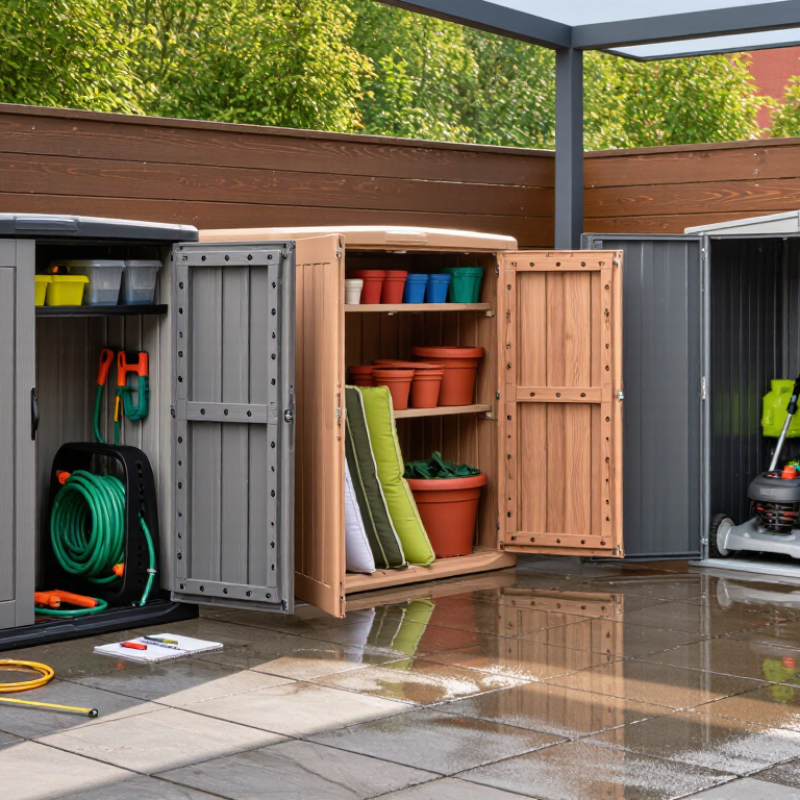
Before choosing an outdoor storage cabinet, list what you plan to store. Include bulky items such as folded chairs, garden tools, or cushions, plus smaller supplies that need shelves or bins. Measure the tallest and widest items, including handles. Then check their depth; a cabinet can look roomy but still fail to fit a long spade. Allow extra space for easy access, not just a tight fit.
Tips: Group items by use. Measure the largest object twice. Note which supplies need frequent access. A quick sketch of the cabinet’s interior can reveal wasted corners or shelves placed too low.
Next, measure the intended spot, including doorways, paths, and nearby walls. Leave room to open the doors and remove items without dragging them across the ground. Check the cabinet’s usable interior dimensions, since thick walls and shelves reduce capacity. Think about seasonal changes, too: wet cushions or bulky winter gear may need more space than expected. It is easy to overestimate how neatly everything will stack. Recheck your list after a week of normal use; the items you reach for most may deserve the easiest-to-reach shelf.
Compare Cabinet Materials, Construction, and Weather Resistance
Cabinet materials matter most where rain, sun, and ground contact meet. Resin cabinets resist rot and rust, but thin panels can flex under a heavy lid or strong wind. Look for UV-resistant material and reinforced corners; color fading alone does not reveal structural damage. Steel offers rigidity, yet scratches can expose bare metal to moisture. Aluminum avoids red rust, though thin frames may dent. Wood feels sturdy, but exposed end grain absorbs water unless regularly sealed. Details matter.
Weather resistance depends on construction, not just material labels. Inspect roof overhangs, door seals, raised feet, drainage paths, and fasteners. A cabinet sitting directly on wet paving may trap water underneath. ASTM D4329 describes a fluorescent UV exposure test for plastics; ASTM B117 covers salt-spray testing for metals. These methods help compare test results, but neither guarantees years of outdoor service. Check the actual test duration and reported damage. NOAA recorded 28 U.S. weather and climate disasters with losses above one billion dollars in 2023, a reminder that local exposure can be severe. For a coastal patio, prioritize corrosion-resistant hardware and sealed joints; beneath a tree, check roof loading and debris buildup. Measure the site, too. A cabinet can be weatherproof and still admit water through a poorly aligned door.
Choose the Right Size, Layout, and Storage Features
How to Choose the Best Outdoor Storage Cabinet
Measure the available space, then check the cabinet’s interior dimensions. A wide frame can still feel cramped inside. Allow room for doors to open and for you to reach the back without moving a planter. Measure the walkway, too. A cabinet that blocks a gate becomes annoying fast.
Match the layout to what you actually store. Tall tools need vertical clearance, while small pots and gloves stay easier to find on shelves. Adjustable shelves help when your needs change, but check how much weight each shelf can hold. I would not rely on a product photo alone; shelf spacing often looks roomier than it is. Bring a tape measure to the items you plan to store.
Weather protection matters. Look for a sturdy, weather-resistant body, a close-fitting lid or doors, and a raised base that helps keep stored items away from standing water. Small details count. Ventilation can reduce trapped moisture, while a simple latch keeps doors from swinging open in wind. Check that the cabinet sits level on your patio or garden surface. I once overlooked a slight slope, and the doors never closed quite right. It was fixable, but worth checking beforehand.
Evaluate Security, Ventilation, and Ease of Assembly
A good outdoor storage cabinet should protect more than its contents from rain. Check how the doors close, whether the hinges feel sturdy, and if the lock can be reached without awkward bending. A simple hasp may deter casual access, but it is not a substitute for anchoring the cabinet. On a windy patio, secure it to a stable surface and keep valuable items out of sight. Small details matter.
Ventilation helps limit trapped moisture, especially when damp garden tools go inside. Look for vents placed high and low, where air can move through without exposing the interior to direct rain. I would also check for a raised base or drainage gaps. After a wet week, open the doors and inspect the corners. A cabinet can still smell musty. That’s easy to miss in a showroom.
Assembly affects how well the cabinet works later. Read the instructions before unpacking, then sort the screws and panels on a flat surface. Door alignment often depends on tightening the frame evenly, not forcing one corner into place. If the ground slopes, level the base first; otherwise, the doors may scrape or fail to latch. Allow extra time. Even clear instructions can leave you guessing about one small bracket.
Check Placement, Maintenance, and Long-Term Value
Before buying an outdoor storage cabinet, study the actual spot after rain. A level, well-drained surface helps keep doors aligned and the base away from standing water. Leave room to open the doors, and check whether roof runoff hits the cabinet. Strong afternoon sun can fade finishes and heat stored items; exposed corners may also catch wind. Measure twice. A cabinet that barely fits can make everyday access frustrating.
Material choice affects maintenance and long-term value. The USDA Forest Products Laboratory’s Wood Handbook notes that wood decay fungi generally need moisture content above about 20%; persistent dampness deserves attention, even with treated wood. Inspect seals, hinges, and fasteners each season, and clear leaves from the base. Houzz’s 2023 U.S. Houzz & Home Study reported median outdoor-project spending of $3,000 in 2022, up 13% year over year. That figure covers outdoor projects broadly, not cabinets, but it suggests homeowners are investing in these spaces. Compare purchase price with upkeep, replacement parts, and expected exposure—not appearance alone.
Tips: Put a small level on the base before assembly. Keep a few inches of clearance from walls for airflow. Check the manufacturer’s care guidance; repainting or tightening hardware may be needed sooner than expected. I’d reconsider any site that stays damp after a dry day.

