
Blog
Blog
Blog
How to Choose Sofa Upholstery for Global Sourcing?
Choosing sofa upholstery for global sourcing requires more than matching a color card to a showroom mood. The fabric must perform across homes, climates, cleaning habits, and shipping conditions. A soft boucle may look luxurious in a sample room, yet collect lint quickly in a busy family lounge. A coated fabric may resist spills, but feel cold against the skin. These differences matter when one sofa enters several markets.
Experienced sourcing teams usually begin with the sofa’s real use. They assess abrasion resistance, seam strength, pilling, colorfastness, cleanability, and flame performance requirements. They also examine backing quality, roll width, dye-lot consistency, and lead times. Ask suppliers for technical datasheets and recent laboratory reports. Then compare those documents with physical samples. Paperwork helps. Hands-on testing reveals more.
Small details often expose larger risks.
Rub the fabric repeatedly. Spill water, coffee, and a mild cleaner. Check the surface after drying. A supplier’s test result may follow a controlled method, while a customer’s home rarely does. Regional standards and labeling obligations should be verified with qualified local professionals before purchase. Requirements can differ between countries and product categories. Do not assume one certificate covers every destination.
Cost remains important, but the cheapest sofa upholstery can create replacement claims, inconsistent quality, or delayed launches. A stronger decision balances performance, appearance, supplier reliability, and total landed cost. No material performs perfectly. Even careful recommendations need review when usage, regulations, or climate changes. That honest limitation supports better sourcing decisions.
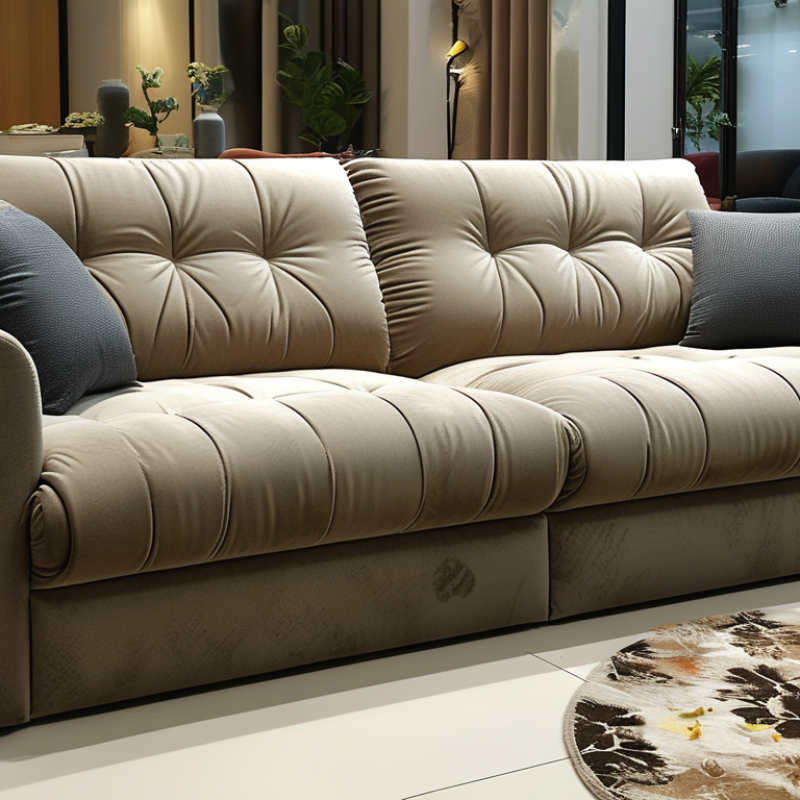
Understanding Sofa Upholstery Materials and Performance
How to Choose Sofa Upholstery for Global Sourcing?
Understanding Sofa Upholstery Materials and Performance
Sofa upholstery affects comfort, appearance, durability, and long-term maintenance. Material selection should begin with the sofa’s expected environment. Polyester blends usually offer stable color, easy cleaning, and dependable abrasion resistance. Linen feels cool and natural, but it can wrinkle and show wear sooner. Wool provides warmth and resilience, although its higher cost may limit some projects. Synthetic leather is easy to wipe, yet heat and humidity can accelerate surface cracking.
Do not judge fabric from a small color swatch alone. Test hand feel, seam slippage, pilling, tear strength, and colorfastness. For commercial seating, abrasion results matter, but they are not the whole story. A fabric can pass laboratory testing and still feel uncomfortable. A practical mistake is choosing maximum durability while ignoring breathability. I would also examine performance after cleaning, sunlight exposure, and repeated sitting. Slightly imperfect samples often reveal more than polished presentations.
Tips: Request production samples, not only showroom cuts. Rub the fabric with denim. Test a small spill. Check backing adhesion and stitch behavior. Confirm applicable flammability and chemical requirements in each target market. Keep test records with fabric composition, weight, finish, and supplier declarations. Ask difficult questions early. Some answers remain uncertain.
Matching Upholstery Choices to Design, Climate, and Usage
How to Choose Sofa Upholstery for Global Sourcing?
Matching upholstery to design, climate, and usage prevents expensive sourcing mistakes.
Start with the room’s visual language. Linen blends suit relaxed interiors, while tightly woven polyester supports sharper, commercial designs. Texture matters too. A coarse weave can collect dust in dry regions. A smooth surface may feel sticky in humid weather.
Climate changes performance. In hot, humid markets, choose breathable fabrics with moisture-resistant finishes. Avoid coatings that feel plastic-like against skin. In colder regions, wool blends can add warmth and visual depth. Textile Exchange’s Materials Market Report 2024 records 124 million tonnes of global fiber production in 2023. Polyester represented about 57 percent. This scale supports availability, but it should not decide every specification. Supply can be easy. Comfort may still fail.
Usage must guide testing. A family sofa needs abrasion resistance, cleanability, and color stability. A hotel sofa needs stronger seam construction and faster maintenance. Request Martindale abrasion results, pilling grades, lightfastness data, and flammability documentation. Test the fabric on a full-size sample. Small swatches hide stretching, shine, and seam distortion. I have seen attractive upholstery fail after repeated cleaning. That mistake is avoidable, though not always. The U.S. EPA’s furniture waste assessments also show why longer product life deserves attention. Design for repair, replaceable covers, and responsible fiber choices. A perfect fabric rarely exists. A carefully matched one usually performs better.
Comparing Quality, Certifications, and Supplier Capabilities
How to Choose Sofa Upholstery for Global Sourcing?
When sourcing sofa upholstery, quality starts with clear performance requirements. Request abrasion results, colorfastness data, seam-slippage tests, and fabric weight. These details reveal more than attractive sample photographs. A dense weave may resist daily friction, while a soft finish can hide weak backing. I have found that testing a production sample is safer than trusting a showroom swatch. Fabric can change after finishing.
Certifications deserve careful checking. Ask for the certificate number, issuing body, validity period, and covered product scope. A certificate may cover the factory, not the upholstery itself. Check whether test reports match the exact fiber blend, dye lot, and finishing process. Independent laboratory reports add confidence, especially for chemical restrictions and flammability requirements. Requirements differ by destination market. Do not assume one document satisfies every customer or region.
Supplier capability also affects long-term reliability. Review machinery, monthly capacity, quality checkpoints, and batch traceability. Ask how the supplier handles shade variation, damaged rolls, and late corrective actions. A capable team should provide pilot samples, inspection records, and realistic lead times. It should also explain minimum order quantities without vague promises. Visit the facility when possible, or arrange a documented remote audit. Ask for evidence. Communication matters, but it cannot replace process control. I once underestimated small color differences; they became obvious across a large sofa shipment. That mistake still influences how I approve upholstery today.
Evaluating Costs, Samples, and Minimum Order Requirements
Choosing sofa upholstery for global sourcing starts with landed cost, not fabric price alone.
Request a quotation that separates fabric, cutting, stitching, packing, freight, and inspection fees. A low unit price can hide expensive color variation or high replacement rates. Ask suppliers for recent production records, test methods, and clear payment terms. In my sourcing reviews, a durable polyester blend often beats cheaper fabric after three shipping cycles. Still, that is not universal. Climate, sofa design, and customer use change the result.
Treat samples as working evidence, not decoration. Order a full-size upholstery panel and one sewn cushion cover when possible. Check shade under daylight, showroom LEDs, and warm household lighting. Rub the surface repeatedly, inspect seam slippage, and spill a measured spoonful of water. Record every result with photos and dates. A sample may pass while bulk fabric differs. I have seen this happen. Approve a signed reference sample, color tolerance, composition, width, weight, and testing standard before production. Avoid vague phrases such as “premium quality.”
Tips:
Compare three landed-cost scenarios: trial order, standard order, and repeat order. Confirm the minimum order quantity by color, not only by total meters. If the MOQ is high, ask about stock fabric, shared dye lots, or a paid pilot run. Calculate leftover rolls and storage costs. A smaller MOQ may cost more per meter, yet reduce cash risk. Negotiate inspection rights before payment. Keep one retained sample for future claims. I sometimes overvalue laboratory results and undervalue handling comfort. Buyer feedback corrects that mistake.
Managing Testing, Logistics, and Global Sourcing Risks
How to Choose Sofa Upholstery for Global Sourcing?
Sofa upholstery sourcing is not only a design decision. It is a testing and logistics decision. Textile Exchange’s 2024 Materials Market Report states that polyester represented about 57% of global fiber production in 2023. That figure matters because synthetic fabrics may offer durability, but they still require checks for colorfastness, abrasion, seam slippage, and restricted substances. Request test reports from an accredited laboratory. Match each test to the destination market. A fabric can pass one requirement and fail another.
Global shipping adds uncertainty. UNCTAD’s Review of Maritime Transport 2024 reports that more than 80% of world trade by volume moves by sea. Moisture, long transit times, compression, and container temperature changes can damage upholstery rolls. Use moisture barriers, corner protection, and clear roll labels. Confirm packaging performance with a real shipment trial. I have seen approved fabric arrive with crushed edges. Laboratory success does not guarantee delivery quality.
Tips: Keep retained samples. Record batch numbers. Test darker colors separately. Use two qualified suppliers when volumes justify it. Do not rely on inspection photos alone. A small pilot order may expose problems early. This costs more today, but rushed replacement orders cost more later. Even careful sourcing has blind spots. Home use varies, and no report predicts every customer’s sofa. Review failures honestly, then adjust specifications, packaging, or supplier controls.
Related Posts
-
2026 Top Sofa Upholstery Types for Global Buyers
-
Understanding the Challenges with Choosing the Right Sofa Material
-
Solutions for Selecting the Perfect Sofa Fabric Material for Your Home
-
The Ultimate Guide to Choosing Eco Friendly Sofa Fabric for a Sustainable Home
-
Choosing the Perfect Sofa Fabric for Your Home A Comprehensive Guide to Styles and Durability
-

Top Outdoor Material Tips for Better Durability and Comfort?