

Blog

blog

Blog

blog

Blog

blog

How to Choose the Best Embroidery Pattern Fabric?

Choosing the best fabric can determine whether an embroidery project looks refined or frustrating. The material affects stitch definition, tension, durability, and comfort during long stitching sessions. Embroidery Pattern Fabric is not one universal product. Its ideal choice depends on your design, thread, needle, and finishing method.

A tightly woven cotton works well for detailed motifs and everyday decorative pieces. Linen creates a softer, more textured appearance, but its loose structure may challenge beginners. Evenweave fabric supports counted designs because its threads form consistent squares. Check the weave under bright light. Uneven gaps can distort geometric patterns. Run your fingertip across the surface. It should feel stable, not overly slippery. Hold a small sample in an embroidery hoop. Watch for puckering around the edges.

Your thread choice matters too. Thick floss can overwhelm lightweight fabric, while delicate thread may disappear on heavy cloth. Test two or three stitches before cutting the full piece. This simple step prevents expensive mistakes. Prewash washable fabrics according to their care labels, especially when the finished item may be cleaned later. Shrinkage can change the design’s proportions. Do not assume every natural fabric behaves identically. Cotton from different mills may have noticeably different tension and softness.

Experienced stitchers often compare samples rather than relying on appearance alone. A fabric that looks beautiful in a shop may feel difficult beneath the needle. There is no perfect choice. Your hands, pattern, and final use must guide the decision. Even careful testing can miss something. That is part of learning. Reliable fabric selection comes from observation, small experiments, and honest adjustment.
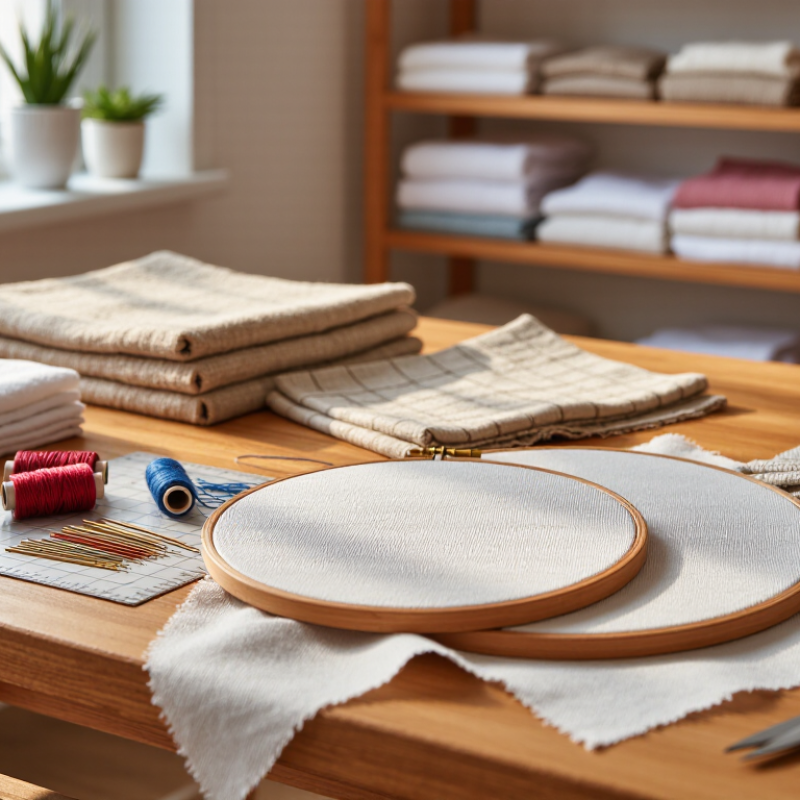
How to Choose the Best Embroidery Pattern Fabric?

Understanding Embroidery Pattern Fabric and Its Main Types

How to Choose the Best Embroidery Pattern Fabric?

Embroidery pattern fabric is the base that supports every stitch. Its weave, weight, and surface affect accuracy, tension, and durability. Evenweave fabric suits counted patterns because its threads form consistent squares. Aida fabric offers visible holes and works well for beginners. Linen provides a refined texture, but its uneven slubs can shift measurements. Cotton canvas feels firmer and handles dense decorative designs. Felt is softer, though it may stretch under heavy stitching.

The Textile Exchange 2024 Materials Market Report recorded global fiber production at about 124 million tonnes in 2023. Polyester represented approximately 57 percent, while cotton accounted for about 19 percent. These figures explain why cotton and synthetic blends remain common in embroidery supplies. Cotton usually gives better needle control and breathability. Polyester blends resist wrinkles and moisture, but they can feel less natural. Choose based on the finished object, not only the pattern.

Check the fabric under bright light. Sparse areas reveal weak weaving. Hold a ten-centimeter section and count the threads. Even counts improve design placement. For washable projects, test a small piece first. I still misjudge shrinkage sometimes. Prewashing can prevent distorted motifs, but it may soften the surface. A tightly woven fabric is safer for satin stitches. A looser weave may suit textured stitches, yet it needs stabilizing. Data reports offer useful context, but hands-on testing remains essential.

Assessing Fabric Weight, Weave, Texture, and Thread Compatibility

How to Choose the Best Embroidery Pattern Fabric?

Fabric weight controls stitch stability. Lightweight cotton can pucker under dense satin stitches. Medium-weight linen or cotton canvas usually supports clearer outlines. I test a 10-centimeter fabric square before starting. Textile Exchange’s 2024 Materials Market Report recorded 124 million metric tons of global fiber production in 2023. Cotton represented about 22%, while polyester reached roughly 57%. Fiber content matters because blended fabrics may stretch differently during hooping. ASTM D3776 provides a recognized method for measuring fabric mass per unit area. Still, weight alone cannot predict embroidery performance.

Weave affects needle movement and pattern accuracy. A close plain weave gives even holes and controlled thread placement. Loose weaves create visible gaps, especially with thin floss. Twill offers strength, but its diagonal structure can slightly distort tiny motifs. Texture also changes friction. Smooth surfaces suit detailed lettering; napped surfaces can hide short stitches. Thread compatibility needs practical testing. Cotton floss feels balanced on natural fabrics, while metallic thread often needs larger needle eyes and slower stitching. My own mistake was choosing a beautiful textured fabric that swallowed the design. It looked good in the hoop. It failed after washing.

Tips: Rub the fabric gently between your fingers. Check stretch, loose fibers, and surface drag. Stitch a small motif, wash it, then inspect puckering, color movement, and thread tension. Do not trust appearance alone. A fabric sample is cheaper than repairing a finished panel.

How to Choose the Best Embroidery Pattern Fabric? - Assessing Fabric Weight, Weave, Texture, and Thread Compatibility
Fabric Type Typical Weight Weave Structure Surface Texture Stability for Embroidery Compatible Threads Recommended Stitch Types Best Uses
Medium-Weight Cotton 120–180 g/m² Plain weave with balanced horizontal and vertical threads Smooth, matte, and easy to mark Very good Stranded cotton, pearl cotton, rayon, and wool-blend threads Outline, satin, stem, chain, and counted stitches General hand embroidery, samplers, tote bags, and clothing panels
Linen 120–250 g/m² Plain weave with visible, often slightly irregular yarns Natural slubs and a crisp, lightly textured finish Very good Stranded cotton, linen thread, silk, and pearl cotton Cross-stitch, pulled thread, surface embroidery, and blackwork Decorative panels, heirloom pieces, napkins, and fine artwork
Evenweave Fabric 100–180 g/m² Uniform thread count in both directions Regular grid with a smooth to lightly textured surface Excellent for counted work Stranded cotton, silk, metallic accents, and fine wool Cross-stitch, blackwork, pulled thread, and counted patterns Precise geometric designs and detailed counted embroidery
Canvas or Duck Cloth 250–450 g/m² Dense plain weave made with thicker yarns Firm, coarse, and highly durable Excellent Pearl cotton, wool, tapestry yarn, and heavy cotton thread Needlepoint, bold outlines, appliqué, and decorative motifs Bags, wall hangings, cushions, and outdoor-use accessories
Denim 250–450 g/m² Diagonal twill weave with a firm construction Distinct twill ribs and a sturdy, slightly rigid hand Excellent Embroidery cotton, pearl cotton, wool, and polyester thread Chain, satin, stem, blanket, and bold free-motion stitches Jackets, jeans, backpacks, caps, and workwear details
Felt 150–400 g/m² Non-woven, compressed fiber structure Soft, dense, and slightly fuzzy with no visible weave Very good Wool yarn, pearl cotton, stranded cotton, and metallic thread Appliqué, blanket stitch, whip stitch, and decorative outlines Ornaments, brooches, toys, patches, and craft projects
Silk 40–120 g/m² Usually plain or satin weave with fine, closely packed threads Smooth, lustrous, and sometimes slippery Moderate Silk thread, fine stranded cotton, and lightweight metallic thread Long and short, satin, couching, and fine outline stitches Luxury garments, accessories, decorative panels, and fine art
Velvet 180–350 g/m² Woven base with a raised pile surface Soft, plush, and directionally reflective Moderate to low Silk, rayon, fine cotton, and couching threads Couching, outline, bead attachment, and simple surface stitches Eveningwear, decorative accessories, and statement embellishment
Knit Jersey 140–250 g/m² Looped knit structure with significant stretch Soft, flexible, and smooth to lightly ribbed Low without stabilization Polyester embroidery thread, wool, and flexible cotton thread Chain, blanket, running, and simple outline stitches T-shirts, sweatshirts, babywear, and stretch garments
Aida Cloth Typically 110–180 g/m² Open, block-weave structure with clearly defined holes Even square grid designed for counted stitching Excellent for cross-stitch Stranded cotton, pearl cotton, and specialty counted-work threads Cross-stitch, blackwork, and other counted techniques Beginner projects, samplers, ornaments, and framed designs
Fabric weight values are typical ranges and may vary according to fiber content, finishing, thread count, and manufacturing method.

Matching Fabric Choices to Embroidery Techniques and Design Details

How to Choose the Best Embroidery Pattern Fabric?

Choosing embroidery fabric starts with the stitch, not the color. For satin stitch, use firm, tightly woven cotton or linen. Its stable surface keeps parallel threads smooth and evenly packed. For cross-stitch, even-weave fabric makes counting simple and reduces misplaced motifs. A small swatch matters. I test the needle, thread tension, and hoop pressure before cutting fabric.

Delicate details need different support. Fine outlines and tiny French knots work well on lightweight linen, but the fabric can distort under repeated needle passes. Add a soft stabilizer when the design has dense areas. For raised embroidery, choose fabric with enough body to hold padding without looking stiff. Wool, canvas, and heavier linen can support textured petals, leaves, or lettering. Yet thick fabric may hide short stitches. That trade-off is easy to miss.

Thread choice changes the result too. Metallic or tightly twisted thread slides better through a smooth weave than a loose, fuzzy surface. Open-weave fabric suits bold motifs, but small curves may look jagged. I once chose beautiful loose linen for detailed lettering; the letters softened after washing. Now I wash and dry-test fabric first. It takes extra time, and I still occasionally choose poorly. That failure reveals more than a perfect sample.

Testing Fabric Stability, Stitch Visibility, and Ease of Handling

How to Choose the Best Embroidery Pattern Fabric?

Fabric stability, stitch visibility, and handling comfort should guide every embroidery choice. Textile Exchange’s 2024 Materials Market Report places cotton at roughly one-fifth of global fiber production. Its popularity is understandable: cotton shows printed patterns clearly and accepts hand stitches well. Yet, not every cotton fabric behaves reliably.

Test a 10-centimeter fabric square before cutting. Mark a small grid, then pull it gently in both directions. If the lines distort, the weave may need stabilizing. AATCC TM135 measures dimensional change after laundering, so prewash fabric when shrinkage matters.

For dense designs, hold the sample near a window. Loose weaves reveal gaps between stitches, while tightly woven surfaces sharpen outlines. I often choose medium-weight fabric for beginners, but that choice is not perfect. Very stable fabric can feel stiff under the needle.

Tips:

Make a five-centimeter test motif. Count how many stitches disappear into the surface. Try satin stitches, backstitches, and French knots. Notice needle resistance, thread drag, and puckering. ASTM D5034 tensile testing measures fabric breaking strength, but home embroidery needs a gentler practical check. Tug the sample by hand and inspect the needle holes. If holes remain visible, reduce thread tension or add a backing layer. A fabric that looks beautiful may still handle poorly after repeated stitching.

Selecting the Best Fabric for Your Project and Care Requirements

Choosing the best embroidery fabric starts with the project’s purpose. Cotton is practical for beginners and holds small, even stitches well. Linen offers a natural texture, but its loose weave demands steadier tension. Evenweave fabric helps counted patterns stay accurate. For dense designs, choose a firm fabric that will not sag inside the hoop.

Care requirements should guide the fabric choice before stitching begins. Prewash washable fabric in the same way you plan to clean the finished piece. This reveals shrinkage and removes sizing that may affect thread tension. Test a small corner with water and mild detergent. Some dyes bleed unexpectedly. Air-drying is usually gentler than high heat, especially for linen and delicate threads.

Think about where the finished work will live. A frequently handled cushion needs stronger fabric than a framed sampler. For clothing, select a flexible base and avoid overly heavy stitches. Stabilizing the reverse can reduce stretching, though too much backing may make the fabric stiff. I once ignored this balance and created a beautiful panel that felt unpleasantly rigid. That mistake still influences my choices.

Keep the fabric clean while stitching. Wash your hands and store the project away from sunlight. Before committing to a full pattern, stitch a small sample. Check its surface, softness, and response to washing. The perfect fabric is not always the most expensive one. It is the one that suits the design, your skill, and the care you can realistically provide.