How to Choose the Best Moisturizing Dish Soap Supplier?
Choosing a supplier for Moisturizing Dish Soap involves more than comparing prices or attractive labels. The right partner should deliver dependable cleaning performance while helping the product feel comfortable during routine use. That balance depends on the formula, manufacturing consistency, packaging, and clear communication. Small details matter.
Start by requesting a product specification, ingredient information, and samples from potential suppliers. Test the soap on greasy plates, glassware, and cookware, then note how easily it rinses and whether its scent feels too strong. Pay attention to the hand feel after repeated washing, but avoid treating a pleasant sample as proof of long-term quality. A sample may not represent every production batch. Ask how the supplier checks consistency, manages quality issues, and handles changes to ingredients or packaging.
Commercial details deserve equal scrutiny. Confirm minimum order quantities, production lead times, packaging options, and the supplier’s ability to meet your forecast. Ask for evidence supporting claims such as plant-derived ingredients or recyclable packaging, rather than relying on marketing language alone. Clear answers are a useful sign of a professional relationship. Vague promises are not. A supplier may offer an appealing price yet struggle with delivery or communication, so weigh the full picture. No checklist removes every risk, and I would revisit my assumptions after reviewing samples and documentation. The best choice is the supplier whose product, evidence, and service fit your customers and your business needs.
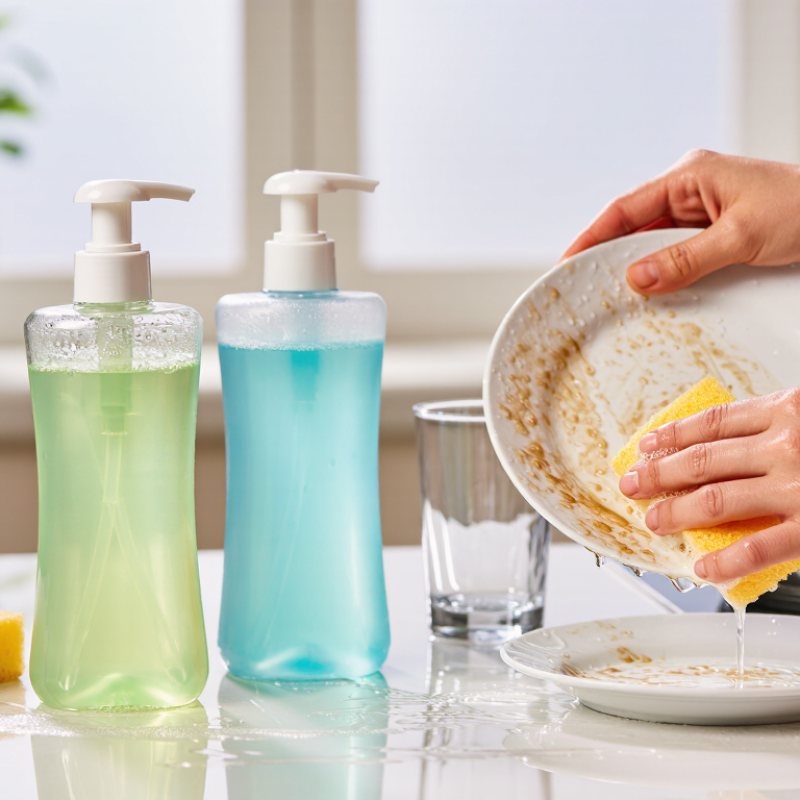
Define Cleaning, Skin-Feel, and Moisturizing Targets Before Supplier Screening
Before contacting suppliers, define what “clean” means in your kitchen. Set a practical soil test using the same greasy plates, water temperature, and rinse method each time. Decide whether one wash should handle cooking oil, dried sauce, or both. A supplier’s foam claims are not a cleaning result.
Next, describe skin-feel in observable terms. Note tightness after repeated washing, fragrance strength, and whether hands feel slippery after rinsing. “Gentle” is too vague. Test a sample during a normal dishwashing session, not just a quick hand test.
Set moisturizing expectations carefully.Dish Soap is rinsed away, so it should not be assumed to replace hand cream or prevent irritation. Compare how hands feel after equal washing periods, and review formula information and available safety documentation. Record water hardness, dose, and wash duration; these details can change results. Bring your target sheet to supplier discussions and ask how each formula performs against it. Request consistent samples and clear testing methods. Small differences matter. You may find your first target was unrealistic, especially when stronger grease removal leaves a drier feel. Revise the priorities, then screen suppliers using the same measures.
Check Surfactant Biodegradability Against the EU’s 60% in 28-Day Requirement
How to Choose the Best Moisturizing Dish Soap Supplier?
Check Surfactant Biodegradability Against the EU’s 60% in 28-Day Requirement
A dependable supplier should provide test evidence for the surfactants used in its dish soap. Under EU detergent rules, surfactants must meet ultimate aerobic biodegradability criteria, including 60% biodegradation within 28 days under applicable test methods. Ask for the actual report, not just a sales claim. Not just a logo.
Check that the report identifies the surfactant, test method, laboratory, and result. Recognized OECD 301 methods assess biodegradation in controlled conditions, but their procedures differ. A report for one ingredient may not describe every component in a finished formula. Ask whether the tested material matches the ingredient supplied to you, and whether formulation changes trigger review. Small detail, big difference.
Moisturizing performance still matters. Request sample bottles and test them on greasy plates, then check how hands feel after repeated washing. Compare the evidence with your own product needs. If a supplier cannot explain its test results clearly, pause before committing. That is useful information. The 60% figure is an important screen, not a complete measure of environmental impact; packaging, use, and wastewater treatment also matter.
Audit Supplier Quality Systems, Batch Traceability, and Product Stability Data
How to Choose the Best Moisturizing Dish Soap Supplier?
Audit Supplier Quality Systems, Batch Traceability, and Product Stability Data
A supplier’s quality certificate is a starting point, not proof that every batch performs consistently. The ISO Survey 2021 recorded more than 1.07 million ISO 9001 certificates worldwide. That scale shows how common quality systems are; it does not verify a specific dish soap’s viscosity, fragrance, or cleaning performance. Ask to review audit findings, corrective-action records, change controls, and the process for releasing finished batches. Paper is not proof.
Traceability should work in both directions. Select a recent batch and follow its record from surfactant and humectant lots to filling date, inspection results, and retained sample. Then ask how quickly the supplier can identify other batches using the same raw-material lot. Look for clear records of out-of-specification results, not just a polished certificate. Small details matter.
Request stability data for the actual formula and packaging, including real-time and accelerated conditions, storage temperatures, test intervals, and acceptance limits. Compare early and later results for separation, odor, color, pH, and viscosity. A clear bottle on a warm warehouse shelf can reveal changes a fresh sample hides. I would not treat accelerated testing as a perfect prediction; it is supporting evidence, not a substitute for real-time checks. Ask whether formula or packaging changes trigger new testing, and whether shipment samples are retained for follow-up.
How to Choose the Best Moisturizing Dish Soap Supplier?
Audit Supplier Quality Systems, Batch Traceability, and Product Stability Data
Example evaluation checklist: review four quality-system checks, three batch-traceability checks, and three product-stability checks. These counts describe this checklist—not supplier performance or an industry benchmark. Confirm documented procedures, trace lots to relevant records, and review stability results against the product specification.
Compare Minimum Orders, Lead Times, Capacity, and Regulatory Documentation
A low minimum order can make a first trial easier, but it may not reflect repeat-order economics. Ask whether the minimum applies to one fragrance, one bottle size, or a mixed production run. Request pricing at your expected monthly volume, too. Small details matter. A 500-unit test is less useful if packaging components require a much larger commitment.
Check lead times against a production calendar, not just a sales estimate. Confirm sample approval, ingredient sourcing, filling, quality checks, and shipping separately. Ask how capacity changes during seasonal peaks and whether backup production lines are available. A supplier may promise speed, yet leave little room for a delayed pump or label. Build a buffer. It is not exciting, but missed launch dates cost money.
For documentation, request current safety data sheets, ingredient specifications, and batch-level quality records where applicable. Check that claims such as “moisturizing” have supporting test or formulation information. Requirements differ by destination and product category, so ask qualified compliance staff to review the file. Also ask who updates documents after formula changes. Paperwork can look complete and still be outdated; verify revision dates against the quoted formula.

