

How to Choose a Luggage Manufacturer in 2026?
Choosing a luggage manufacturer in 2026 requires more than comparing unit prices. It demands evidence, testing, and careful supplier judgment.
Grand View Research estimates the global luggage market reached approximately USD 22.67 billion in 2023. Its report also projects strong growth through 2030. Mordor Intelligence similarly forecasts continued expansion, driven by travel recovery, premium products, and online retail. The figures differ slightly. That matters. Market reports use different definitions and data methods.
Look beyond the catalog.
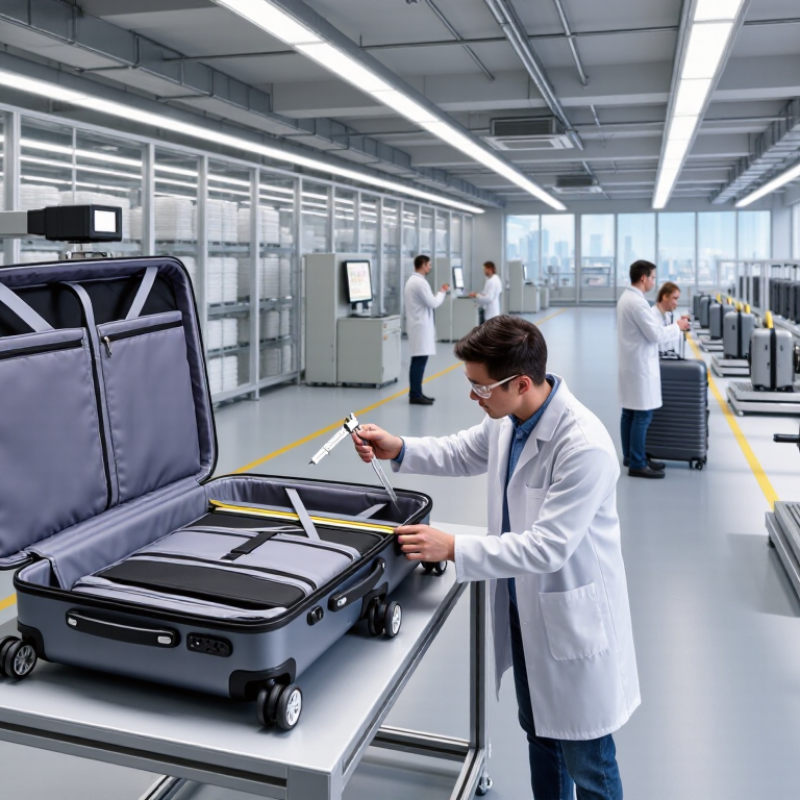
A reliable luggage manufacturer should show material specifications, factory capacity, quality records, and recent production examples. Ask for wheel-cycle testing, handle-load testing, zipper inspection, and drop-test results. A polished sample can hide weak stitching or inconsistent shell thickness. I have seen attractive prototypes fail after repeated corner impacts. That uncomfortable detail deserves attention.
Robert Plath, the inventor of the Rollaboard suitcase, explained his practical goal simply: “I just wanted to make a suitcase that would roll.” His observation remains useful. Good luggage solves real travel problems before adding decoration.
Factory visits, independent inspections, and traceable production records strengthen supplier evaluation. Check whether the manufacturer can maintain quality across larger orders, not only during sampling. Review minimum order quantities, lead times, packaging, repair support, and communication speed. Sustainability claims also need proof, such as recycled-content documentation and measurable waste controls.
The right choice is rarely the cheapest quotation. It is the manufacturer that combines engineering discipline, transparent evidence, and dependable execution. In 2026, brands should compare suppliers with a written scorecard, then challenge their own assumptions. Sometimes, the impressive option is not the reliable one.
Define Your Luggage Product Requirements and Target Market
Before contacting a luggage manufacturer, define the product you actually need. “A premium suitcase” is not enough. Record dimensions, empty weight, shell material, wheel type, handle height, lining, zipper construction, and target retail price. Add the expected use: weekly commuting, family holidays, or frequent air travel. These situations demand different durability and storage choices. Sketch the interior with pockets, compression panels, and approximate clothing capacity. Small details prevent expensive revisions.
Your target market should guide every specification. Young urban travelers may value light weight, laptop protection, and quiet wheels. Families may need washable linings, expandable storage, and stronger corner protection. Business travelers often notice handle stability before decorative features. Ask real users about airport floors, overhead-bin limits, and common packing frustrations. Test it yourself. My first product brief was too broad, and factory quotations became difficult to compare.
Turn the brief into measurable requirements. Specify acceptable weight variation, wheel-cycle testing, handle-load testing, fabric abrasion standards, color tolerances, and inspection points. Request prototypes before discussing large production quantities. Check whether the manufacturer can explain material sources, quality records, sampling methods, and corrective actions. Clear documents build trust. Still, no specification is perfect. A pocket can look useful on paper but waste interior space in practice. Test a packed sample, revise the brief, and keep every change dated.
How to Choose a Luggage Manufacturer in 2026? – Define Your Luggage Product Requirements and Target Market
Use the following planning benchmarks to define the product specifications, target customers, and manufacturing requirements before requesting quotations.
| Target market | Typical travel use | Recommended size and capacity | Weight target | Preferred construction and materials | Core hardware requirements | Expected retail positioning | Manufacturer priorities |
|---|---|---|---|---|---|---|---|
| Urban commuters | Daily commuting, short business trips, and rail travel | Personal item or compact cabin case; approximately 20–25 L | Preferably below 2.5 kg for a compact wheeled case | Water-resistant polyester or nylon; reinforced corners and padded laptop compartment | Smooth two-wheel or four-wheel system, telescopic handle, YKK-type compatible zippers, USB port only where permitted and safely designed | Mid-market, approximately US$60–150 | Consistent stitching, abrasion testing, water-resistance testing, and reliable laptop protection |
| Frequent air travelers | Short-haul and international business trips | Cabin case; commonly 35–45 L; verify airline limits before finalizing dimensions | Approximately 2.5–3.2 kg | Polycarbonate or durable ballistic nylon with a structured interior and compression system | Replaceable spinner wheels, reinforced telescopic handle, TSA-recognized lock for applicable markets, tested zippers | Mid-to-premium, approximately US$120–300 | Wheel-cycle testing, handle-load testing, drop testing, dimensional accuracy, and spare-parts availability |
| Weekend travelers | Two- to four-day leisure trips | Cabin case or weekender; approximately 40–55 L | Approximately 2.5–3.5 kg | ABS/PC blend, polycarbonate, or coated textile depending on price target | Four quiet spinner wheels, expandable gusset, internal divider, compression straps, and combination lock option | Value-to-mid-market, approximately US$70–180 | Flexible MOQ, color consistency, efficient sampling, and controlled material substitutions |
| Long-haul leisure travelers | One- to three-week international vacations | Medium checked case; approximately 70–95 L | Approximately 3.5–4.5 kg; keep empty weight low to preserve packing allowance | Impact-resistant polycarbonate or reinforced textile construction with corner protection | Large-diameter spinner wheels, strong handle tubes, reinforced seams, expansion panel, and durable lining | Mid-market, approximately US$100–250 | Impact, abrasion, wheel, zipper, and pull-handle tests; clear warranty and replacement-wheel program |
| Families with children | Family holidays requiring organized packing and frequent handling | Medium or large case; approximately 80–120 L, with optional child-size companion bag | Approximately 4.0–5.0 kg for a large case | Durable PC/ABS shell or high-denier polyester; stain-resistant and easy-clean surfaces | Large wheels, rounded edges, simple lock operation, strong zippers, washable lining, and high-visibility color options | Value-to-mid-market, approximately US$90–220 | Safety-focused design review, odor and chemical compliance, easy-clean material validation, and dependable after-sales parts |
| Premium-conscious buyers | Frequent travel where appearance, durability, and service are important | Cabin, medium, and large sizes; approximately 40–110 L across a coordinated collection | Use lightweight construction while maintaining structural rigidity; typically 2.5–4.5 kg by size | High-grade polycarbonate, aluminum components, premium textile, or carefully selected recycled materials | Precision wheels, premium bearings, replaceable components, refined handle finish, and secure lock system | Premium, approximately US$250–600+ | Tight tolerances, surface-finish control, traceable materials, detailed inspection reports, and long-term service capability |
| Sustainability-focused consumers | General leisure and business travel with interest in lower-impact products | Cabin or medium case; approximately 40–90 L | Comparable to standard market products; avoid unnecessary weight from decorative components | Recycled polyester or recycled polycarbonate where performance and traceability are verified; repairable design preferred | Replaceable wheels and handles, repair-friendly construction, durable lining, and minimal mixed-material bonding | Mid-to-premium, approximately US$120–350 | Material traceability, recycled-content documentation, restricted-substance testing, durability evidence, and credible environmental claims |
| Online value shoppers | Occasional holidays and price-sensitive travel purchases | Complete three-piece set; approximately 35–105 L across sizes | Approximately 2.8–4.8 kg by size, balancing cost and durability | ABS or ABS/PC blend with polyester lining and practical internal organization | Four spinner wheels, telescopic handle, basic combination lock, expansion feature, and easy-to-photograph color options | Value market, approximately US$50–150 per set | Competitive MOQ, stable cost control, accurate product photography samples, packaging efficiency, and low defect rates |