How to Choose Giant Lanterns for Events
Choosing giant lanterns for an event is not just a matter of picking the brightest design. Their size, materials, lighting, and placement all affect how guests experience the space. A lantern that looks striking in a product photo may overwhelm a small courtyard or disappear beneath a high tent ceiling. Scale matters.
Start with the venue. Measure ceiling height, walkways, entrances, and the distance between guests and display areas. Then consider the event’s duration and setting. Indoor displays may need different materials and lighting from outdoor installations exposed to wind or damp conditions. Check the maker’s specifications, recommended setup, and power requirements before making a decision. Small details matter.
Color and shape should support the event’s mood without making the space feel crowded. Warm tones can create a welcoming glow, while bold colors may suit a festival or themed celebration. Ask how the lanterns look when lit, not only in daylight. If possible, request photos or a sample under similar lighting. That step can reveal surprises.
Reliable planning also means confirming who will deliver, assemble, and remove the display. Clarify timing, storage needs, and the care required for delicate surfaces or electrical components. I would not choose by appearance alone; an impressive design can still be awkward to install or poorly suited to the venue. A thoughtful choice balances visual impact with practical needs, giving guests a memorable display without making the event harder to manage.
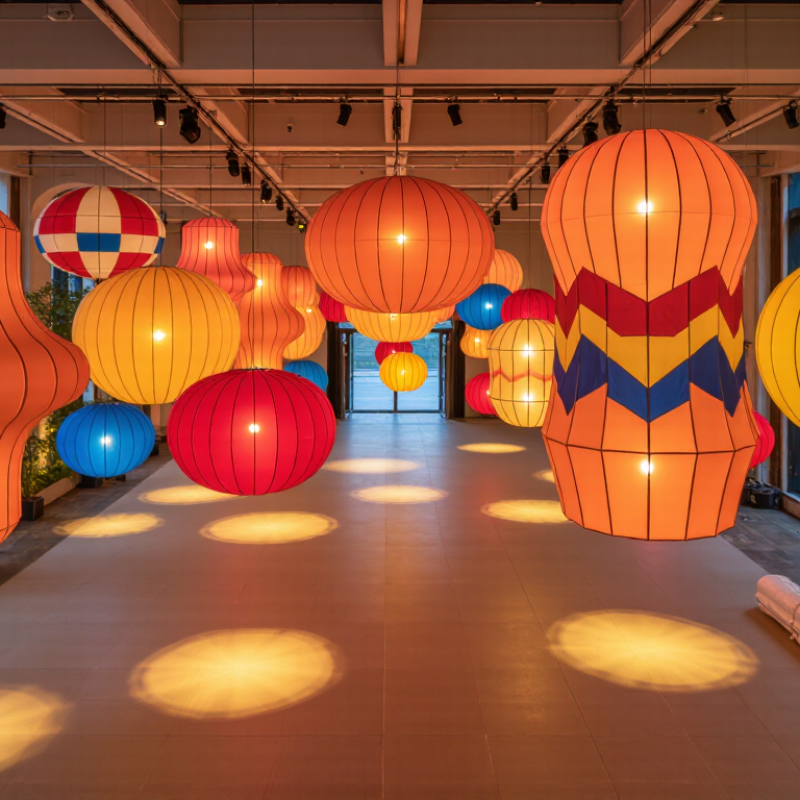
Set Lantern Scale by Venue Size, Sightlines, and Viewing Distance
Choose lantern size after measuring the venue, not from a product photo. A lantern that looks dramatic outdoors may overwhelm a low-ceilinged hall. Note ceiling height, available floor space, and the width of entrances. Keep clear routes around displays and account for poles, cables, or other supports. A quick floor plan helps, but it cannot show every obstruction.
Sightlines matter as much as overall scale. Walk the room from the entrance, seating rows, and busiest viewing points. Stand back. Look again. Check whether a lantern disappears behind a column or blocks a stage view. For seated guests, assess the display at eye level; for standing crowds, look above shoulder height. If possible, hang a paper outline or lightweight mock-up at the planned height. It may feel a little crude, but it reveals problems early.
Viewing distance helps determine how much detail guests will notice. A large lantern viewed from across a courtyard needs a clear silhouette and bold color contrast. Near a dining area, smaller details can reward closer inspection, while excessive brightness may feel harsh. As a practical check, photograph the mock-up from the farthest intended viewing point and review it at normal screen size. Venue conditions vary, so treat any size estimate as a starting point, then adjust for crowd density, lighting, and viewing angles.
Choose IEC 60529 IP44 or Higher for Splash-Exposed Outdoor Events
How to Choose Giant Lanterns for Events
For splash-exposed outdoor events, choose giant lanterns with electrical components rated IP44 or higher under IEC 60529. IP44 protects against solid objects larger than 1 mm and water splashing from any direction. It does not mean the lantern can withstand powerful water jets, flooding, or immersion. Check that the rating applies to the complete electrical assembly, not just one small component. Plugs, connectors, and in-line controls need suitable protection too. A dry-looking lantern can still have a vulnerable connection near wet grass.
Tips: Check the product label and installation instructions. Keep connectors raised off the ground, and use only compatible weather-rated cables. Inspect seals before setup.
Match the rating to the actual site conditions. A sheltered patio may face only light splashes, while an open lawn can catch wind-driven rain. Higher protection may be appropriate where exposure is harder to predict, but the number alone cannot fix poor installation. Keep lanterns clear of puddles and avoid placing cables where guests can tug or step on them. It is easy to focus on the fabric, color, and size; the electrical details deserve the same attention. I would still confirm the rating with the supplier when documentation is unclear, rather than assume “outdoor use” means weatherproof.
Specify Warm LED Light at 2700–3000 K with CRI 80+
When choosing giant lanterns, specify warm LED light at 2700–3000 K and a CRI of at least 80. This range creates a welcoming glow without making fabric colors look unnaturally cool. Check the lantern in the actual venue; a white canopy can reflect light differently from dark timber or greenery. Test it at dusk.
CRI is useful, but it is not the whole picture. CIE publication 13.3 evaluates general color rendering using eight standard color samples, so a CRI 80 rating may not reveal how every fabric or flower will appear. The Illuminating Engineering Society’s TM-30 method assesses 99 color evaluation samples and reports fidelity and gamut metrics. Ask suppliers for TM-30 data when accurate color matters, especially for stage décor or photography. Look closely at reds.
A practical event check is simple: place a red flower, a skin-tone fabric swatch, and a white card beneath the lantern. Compare them under the proposed light and nearby venue lighting. I would not rely on a catalog photo alone; camera exposure and screens can distort warmth. Even good specifications need an on-site check.
Check Lantern Fabrics Against NFPA 701 Flame-Propagation Tests
When choosing giant lanterns for an event, ask what the fabric is made of and how its flame behavior was tested. NFPA 701 evaluates flame propagation in textiles and plastic films used in applications such as decorative displays. A vague claim like “fire safe” is not enough. Request a test report or compliance documentation that identifies the tested material and test method.
Check that the report matches the lantern you plan to use. Fabric type, coating, color, and finish can differ between products, so a report for one material may not cover another. Ask whether seams, printed areas, or applied decorations use different materials. Paperwork matters. Also confirm whether the tested fabric is part of the finished lantern or only a sample. That distinction is easy to miss.
Flame-retardant performance can change with wear, moisture, cleaning, or unapproved treatments. Inspect lanterns for damage, and follow the supplier’s care instructions. Keep them clear of hot lamps, heaters, and other ignition sources; a test result does not make a display fireproof. For an outdoor event, ask how wind and damp conditions affect the setup. I would verify the documents early, then check the actual lanterns on arrival. A slightly awkward seam or replacement panel can matter more than the brochure suggests.
Verify Rigging Loads and Wind Limits with a Qualified Installer
A giant lantern may look light, but its frame, fabric, and fittings can catch substantial wind. Ask a qualified installer to inspect every suspension point and calculate the complete rigging load, including cables, motors, and attachment hardware. Get the allowable load in writing. Guessing is not a plan.
The ASCE/SEI 7-22 standard maps design wind speeds as three-second gusts and adjusts wind pressure for factors such as exposure, height, and risk category. Its basic velocity-pressure equation uses 0.00256 × wind speed squared: at 100 mph, that equals about 25.6 pounds per square foot before adjustment; at 120 mph, about 36.9. That is roughly 44% more pressure from a 20% speed increase. Small changes matter. These figures are not a safe operating limit for a lantern. Have the installer assess the actual site, mounting surface, lantern shape, and forecast gusts, then set written stop-work and lowering thresholds. Keep an anemometer where the crew can read it, and assign one person to monitor it. A sheltered courtyard can still produce awkward gusts. Plans are imperfect; check them again when conditions change.
How to Choose Giant Lanterns for Events: Verify Rigging Loads and Wind Limits
This Beaufort scale reference shows approximate wind-speed bands, not safe operating limits for lanterns. Before installation, have a qualified installer verify the lantern’s weight, rigging loads, supporting structure, site exposure, and manufacturer-specified wind limits. Conditions and requirements vary by installation.

