How to Source Freeze-Dried Peaches in 2026?
Sourcing Freeze-Dried Peaches in 2026 takes more than comparing prices. Buyers need to assess fruit quality, processing consistency, documentation, and supplier reliability. A vivid golden color and crisp bite can signal a well-made product, but appearance alone proves little. Ask suppliers about peach varieties, harvest timing, drying methods, and controls for moisture and texture. Request a representative sample. Then compare it with the product specification, not just a photograph.
Small details matter. Check the ingredient list, allergen information, lot identification, shelf-life data, and packaging barrier properties. Ask for current test reports and traceability records, and confirm that documents match the specific product and production lot. Requirements vary by destination and intended use, so buyers should verify applicable food standards with qualified professionals. Clear answers are a good sign. Vague promises are not.
A dependable sourcing process also considers capacity, lead times, minimum order quantities, and how a supplier handles rejected or inconsistent batches. If possible, review the facility’s quality systems and request references or an independent audit summary. A low quote may exclude testing, protective packaging, or freight. Compare the full delivered cost. No checklist catches everything. Even a strong supplier can have a poor batch, so define acceptance criteria before placing a large order. This guide explores practical ways to evaluate suppliers, reduce avoidable surprises, and source Freeze-Dried Peaches with greater confidence in 2026. The process is rarely neat. That is worth remembering.
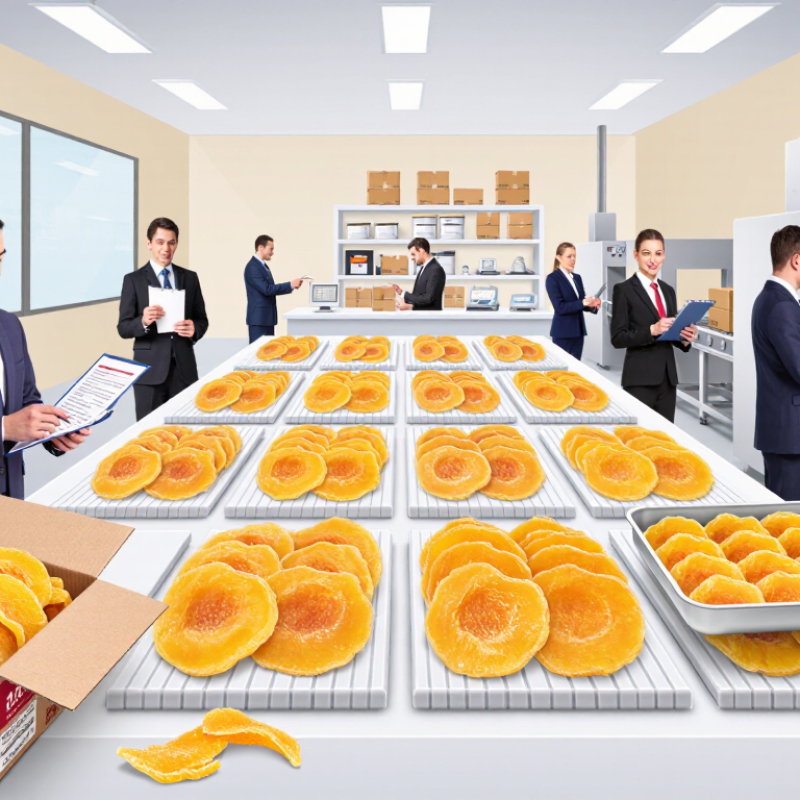
Define Peach Grade, Cut Size, and Moisture Specs for 2026 Lots
For 2026 lots, define grade before requesting quotes. “Grade A” has no useful meaning unless the contract explains it. Specify ripe peach flavor, natural color, cultivar or blend, and limits for browning, skin, pits, and broken pieces. USDA FoodData Central reports raw peaches contain about 88.9 grams of water per 100 grams, so incoming fruit maturity and solids can affect finished texture. Use that as context, not as a freeze-dried quality threshold. Codex CXS 360-2020 provides a dried-fruit reference, but buyers should confirm that its scope and provisions fit their product and market.
Be precise on cut size. For example, request 6–10 mm dice or slices 3–5 mm thick, then state the permitted undersize fraction and how it will be screened. Tiny pieces create dust; thick slices can feel leathery. Moisture needs equal care: set a buyer-defined target, such as 2–4% moisture, and require water activity below 0.30 as a starting specification, not a universal legal limit. Ask suppliers to report the test method, sampling plan, and lot results. Moisture alone is not enough. For 2026 deliveries, retain a sealed sample and check crispness after opening; humidity during handling can undo a good production run. Slightly inconvenient, but worth it.
Use FDA’s pH 4.6 and aw 0.85 Boundaries to Frame Hazard Checks
When sourcing freeze-dried peaches, treat pH 4.6 and water activity 0.85 as hazard-screening boundaries, not proof of safety. FDA uses these values in specific food regulatory definitions. They do not certify a dried fruit or replace a product-specific hazard assessment.
Ask suppliers for batch-level water-activity results, test methods, and moisture-barrier packaging details. An aw below 0.85 can limit microbial growth, but some pathogens may survive drying. Check whether results reflect the finished product, not a sample tested before final packaging. Small differences matter.
For pH, request the measurement method and sample preparation. A dry peach’s pH reading may depend on how it is rehydrated or prepared for testing. Use the 4.6 boundary as context, not a stand-alone acceptance rule. Not a guarantee. Also review lot traceability, foreign-material controls, and storage conditions. A pinhole in a pouch can invite moisture; the fruit may soften before anyone notices. I would still question a neat certificate with no test date or method. Reliable sourcing needs evidence that connects the numbers to the actual lot.
Audit Processors Against FDA Preventive-Control Rules (21 CFR Part 117)
When sourcing freeze-dried peaches in 2026, audit the processor’s written food-safety plan—not just its certificate. Under 21 CFR Part 117, covered facilities need a hazard analysis and, where hazards require control, preventive controls, monitoring, corrective actions, verification, and records. Ask how the processor assesses Salmonella risks before and after drying. Low moisture limits microbial growth; it does not reliably kill pathogens. FDA’s draft guidance on controlling Salmonella in low-moisture ready-to-eat foods highlights this concern. Check whether the supplier’s validated kill step applies to the actual peach cut, load size, and equipment. Details matter.
Walk the records. Request recent environmental-monitoring results, sanitation logs, calibration records, and corrective-action reports. Review supplier approval and incoming-fruit controls, too. CDC estimates that foodborne diseases cause about 48 million illnesses in the United States each year; its burden estimates are broad, but they show why verification cannot rest on assurances alone. (CDC, “Estimates of Foodborne Illness in the United States.”) Confirm that lot codes connect raw fruit, processing dates, and finished cases. Ask for a mock-recall record and traceability time. A spotless audit snapshot can miss a weak night-shift handoff. I would want to see the awkward deviations, not only the polished binder. FDA inspection records can add context, but they do not replace your own risk-based supplier review.
How to Source Freeze-Dried Peaches in 2026? Audit Processors Against FDA Preventive-Control Rules (21 CFR Part 117)
FDA rules do not set one universal audit schedule for every processor. An onsite supplier audit is generally required before approval and at least annually when the supplier controls a hazard requiring a preventive control, subject to the regulatory exception for alternative verification activities supported by a written determination (21 CFR §117.435). A food safety plan must be reanalyzed at least every three years, and sooner when specified changes or new information warrant it (§117.170). Confirm which requirements apply to each supplier and document the rationale.
Verify Importer FSVP Duties Under 21 CFR Part 1, Subpart L
When sourcing freeze-dried peaches, confirm who will serve as the FSVP importer before the shipment leaves. Under 21 CFR Part 1, Subpart L, this is generally the U.S. owner or consignee at entry. If neither exists, a U.S. agent or representative may accept the role with the foreign owner’s written consent. The importer’s name and required identifying information must be supplied for the entry. Clarify this responsibility in writing; a broker’s involvement does not automatically make the broker the FSVP importer.
The importer must develop and follow a Foreign Supplier Verification Program for the food, unless an applicable exemption or modified requirement applies. A qualified individual should assess hazards, evaluate the supplier’s performance, approve suppliers, and set risk-based verification activities. For peaches, examine process controls, drying records, water activity data, sanitation practices, and testing relevant to identified hazards. Ask for lot-specific documentation, not only a polished general certificate. Details matter.
Verification may include record reviews, sampling and testing, or an audit, depending on the food’s risks and the supplier’s history. Keep written procedures, findings, and corrective-action records accessible. If a shipment’s documents are incomplete, pause and investigate rather than treating a supplier assurance as proof. I would not assume every freeze-dried product presents the same risks; the process and supply chain can change the assessment. A qualified food regulatory professional can help resolve unusual cases.
Confirm FDA Facility Registration Is Renewed Every Two Years
How to Source Freeze-Dried Peaches in 2026?
When evaluating a freeze-dried peach supplier, confirm that each U.S. food facility requiring registration has renewed it on time. FDA food facility registrations are renewed every two years during the October-to-December renewal period in even-numbered years. For 2026, check that the renewal was completed between October 1 and December 31. Details matter.
Ask for confirmation tied to the actual manufacturing location, not just a trading office or warehouse. Compare the facility’s legal name and address with your supplier records, and clarify any recent ownership or site changes. A registration number alone does not establish that the peaches meet your specifications or that a shipment is cleared for entry. That is not approval.
Keep the confirmation and renewal date with your supplier documents, then set a reminder before the next renewal cycle. If a supplier cannot explain which facility processes the fruit, pause and request clarification. A spreadsheet can look reassuring, yet one outdated address can undermine the check. I would also record who verified the information and when; it is a small step, but easy to overlook when sourcing moves quickly. FDA registration status is one useful compliance check, not a substitute for reviewing product specifications, traceability records, and food-safety controls.

