What Are Three Wheeled Vehicles and How Do They Work?
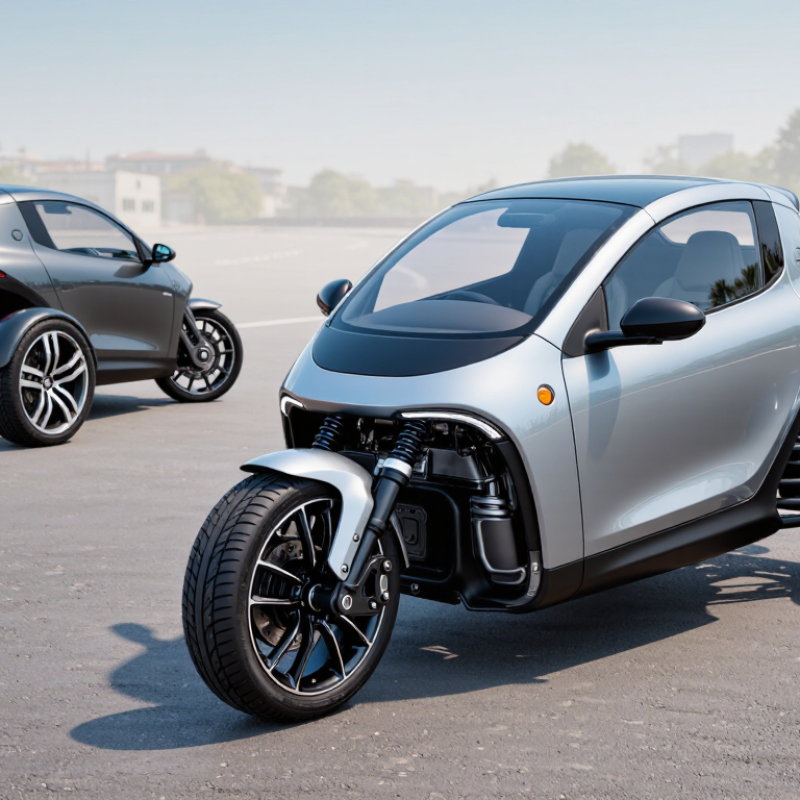
Three Wheeled Vehicles look unusual, yet their engineering follows understandable principles. They use three contact points instead of four, changing how weight, steering, braking, and stability interact. Some models place one wheel in front and two behind, creating a “tadpole” layout. Others reverse that arrangement. The design is not automatically safer or more efficient. It depends on geometry, tires, suspension, and driver behavior.
Paul Elio, founder of Elio Motors, has described the purpose simply: “We’re trying to change the way people think about transportation.” His observation captures the appeal of Three Wheeled Vehicles. They can use less material, occupy less road space, and deliver a more focused driving experience. However, efficiency claims require careful testing. A lightweight body may reduce energy use, but it can also provide less protection in certain crashes. That trade-off deserves honest attention.
A three-wheeled vehicle normally sends power through a compact drivetrain, while steering changes the front wheel or pair of front wheels. A differential may help the driven wheels rotate at different speeds during turns. Braking systems vary widely, from linked hydraulic brakes to regenerative systems in electric models. Stability control is also becoming more important. Small details matter.
Tire pressure matters.
This article explains how these vehicles work, where their designs differ, and why handling can feel unfamiliar. It also considers practical ownership, maintenance, weather performance, and safety equipment. Some assumptions may not survive close inspection. That is exactly why careful comparison matters.
What Defines a Three-Wheeled Vehicle?
A three-wheeled vehicle is defined by its wheel arrangement, not its styling. In the common delta layout, two wheels sit behind one steered front wheel. A tadpole layout reverses that pattern, placing two wheels in front. The vehicle may use a motorcycle-style saddle, a cabin, pedals, or a conventional seat. Those features influence classification, but they do not define the category alone. EU Regulation 168/2013 classifies many symmetric three-wheel motor vehicles as L5e vehicles.
Steering usually turns one or two wheels through a mechanical linkage. Power can come from an electric motor or an internal combustion engine. A differential allows driven wheels to rotate at different speeds during cornering. Without it, tires may scrub across the pavement. Some designs tilt through a turn. Others stay upright with suspension and careful weight distribution. That difference changes the rider’s experience significantly.
The International Energy Agency’s Global EV Outlook 2024 reported that electric three-wheelers represented roughly half of new three-wheeler sales in India during 2023. NHTSA’s 2022 Traffic Safety Facts recorded 6,084 U.S. motorcyclist deaths, although the report did not isolate three-wheeled vehicles. This data gap matters. Market reports also use different definitions, so comparisons can become misleading. The boundary is less tidy than many technical brochures suggest.
The Main Types and Structural Designs
What Are Three Wheeled Vehicles and How Do They Work?
The Main Types and Structural Designs
Three-wheeled vehicles use a frame, steering system, drivetrain, and suspension arranged around two axles. Their layout strongly affects balance, handling, and cabin space. The delta design places two wheels at the rear and one at the front. It usually offers a simple frame and a broad rear section for cargo. The tadpole design reverses this arrangement, with two front wheels and one rear wheel. This configuration can improve braking stability because the front wheels share steering and stopping forces.
Some models use a rigid frame, while others add a tilting mechanism. A rigid structure keeps the vehicle upright through suspension and tire contact. A tilting design allows the body to lean during turns, closer to a bicycle’s movement. That system feels natural, but it requires careful alignment and maintenance. Small errors can change cornering behavior. This trade-off is easy to underestimate.
Tips:
Check the wheel alignment, tire condition, steering response, and frame joints before riding. Sit in the vehicle and test visibility. A low seat may improve stability, but it can make traffic harder to see. During inspection, listen for uneven suspension sounds and examine brake movement. No design fits every driver. Personal height, road surface, load weight, and turning habits all matter.
Key Components and Their Functions
Three-wheeled vehicles use two front wheels and one rear wheel, or the reverse layout. Their frame supports the engine, battery, seats, and steering hardware. Each arrangement changes how the vehicle balances during turns. A narrow rear section may feel agile, but it can react sharply to uneven roads.
The steering system guides one wheel or a paired front assembly. Handlebars or a steering wheel transfer the driver’s input through linkages. Suspension parts absorb bumps before they reach the frame. Springs, dampers, and wheel bearings must work together. Without proper damping, the vehicle can bounce after a pothole. That movement reduces tire contact and makes control less predictable.
Power comes from a combustion engine or an electric motor. A transmission controls speed and torque before power reaches the driven wheel or axle. Some designs use a differential, allowing paired wheels to rotate at different speeds around a corner. Brakes convert motion into heat through discs, drums, or regenerative systems. Tires remain the final contact with the road. Their pressure affects grip, braking, and stability. A practical check should include loose fasteners, worn tread, leaking fluid, and uneven brake response. It is tempting to judge stability by appearance alone. That can be misleading. Weight placement, steering geometry, and rider movement matter more than the body shape. Even a well-designed vehicle may feel unsettled on crosswinds or sharply banked roads.
What Are Three-Wheeled Vehicles and How Do They Work?
Key components and wheel layouts used in three-wheeled vehicles
Delta Layout One front wheel and two rear wheels. The front wheel commonly handles steering, while the rear axle supports the back of the vehicle.
Tadpole Layout Two front wheels and one rear wheel. The front axle can provide wider lateral support, while the rear wheel may provide propulsion.
Key Components The frame carries loads, suspension absorbs road shocks, brakes reduce speed, and the steering system changes direction.
Stability, Safety, Uses, and Practical Limitations
Three-wheeled vehicles use one wheel at one end and two at the other. Their frames, steering systems, and suspension determine how they balance. Some designs tilt through corners like motorcycles. Others keep the body upright, relying on a wider axle and lower center of gravity. That difference matters.
Stability changes with speed. Two front wheels usually improve braking confidence because they spread contact across the road. However, a narrow rear track can still lift during a sharp turn. Cargo placed high makes this risk worse. NHTSA’s 2022 Traffic Safety Facts reports that motorcycle helmets reduce rider fatality risk by about 37%. Three-wheel users still need helmets, protective clothing, and careful cornering. More wheels do not remove rider error.
These vehicles suit short urban trips, mobility-focused transport, light delivery, and recreational travel. They can feel reassuring at traffic lights. Parking is often easier than with a car. Yet they remain exposed to rain, side winds, poor road markings, and sudden obstacles. Their turning radius may also surprise new riders. Fuel and maintenance costs vary widely, so broad market claims deserve caution. Industry statistics often combine scooters, utility vehicles, and recreational models, making direct comparisons unreliable. The U.S. National Highway Traffic Safety Administration and European road-safety agencies classify these vehicles differently. That weakens simple accident-rate comparisons. Test the vehicle slowly. Practice matters.