

Blog
Blog
Blog
10 Tips for Choosing the Best Toys Storage Boxes
Choosing the right Toys Storage Boxes can change how a playroom feels and functions. A crowded floor creates daily frustration. A thoughtful storage system creates clearer paths, faster cleanup, and safer play. Yet the best box is not always the largest one. Size, material, accessibility, labeling, ventilation, and stability all matter.
Marie Kondo, a widely recognized organization expert, has said, “The objective of storage is to give every item—a home.” This principle fits children’s spaces well. Each toy needs a visible, reachable place. A child should lift a lightweight lid without help. Small blocks may need a divided container, while plush animals need open baskets. Wheels, handles, and rounded edges can make movement easier. Strong plastic may suit busy rooms, but fabric boxes often feel warmer. Choices depend on the child, not only on appearance.
This guide, “10 Tips for Choosing the Best Toys Storage Boxes,” examines those practical details. It considers box capacity, cleaning effort, durability, safety, and room design. It also asks an uncomfortable question: are too many boxes creating more clutter? Sometimes the problem is not storage. It is excess.
Measure the shelf first. Check the floor space. Watch how children actually tidy up. Their habits may challenge an adult’s perfect plan. A storage box that looks beautiful but stays unused has failed its purpose. The following tips will help families compare options carefully, avoid fragile designs, and build a system that can adapt as toys change. Small improvements count. A tidy room is still a work in progress.
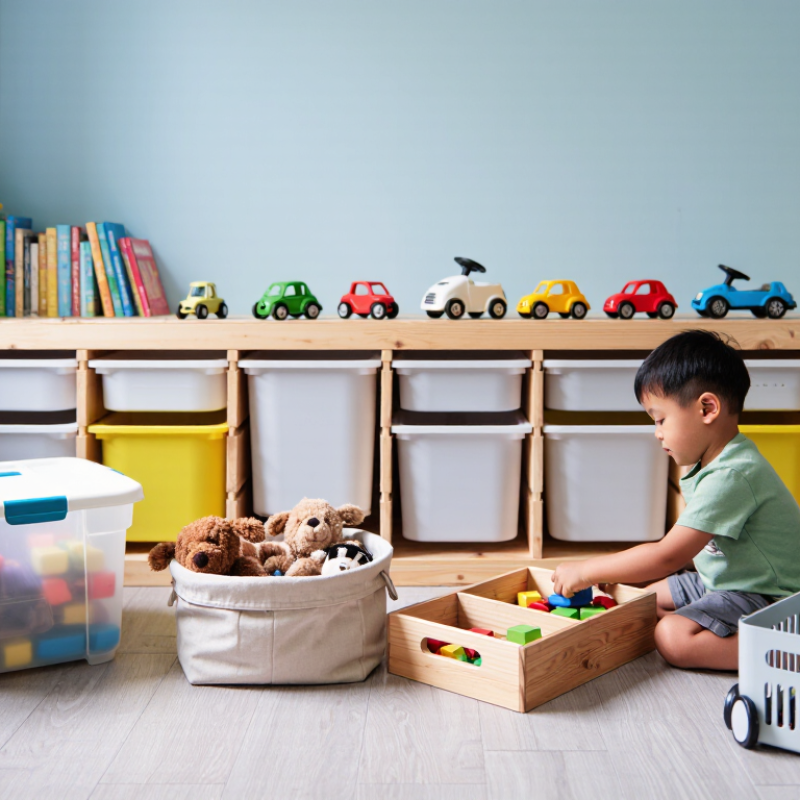
Define Your Toy Storage Needs and Available Space
Before choosing a toy storage box, define what you actually need to store. Count large toys, small parts, books, and fragile items separately. A box for building pieces needs a different shape from one for stuffed animals. Watch how your child plays. Frequently used toys should stay within easy reach, while rarely used items can go higher.
Tip: Measure the storage area before shopping. Record its width, depth, and height, including shelf clearance. Leave a few centimeters for easy removal. I once chose boxes that fitted perfectly but were difficult to pull out. That small mistake made daily cleanup frustrating.
Think about the room’s movement, not only empty corners. A box placed beside a doorway may become a trip hazard. Low containers usually work well in children’s rooms because they support independent access. However, open storage can look untidy quickly. Lidded boxes protect toys from dust, but children may stop using them if the lids are stiff.
Tip: Test the routine for one week. Notice which toys return to storage and which remain on the floor. Adjust the box size or location instead of blaming the child. Choose durable, smooth materials with secure construction, and avoid sharp edges or loose parts. Storage should fit real habits, not an imagined perfect room.
Compare Box Sizes, Capacity, and Storage Configurations
Tip 1: Measure the shelf, floor space, and doorway before shopping. A box that fits the shelf may not pass through the room’s narrowest entrance.
Tip 2: Compare internal dimensions, not only outside measurements. Thick walls can reduce usable space.
Tip 3: Group toys by size and frequency of use. Small puzzles need different storage from large building sets.
Tip 4: Leave about 15 percent empty space for easier access. Overfilled boxes quickly become frustrating.
Tip 5: Check each box’s stated capacity against the toys’ actual weight. Capacity is not just a volume number.
Tip 6: Choose shallow boxes for daily toys and deeper boxes for seasonal items. Children can see contents more clearly in lower containers.
Tip 7: Compare open bins, lidded boxes, drawers, and stackable designs. Open bins improve access, while lids reduce dust.
Tip 8: Test the configuration before buying several matching boxes. I once planned a neat stack, but the lids blocked a nearby cabinet. Measure twice.
Tip 9: Look for smooth edges, stable bases, and handles that fit small hands. These details support safer, more reliable use.
Tip 10: Consider labels and transparent sections for quick sorting. My first capacity estimate was wrong because I ignored bulky toy shapes. That mistake taught me to measure the largest items, not the average ones. A flexible arrangement may look less perfect, yet it often works better as children’s collections change.
Evaluate Materials, Durability, and Child Safety Features
10 Tips for Choosing the Best Toys Storage Boxes
Choosing a toy storage box starts with its material. Solid wood feels stable, while quality plastic resists spills and frequent wiping. Fabric bins are light, but their seams may weaken under heavy toys. Check for smooth edges, secure stitching, and finishes labeled as child-safe. A strong box should not smell sharply chemical when opened.
Durability matters in real playrooms. Press the sides gently and inspect the base for flexing. A box that bends under a few books may fail quickly. Look for reinforced corners, sturdy handles, and hinges that stay aligned. Avoid lids that slam or trap small fingers. Open and close the lid several times before buying. It should move smoothly, not suddenly drop.
Safety also depends on the box’s shape and location. Choose a wide, stable design that resists tipping when a child pulls one toy forward. Ventilation openings can help if a child climbs inside, but they should not create sharp edges. Keep small removable parts away from toddlers. Check age guidance and the manufacturer’s safety information. I once favored attractive deep boxes, yet children struggled to reach the bottom. Now, shallow containers often work better, even when they hold less. That compromise is easy to miss. A practical final check is simple: kneel beside the box and view it from a child’s height. Hidden gaps and hard corners become much clearer.
10 Tips for Choosing the Best Toy Storage Boxes
A practical evaluation of the factors that matter most when comparing toy storage boxes, including materials, durability, accessibility, and child safety.
How to use this chart: Prioritize boxes with child-safe construction, rounded edges, stable bases, easy-to-clean surfaces, and materials that remain durable under frequent use. The percentages are a practical comparison weighting for evaluating products, not brand or company data.
Check Accessibility, Organization, and Cleaning Requirements
The best toy storage boxes should make cleanup easier, not create another daily chore. Check accessibility before appearance.
A child should lift it safely.
Organization depends on simple choices.
Less searching means fewer toys scattered across the floor. It sounds obvious, but clutter grows quickly.
Cleaning requirements deserve equal attention.
Let containers dry fully before replacing toys.
I once underestimated how quickly fabric bins collected dust. They looked cozy, but cleaning them took longer than expected. That choice needed reconsideration.
Also inspect hinges, lids, and handles regularly for cracks, sharp edges, or loose parts. Storage should support safer play, not hide maintenance problems.
Balance Design, Price, and Long-Term Value
10 Tips for Choosing the Best Toys Storage Boxes
Balance Design, Price, and Long-Term Value
Tip 1: Measure the storage area before shopping.
A beautiful box is useless if it blocks a doorway or wastes shelf space. In my experience, open-top containers make daily cleanup faster for young children. Choose rounded edges, stable bases, and lids that children can lift safely. Fabric bins feel soft, but they may collapse when overloaded.
Tip 2: Compare the total cost, not only the purchase price.
A cheap box may crack, stain, or lose its shape within months. Durable plastic, treated wood, or reinforced fabric usually offers better value. Check hinges, handles, seams, and ventilation openings carefully. Avoid complicated designs that add cost without improving storage. I once chose attractive boxes with weak handles. That decision became annoying very quickly.
Tip 3: Think about changing toy collections.
Adjustable compartments can hold blocks today and art supplies later. Neutral colors may remain suitable after a child’s room changes. Label-friendly surfaces also help children return items independently. However, too many compartments can make sorting tiring. Simple storage often works better than perfect organization. Leave a little empty space for new toys. A completely full box is difficult to use.