

Blog

blog

Blog

blog

Blog

blog

China Top 10 Clothes Wardrobe Manufacturers

China has become a major source of furniture for homes, apartments, hotels, and retail projects. For buyers comparing a Clothes Wardrobe, the choice involves more than appearance. Materials, internal layout, production capacity, and communication all affect the final result.

This guide introduces ten Chinese wardrobe manufacturers and the qualities buyers may want to examine. Some focus on ready-made designs, while others offer customization, including sliding doors, adjustable shelves, and finishes suited to specific rooms. A well-organized factory can support consistent production. Yet a polished catalog alone does not prove that a supplier is the right fit.

Details matter. Buyers should check product specifications, sample quality, lead times, and packaging before placing a large order. Ask how the manufacturer handles design changes and quality checks. If possible, compare written quotations on the same basis, since prices may exclude different services or components. These steps provide a clearer picture than a headline price.

The companies featured here represent options to investigate, not a universal ranking. Capabilities and product ranges can change, and public information may not answer every question. That uncertainty deserves attention. Use this overview as a starting point, then confirm current details directly with each manufacturer. The right partner should match the project’s budget, style, and practical requirements—not just offer attractive photos.
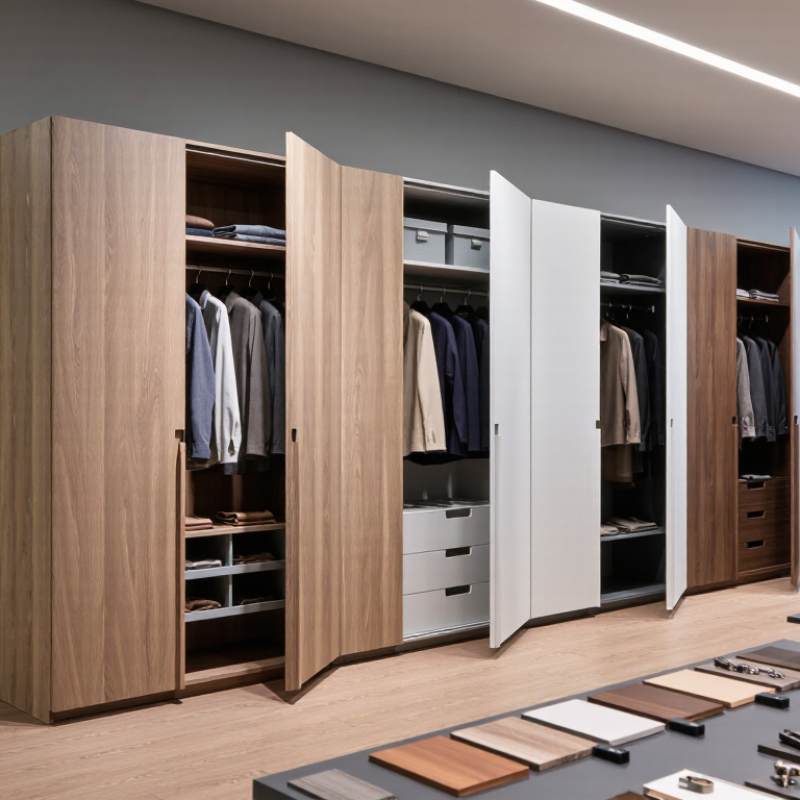
China Top 10 Clothes Wardrobe Manufacturers

China’s Clothes Wardrobe Manufacturing Industry at a Glance

China’s clothes wardrobe manufacturing industry is part of a much larger furniture ecosystem, supported by panel processing, hardware supply, surface finishing, and assembly. The National Bureau of Statistics reported that furniture manufacturers above designated size generated RMB 655.7 billion in operating revenue in 2023, down 4.4% year on year. This is useful context, but it is not wardrobe-only sales. A broad number can hide very different product categories.

China Customs reported about US$55.7 billion in 2023 exports of furniture and parts, a category that also extends beyond wardrobes. For buyers, the practical picture is a network of factories offering varied materials, finishes, and levels of customization. A useful signal. Yet production capacity alone does not guarantee consistent panel thickness, edge sealing, or hardware performance. These details matter when doors are opened daily and cabinets stand in humid rooms. The data describe a large, export-linked industry, not a quality rating for every supplier. Factory audits and sample checks remain important; even those checks may not reveal long-term wear.

Criteria for Selecting China’s Top 10 Wardrobe Manufacturers

China Top 10 Clothes Wardrobe Manufacturers

Criteria for Selecting China’s Top 10 Wardrobe Manufacturers

A useful shortlist should begin with construction, not polished showroom photos. Ask for a wardrobe sample or a finished project with similar dimensions. Inspect panel edges, door alignment, drawer movement, and the feel of hinges after repeated use. Small flaws show up quickly in daily use. Ask which board materials and finishes are available, and request clear specifications rather than relying on broad terms such as “premium quality.”

Production capability matters, but verify it against your order. Review the maker’s quality checks, sample approval process, and estimated production schedule. If possible, speak with previous clients or arrange a factory visit. Look for consistent records, organized material storage, and staff who can explain how defects are handled. A certificate alone does not prove that every cabinet will be finished well. Details matter.

Compare quotations line by line, including packaging, hardware, customization, and shipping preparation. Check how quickly the team answers technical questions and whether drawings reflect your actual room measurements. A lower price can be suitable, but only when materials and workmanship remain clear. I would not rank a supplier on price alone; that judgment can miss the cost of repairs or delays. Some details may still be overlooked, so keep approved samples and written specifications for reference.

China Top 10 Clothes Wardrobe Manufacturers - Criteria for Selecting China’s Top 10 Wardrobe Manufacturers

Suggested evaluation framework for comparing wardrobe manufacturers. The weights are a practical scoring model, not verified rankings of specific companies.

No. Selection criterion What to assess Evidence to request Suggested weight
1 Product quality and workmanship Panel alignment, edge finishing, door operation, hardware fit, surface consistency, and inspection controls. Production samples, written inspection criteria, defect records, and a sample inspection report. 18%
2 Materials and formaldehyde emissions Board type and grade, veneer or laminate specification, adhesive details, and emissions requirements for the destination market. Material specifications and current test reports from a qualified laboratory. For the U.S. market, check applicable TSCA Title VI requirements for regulated composite wood products. 14%
3 Design and customization capability Ability to manufacture built-in or freestanding wardrobes, adapt dimensions, configure interiors, and work from drawings or specifications. Technical drawings, approved samples, configuration options, and a documented design-approval process. 12%
4 Manufacturing capacity and lead time Available production capacity, order scheduling, peak-season planning, and ability to meet agreed shipment dates. A production plan, stated lead times by order stage, capacity information, and examples of delivery records where available. 10%
5 Quality management system Documented controls for incoming materials, in-process checks, final inspection, corrective action, and traceability. Quality procedures and any valid, in-scope management-system certificates, such as ISO 9001, verified with the issuing body. 10%
6 Hardware and functional performance Hinge and runner quality, load suitability, opening and closing performance, and availability of replacement components. Hardware specifications, functional test results, component warranty terms, and spare-parts policy. 8%
7 Packaging and export readiness Protection of panels, doors, mirrors, and fittings; carton identification; packing efficiency; and export-document capability. Packaging specifications, packing-test records where available, carton marks, and a sample export-document checklist. 8%
8 Pricing transparency and total cost Clarity of quotation, tooling or sample charges, packing costs, payment terms, and potential costs for changes or replacements. An itemized quotation with product specifications, commercial terms, and stated assumptions for shipping and packaging. 7%
9 Environmental and sourcing practices Wood sourcing documentation, material efficiency, waste handling, and environmental management practices relevant to the order. Material sourcing records and applicable, valid certificates or audit documents. Treat certifications as evidence to verify, not as a substitute for product checks. 7%
10 Communication and after-sales support Response clarity, change management, complaint handling, warranty process, and support for installation or replacement parts. Named points of contact, written warranty terms, service-response process, and documented procedures for handling claims. 6%
Total suggested evaluation weight 100%

Note: Confirm product requirements against the regulations and standards applicable in the destination market. Request current documents and verify their scope, validity, and issuing source.

Profiles of 10 Leading Clothes Wardrobe Manufacturers in China

Profiles of ten leading clothes wardrobe manufacturers in China should compare more than showroom appearance. A useful profile records factory location, annual capacity, board thickness, edge-banding method, hardware options, and customization lead time. Buyers should also ask how each maker handles measurement errors and replacement parts. These details matter when a wardrobe must fit an uneven wall or a narrow apartment corridor.

China National Furniture Association statistics put revenue for large furniture manufacturers at about RMB 655.7 billion in 2023, down 4.4% from the previous year. This figure covers the wider furniture industry, not wardrobes alone. It offers market context, but it cannot verify an individual factory’s quality. Across ten profiles, compare material certificates, sample consistency, packaging, and installation support. A glossy finish can hide weak joints. One limitation is that public factory data is not always comparable, so buyers should confirm claims directly.

Tips: Request a written specification and a finished-door sample. Check the back panel, hinge alignment, and edge seams under bright light. Ask for a recent production reference. Small checks prevent expensive surprises.

Comparing Product Range, Materials, and Manufacturing Capabilities

China Top 10 Clothes Wardrobe Manufacturers

Comparing product range, materials, and manufacturing capabilities gives buyers a clearer picture than catalog photos alone. A strong range may include hinged and sliding-door wardrobes, corner units, drawer inserts, and adjustable shelves. Check whether standard dimensions suit your room or whether custom sizing is available. Small details matter. A shallow drawer can waste space, while poorly placed rails may limit everyday access.

Material claims deserve careful review. Ask for panel thickness, surface finish, edge-banding method, and hardware specifications. Moisture-resistant board can help in humid rooms, but it is not waterproof. Solid wood offers a distinct grain, yet requires careful control of movement and finish. Request samples when possible. A polished image cannot reveal a rough edge or a weak hinge.

Manufacturing capability includes more than production volume. Look for clear drawings, repeatable cutting and drilling, stable finishing processes, and documented inspection steps. Ask how the factory checks door alignment and protects corners during shipment. Confirm minimum order quantities, sample timing, and packing options in writing. One imperfect part can delay installation. A broad catalog is not proof of consistent quality, and comparing ten suppliers still takes judgment; published specifications may leave important gaps.

How to Evaluate and Source from a Chinese Wardrobe Manufacturer

When evaluating a Chinese wardrobe manufacturer, look beyond showroom finishes. Ask for factory details, production capacity, and recent inspection records. The National Bureau of Statistics of China reported that furniture manufacturers generated about RMB 655.7 billion in operating revenue in 2023, down 4.4% year over year. The sector is broad, so national figures cannot verify an individual supplier. Request evidence.

Check how the factory handles the details that affect daily use: board thickness, edge sealing, hinge cycles, load limits, and moisture control. Ask for a sample made with the same materials and hardware as the planned order. Measure it yourself. A neat sample is useful, but it does not prove every batch will match. Compare written specifications with the actual sample, and record any differences before signing.

For sourcing, confirm lead time, packaging method, defect remedies, and who pays for replacement parts. The World Bank’s 2023 Logistics Performance Index placed China 19th, reflecting strong overall logistics performance, but it cannot guarantee a smooth shipment from one factory. Ask for a production schedule and photos at key stages. A video call helps, though it is not a full audit. I would not rely on a low quote alone; unclear inclusions can make it costly.

How to Evaluate a Chinese Wardrobe Manufacturer

Suggested weighting for a 100-point supplier evaluation. Adjust the weights to match your project; these are buyer-defined priorities, not market-wide statistics.