

Blog

blog

Blog

blog

Blog

blog

7 Best Spooling Machine Suppliers Worldwide

Choosing the right Spooling Machine supplier can influence production speed, winding accuracy, and long-term operating costs. A reliable machine should handle the required wire, cable, tape, or filament without damaging its surface. It should also maintain stable tension, precise traverse movement, and consistent spool filling.

This guide introduces seven respected Spooling Machine suppliers serving customers worldwide. The selection considers engineering experience, product quality, customization capability, technical support, and documented industry performance. Practical details matter. A factory may need automatic spool changing, adjustable winding speeds, compact layouts, or controls that integrate with existing production lines. These requirements can vary significantly between a small workshop and a high-volume cable plant.

Look closely.

Supplier credibility is not based on polished websites alone. Buyers should review machine demonstrations, installation records, spare-parts availability, warranty terms, and customer references. A supplier with strong engineering knowledge should explain tension settings, reel dimensions, safety systems, and maintenance intervals clearly. Regional service coverage also matters when a machine stops unexpectedly.

No supplier is perfect. Some offer excellent automation but limited local support. Others provide flexible customization but longer delivery times. This comparison recognizes those trade-offs rather than presenting a single universal choice. Prices may change, specifications can differ, and advertised performance should be verified through testing. Before selecting a supplier, request a sample winding trial using your actual material and spool design. That simple step can reveal problems that brochures often hide.
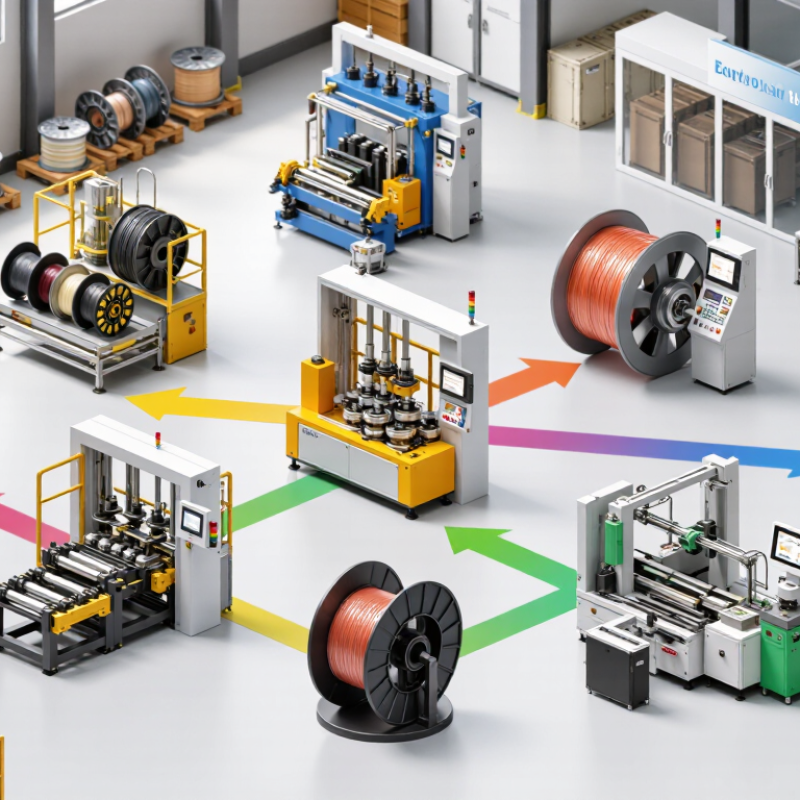
7 Best Spooling Machine Suppliers Worldwide

What Is a Spooling Machine and Where Is It Used?

A spooling machine winds flexible materials onto a reel, bobbin, or core with controlled tension. It replaces uneven manual winding with repeatable movement and measured length. The machine guides each layer across the core, while sensors monitor speed, tension, and alignment. That detail matters. Poor tension can create loose loops, crushed edges, or material breaks during later processing.

Spooling machines are common in cable production, textile manufacturing, wire processing, tubing, film handling, and packaging operations. A cable plant may spool insulated conductors for transport or cutting. A textile facility may wind yarn into compact packages for weaving or dyeing. In film and tubing production, accurate winding protects the surface from folds and scratches. Different materials need different settings. A stiff wire needs firm control, while delicate yarn may require softer tension and slower acceleration.

Choosing equipment requires more than checking maximum speed. Operators should examine core sizes, material width, reel weight, tension range, changeover time, and maintenance access. A practical trial with real material often reveals problems that specifications hide. The neatest coil is not always the best one. Excessive tension can damage the product silently. Regular checks of guides, sensors, brakes, and winding patterns improve reliability. Still, settings may need adjustment between batches, even when the material appears identical. Production conditions are rarely perfect.

7 Best Spooling Machine Suppliers Worldwide – What Is a Spooling Machine and Where Is It Used?
Rank Supplier Profile Typical Machine Offering Common Materials Handled Typical Technical Range Main Applications Why This Supplier Category Is Considered Strong
1 Western Europe Precision automatic wire and cable spooling lines with electronic tension control Copper wire, aluminum wire, insulated cable, optical-fiber subunits Approx. 0.05–6 mm conductor diameter; production speeds commonly up to 1,000–2,000 m/min, depending on material Electrical cable manufacturing, automotive wire, data cable and specialty conductor production Strong automation integration, accurate traverse control and broad support for high-volume cable production
2 East Asia High-speed pay-off, winding and take-up systems for wire, cable and film Bare wire, enameled wire, PVC cable, polyethylene cable and thin metal strip Typical spool diameters of 100–630 mm; line speeds often range from 300–1,500 m/min Consumer electronics, magnet wire, communication cable and compact component manufacturing Competitive production capacity, compact machine layouts and strong suitability for continuous manufacturing
3 North America Heavy-duty cable reelers and programmable coiling or spooling equipment Power cable, control cable, welding cable, flexible hose and reinforced tubing Common reel diameters of 400–2,500 mm; payloads may range from several hundred kilograms to multiple tonnes Power transmission, industrial cable, mining, construction and oil-and-gas service products Robust frames, large-reel handling capability and compatibility with demanding industrial environments
4 Central Europe Servo-driven spoolers for fine wire, medical tubing and precision filament Fine copper wire, stainless-steel wire, polymer filament, catheter tubing and technical yarn Typical material diameters from approximately 0.02–3 mm; tension accuracy is prioritized over maximum speed Medical devices, sensors, laboratory products, precision electronics and technical textiles Fine tension control, repeatable winding patterns and suitability for delicate or small-diameter materials
5 South Asia Semi-automatic and automatic cable coiling, winding and spool-packing systems Building wire, flexible cable, electrical cord, hose and general-purpose polymer products Common spool sizes of 100–800 mm; output is generally optimized for flexible line products and batch production Electrical goods, building materials, appliance cables and regional contract manufacturing Flexible configurations, accessible maintenance and suitability for small-to-medium production facilities
6 East Asia-Pacific Fiber, yarn and filament winding machines with programmable traverse systems Optical fiber, glass fiber, carbon fiber, synthetic yarn and thermoplastic filament Typical package widths of 50–500 mm; winding tension and traverse pitch are adjustable for different package designs Telecommunications, composite materials, 3D-printing filament, textiles and reinforcement products Good package-quality control, adaptable winding patterns and support for continuous filament materials
7 Southern Europe Custom-built reel-to-reel spooling and rewinding systems for specialty products Flat cable, ribbon cable, coated wire, specialty tape, strip material and flexible profiles Often configured for 100–1,000 mm reels; speed and reel size are selected according to product stiffness and surface finish Specialty electrical products, packaging materials, industrial profiles and customized contract production Strong customization options, modular layouts and ability to integrate printing, inspection or measuring units
A spooling machine winds continuous materials onto a reel, spool or coil in a controlled pattern. Selection should be based on material diameter, reel dimensions, winding tension, line speed, required automation level, product handling method and applicable safety standards. Technical ranges shown above are representative industry ranges rather than specifications for a particular company or brand.

How to Evaluate Spooling Machine Suppliers Worldwide

Choosing among the seven best spooling machine suppliers requires more than comparing prices. Start with application fit. Ask for trials using your actual wire, cable, film, or fiber. Check winding tension, traverse accuracy, spool diameter, line speed, and changeover time. A machine that looks fast may waste material during acceleration. Request recorded test results, not attractive brochure figures.

Supplier quality deserves equal attention. ISO’s 2022 Survey reported more than 1.2 million ISO 9001 certificates worldwide. Certification helps, but it does not replace an on-site audit. Review calibration records, inspection plans, software controls, and corrective-action reports. Speak with at least three current users in similar industries. Their comments about downtime often reveal more than formal references. Small details matter, including spare-part stock, remote diagnostics, operator training, and response times across time zones.

Digital capability is also worth testing. Deloitte’s 2024 Smart Manufacturing and Operations Survey found that 92% of manufacturers viewed smart manufacturing as a major competitiveness driver within three years. Ask whether the supplier can provide production data, alarm histories, recipe control, and secure system integration. Avoid vague promises. Define uptime, tension stability, acceptance testing, warranty coverage, and service costs in writing. Total cost includes installation, energy, tooling, maintenance, and rejected spools. My own evaluation would still leave room for doubt: factory demonstrations use ideal materials. A paid pilot may feel slower, but it exposes the machine’s real weaknesses.

Seven Leading Spooling Machine Suppliers by Product and Region

Seven Leading Spooling Machine Suppliers by Product and Region

The global spooling machine market is shaped by cable production, packaging automation, and rising length accuracy requirements. Grand View Research’s 2024 industrial automation analysis reports continued investment in automated handling equipment, especially across Asia-Pacific and Europe. Within this market, the leading supplier groups serve distinct needs: precision wire, power cable, flexible hose, fiber-optic cable, steel rope, film, and custom automation.

European suppliers often focus on servo-controlled machines for fine wire and fiber-optic applications. North American manufacturers commonly provide heavy-duty systems for industrial cable, hose, and steel rope.

East Asian suppliers compete through compact designs, fast production cycles, and scalable automation. Indian suppliers are expanding in cost-sensitive cable and packaging equipment.

The strongest regional providers usually offer winding tension below one percent variation, programmable length control, and remote diagnostics. That sounds impressive, but real factory performance still depends on operator training.

Product selection should match material behavior, spool size, line speed, and changeover frequency. A hose machine may need different tension control from a copper-wire system. MarketsandMarkets’ automation research highlights the growing value of connected monitoring and predictive maintenance in manufacturing. Buyers should therefore check data logging, spare-part availability, safety certification, and local service coverage. I would not rank suppliers by catalog size alone. That approach misses installation quality, and sometimes the cheapest machine becomes the most expensive decision.

Comparing Supplier Capabilities, Technology, and Service

7 Best Spooling Machine Suppliers Worldwide

Comparing seven leading spooling machine suppliers requires more than checking brochures or production speed. Their capabilities should match your wire, cable, film, or filament specifications. A supplier experienced with delicate materials may offer better tension control than a general equipment builder. Ask for verified samples, not only laboratory claims. A short factory trial can reveal uneven winding, edge damage, or unstable spool changes.

Technology separates strong suppliers from average ones. Servo-driven tension systems, laser diameter monitoring, automatic traverse control, and digital production records improve consistency. However, advanced features can create unnecessary complexity. A clear interface matters on a busy factory floor. Check whether operators can adjust tension without stopping the machine. Also inspect safety guarding, spare-part availability, and integration with existing lines. Small details matter.

Service deserves equal attention. Reliable suppliers provide installation guidance, operator training, maintenance schedules, and practical remote support. Response time should be written into the agreement. Ask how quickly engineers normally diagnose a failed sensor or drive. Visit a reference plant if possible. In my experience, the cheapest quotation often becomes expensive after repeated stoppages. Still, supplier references are not perfect evidence. Production conditions differ, and one successful installation may hide weak after-sales support. Compare testing records, warranty terms, software updates, and lifecycle costs before choosing.

How to Choose the Right Spooling Machine Supplier for Your Needs

Choosing among the seven best spooling machine suppliers requires more than comparing prices. Start with your material, spool dimensions, line speed, tension range, and required output. A supplier should provide test data using your actual wire, cable, film, or tubing. Ask for winding samples, changeover times, and tension stability under continuous operation. Small details matter.

The ISO Survey 2023 recorded more than 1.2 million ISO 9001 certificates worldwide. Certification is useful, but it does not prove machine performance. Check calibration records, factory acceptance procedures, safety documentation, and traceability for critical components. Request references from facilities with similar production volumes. Speak with operators, not only sales teams. Their feedback is often less polished and more valuable.

The 2024 MHI Industry Report found that 83% of supply-chain professionals expect technology adoption to increase. This supports evaluating automation, data logging, remote diagnostics, and integration with existing controls. However, advanced features can create unnecessary cost and training demands. Calculate total ownership cost, including energy, spare parts, software updates, installation, and downtime. A cheaper machine may become expensive after one difficult repair. Also review response times, technician coverage, warranty exclusions, and spare-part availability in your region. One weakness remains easy to miss: suppliers may demonstrate excellent equipment, but not equally strong after-sales support.