

Blog
Blog
Blog
Top 10 China OSB Suppliers for Global Buyers
For global buyers, choosing a China Osb Supplier takes more than comparing prices. OSB quality, delivery reliability, and documentation can vary between factories. The FAO’s 2023 Global Forest Products Facts and Figures reported about 402 million cubic metres of wood-based panel production worldwide in 2022. That figure covers several panel types, not OSB alone. It shows the scale of the broader market, but it cannot verify an individual supplier’s capacity.
The UNECE/FAO Forest Products Annual Market Review 2023–2024 tracks wood-product markets and construction-related demand. Buyers can use such reports to understand market conditions, then check supplier claims directly. Ask for recent production data, product specifications, and test reports for the thickness and grade you need. Check glue type, formaldehyde-emission documentation, and packing details. A neat sample matters. So does the paperwork behind it.
This Top 10 guide is intended as a practical starting point, not a final endorsement. Supplier rankings can change as capacity, ownership, and export experience shift. Some details may be difficult to verify from public sources; that deserves a closer look, not a confident guess. Compare factories using consistent criteria, including certifications relevant to your destination market, sample quality, lead times, and communication. A low quotation can look attractive. The full landed cost may tell a different story. Verify current documents and production schedules before placing an order.
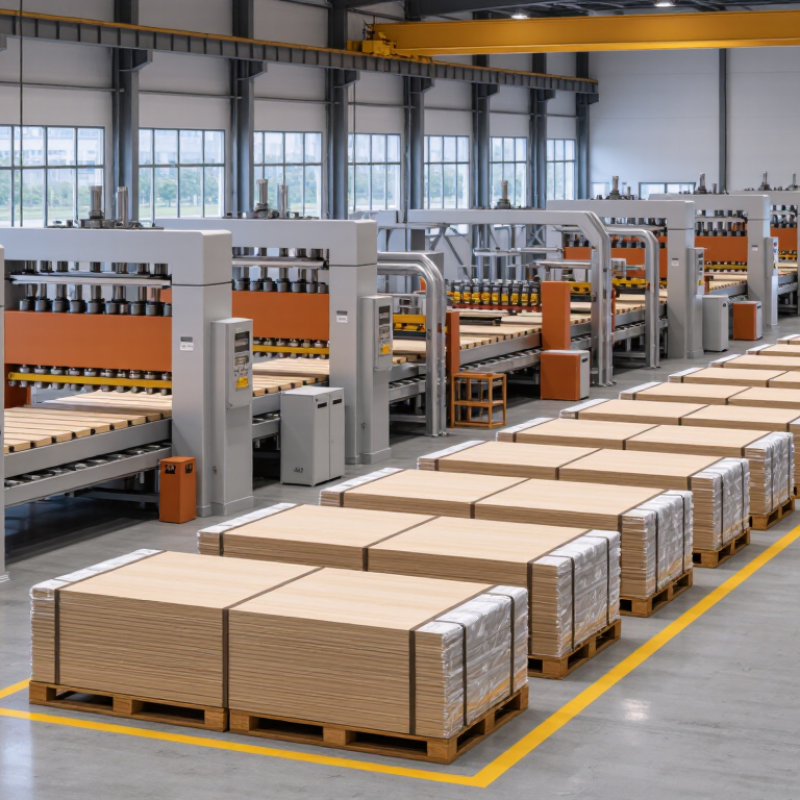
How China’s OSB Supplier Market Serves Global Buyers
China’s OSB suppliers serve global buyers with broad production capacity, multiple panel specifications, and established export logistics. FAO’s Global Forest Products Facts and Figures 2022 reports 399 million cubic metres of wood-based panel production worldwide that year. China accounted for 54 percent of that output. The figure covers all wood-based panels, not OSB alone. It signals industrial scale, not proof of an individual mill’s quality. That distinction matters.
Buyers can compare samples against the declared grade and request batch-linked test results for thickness, bending strength, swelling, and formaldehyde emissions. Confirm that test methods and documents suit the destination market and intended application. A certificate alone may not answer every question. Inspect packaging details too: sealed edges, stable pallets, and moisture protection can affect panels during a long voyage. Freight damage is real. Country-level production data cannot replace factory checks, and remote reviews may miss issues visible on site. A careful supplier assessment combines paperwork, sample testing, and clear agreement on tolerances before shipment.
Criteria for Evaluating China’s OSB Manufacturers
A reliable evaluation starts with product evidence, not a polished catalogue. Ask for technical data showing panel thickness, density, moisture content, and bending strength. Request current test reports, and confirm that the tested grade matches the panels being quoted. Small details matter. Check whether edges are square, surfaces are even, and samples show consistent strand distribution. A sample can look excellent, though one sample cannot prove stable production.
Review the factory’s quality process and ability to trace batches from raw material to finished sheets. Discuss resin type, emissions documentation, and the standards required in your destination market. Verify records with an independent testing body when the order warrants it.
Production capacity should fit your schedule; ask about lead times, packaging, and moisture protection during shipping. A low price is not enough. Compare specifications on equal terms, including tolerances and claims procedures. Some buyers focus heavily on laboratory numbers and overlook communication gaps. That is worth reconsidering. Clear answers, dated documents, and a willingness to explain a failed test may reveal more than confident sales language.
Profiles of Ten Leading China OSB Suppliers
Top 10 China OSB Suppliers for Global Buyers
Profiles of Ten Leading China OSB Suppliers
These ten supplier profiles help buyers compare more than factory size. They cover manufacturers with different strengths, including steady production, export experience, custom panel dimensions, and a broad range of thicknesses. Some focus on construction-grade boards; others may suit furniture, packaging, or interior projects. Product names alone are not enough. Ask for current technical data, including thickness tolerance, bonding performance, and formaldehyde-emission test results.
A useful profile also explains how a supplier handles quality checks and orders. Look for details on incoming wood inspection, pressing conditions, panel moisture, and batch traceability. Request samples that match the proposed specification, then check edges, surface consistency, and thickness with simple measuring tools. Clear answers are a good sign. Vague answers deserve follow-up. Do not assume every factory offers the same testing or export support; confirm these points directly, since public profiles may leave gaps.
Tips: Compare like with like. Send each supplier the same panel specification, target quantity, packaging request, and delivery terms. Ask who issues test reports and when they were prepared. A small sample can reveal a lot, but it cannot prove every production batch will be identical. Keep that limitation in view.
Comparing Product Range, Certifications, and Export Capabilities
Top 10 China OSB Suppliers for Global Buyers
Comparing ten Chinese OSB suppliers takes more than checking prices. Product range matters: ask whether each producer offers different thicknesses, panel grades, edge profiles, and moisture-resistant options. FAO’s 2023 Forest Products Yearbook reports global wood-based panel production of roughly 400 million cubic metres in 2022. This includes many panel types, not OSB alone, but it shows the scale and competitiveness of the wider market. Buyers should compare technical data sheets, not rely on broad claims such as “high strength.”
Check certifications against the destination and intended use. EN 300 classifies OSB by performance, while FSC or PEFC chain-of-custody certification can document responsible material sourcing. These serve different purposes. Request current, plant-specific certificates and independent test reports for thickness tolerance, bending strength, and formaldehyde emissions. A certificate list may look impressive, yet still fail to prove consistent production between batches.
Export capability needs equal scrutiny. Ask for recent shipment references, packaging details, container-loading photos, and lead times during peak season. Confirm that labels, test documents, and packing lists match the actual order. Small details matter: damaged corners or wet panels can erase a modest price advantage. I would still treat supplier rankings cautiously; published information rarely reveals how a factory handles delays or quality complaints. A sample inspection before full production can expose gaps, though it adds time and cost.
Top 10 China OSB Suppliers for Global Buyers — Comparing Product Range, Certifications, and Export Capabilities
Suggested weighting for comparing suppliers: product range, certifications, and export capabilities. These are buyer-evaluation weights, not measured scores or supplier-specific data.
Key Factors in Selecting an OSB Supplier in China
Selecting an OSB supplier in China starts with the panel’s intended use. Ask for the declared grade, thickness range, and test results for bending strength, internal bond, and swelling. EN 300 distinguishes OSB grades by application and performance; a generic “construction grade” claim is not enough. Request recent, lot-specific reports from an independent laboratory, and check that the tested panel matches the product being quoted.
Capacity matters, but consistency matters more. The European Panel Federation’s 2022 industry statistics put European OSB production at roughly 7.8 million m³. This is a useful market benchmark, not proof of any supplier’s capacity in China. Check production records, kiln and press controls, raw-material sourcing, and batch traceability. Ask how the factory handles thickness variation and edge damage. Numbers can mislead.
Compare moisture-related performance and formaldehyde documentation against your destination-market requirements. Confirm packaging, container loading plans, lead times, and how claims are resolved. I would not rely on a polished sample alone; that is an easy mistake. Ask for samples from ordinary production and inspect the edges, surface, and thickness with simple measuring tools. Clear answers, consistent records, and realistic delivery commitments are stronger signals than a low quotation.
Top 10 China OSB Suppliers for Global Buyers - Key Factors in Selecting an OSB Supplier in China
Use these ten checks to compare potential suppliers. The suggested weights are a buyer-side scoring framework, not market statistics or verified ratings of specific companies. Confirm all product claims and documents for the actual factory and order.
| No. | Selection factor | What to verify | Evidence to request | Suggested weight |
|---|---|---|---|---|
| 1 | Product grade and intended use | Confirm the OSB type and intended service conditions. Under EN 300, OSB/1 and OSB/2 are for non-load-bearing and load-bearing use in dry conditions; OSB/3 and OSB/4 are for load-bearing use in humid conditions. Humid-condition grades are not waterproof. | Product datasheet, declared grade, applicable test reports, and written confirmation of intended use. | 15% |
| 2 | Standards and market documentation | Check that the stated standard and documentation match the product, intended application, and destination-market requirements. EN 300 specifies OSB product requirements; additional construction-product documentation may apply in some markets. | Current test reports, declarations or conformity documents where applicable, and document-to-product traceability. | 12% |
| 3 | Consistency between batches | Assess whether thickness, dimensions, squareness, surface condition, and mechanical properties stay within the agreed specification across production lots. | Recent batch inspection records, test results, written tolerances, and a pre-shipment inspection plan. | 12% |
| 4 | Independent testing | Confirm that test methods and results are relevant to the ordered grade and specifications. Where independent testing is required, check the laboratory’s competence and scope for the relevant tests. | Complete reports identifying the tested product, test methods, results, test date, and laboratory. Check relevant accreditation where required. | 10% |
| 5 | Adhesive and emissions requirements | State the required adhesive or resin characteristics and any emissions limits that apply to the destination, product, and use. Do not assume one emissions claim or test applies to every market. | Product-specific declarations and test reports against the buyer’s specified methods and destination-market requirements. | 10% |
| 6 | Production capacity and lead time | Check whether the supplier can meet the required order volume, product mix, and delivery schedule without compromising agreed quality controls. | A written production schedule, capacity confirmation for the requested specifications, and updates on order milestones. | 10% |
| 7 | Product range and customization | Confirm available thicknesses, panel dimensions, edge profiles, and other requested options. Verify that non-standard specifications are technically feasible and included in the order contract. | Current specification sheets, approved samples, drawings where relevant, and a signed order specification. | 8% |
| 8 | Packaging and export handling | Review protection against moisture, edge damage, and handling during storage and transport. Agree packaging and container-loading details for the route and delivery terms. | Packaging specification, loading plan, shipment photographs, and agreed marking and shipping documents. | 8% |
| 9 | Traceability and responsible sourcing | Check whether production lots can be traced and whether any requested forestry or chain-of-custody claims are supported by valid, applicable documentation. | Lot identification procedure and, if required, current certificates with scope and chain-of-custody details verified with the issuing scheme. | 7% |
| 10 | Commercial terms and after-sales support | Compare quotations on the same product specification and delivery basis. Clarify payment terms, claims handling, replacement or remedy procedures, and communication responsibilities. | Itemized quotation, draft contract, written claims process, and named points of contact. | 8% |