What Are the Top Coating Powder Types in 2026?
In 2026, choosing a Coating Powder is less about finding one universal winner and more about matching resin chemistry to the part’s job. A steel bracket near coastal air faces different demands from an indoor appliance panel or an aluminum wheel. Heat, moisture, sunlight, impact, and cure temperature all matter. Small details matter.
The market is growing, but market size alone does not decide which powder performs best. Grand View Research valued the global powder coatings market at about US$14.2 billion in 2023 and forecast a 5.5% compound annual growth rate from 2024 to 2030. That growth reflects broad use across industries, not proof that every coating type suits every component. Kevin Coursin, executive director of the Powder Coating Institute, has emphasized the practical importance of selecting a finish for its application and performance requirements. In other words, the label is only a starting point.
This guide compares the leading coating powder types expected to matter in 2026: epoxy, polyester, epoxy-polyester hybrid, polyurethane, and specialty systems. Epoxy commonly serves interior parts needing chemical resistance; polyester is widely chosen for exterior durability and weatherability. Hybrids balance selected properties, while polyurethane and specialty powders address more specific finish or exposure needs. The trade-offs are real. A powder can look excellent on a sample panel yet fail when its cure schedule, substrate, or environment is mismatched. The sections ahead explain what each type does well, where it can fall short, and which questions to ask before specifying a coating.
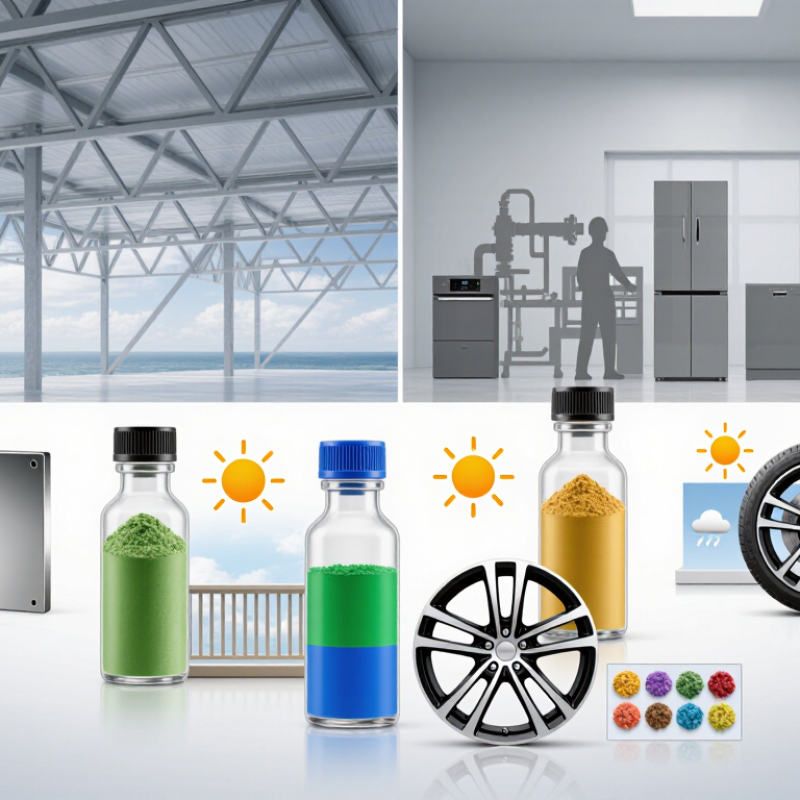
What Is Powder Coating, and How Are Its Types Classified?
Powder coating is a dry finishing process: fine resin-based particles are applied to a prepared surface, commonly using electrostatic charge, then heated until they flow and form a continuous film. The oven is not just a drying step. Heat triggers melting and, for many powders, a chemical cure. The result can be a smooth, textured, or matte finish.
A useful classification starts with resin chemistry. Thermoset powders, including epoxy, polyester, and epoxy-polyester hybrids, crosslink during curing and cannot simply be remelted. Thermoplastic powders soften with heat and harden again as they cool. Not always. That distinction matters when comparing repair options, heat resistance, or exposure outdoors. A powder’s name alone does not predict performance; pretreatment, film thickness, and cure temperature matter too.
Market figures show why the category deserves careful attention. Grand View Research’s 2024 Powder Coatings Market report valued the global market at about US$15.5 billion in 2023 and projected a 5.5% compound annual growth rate from 2024 to 2030. These figures describe market value, not coating quality. For outdoor railings, polyester formulations are commonly considered for weather and UV exposure; for indoor metal parts, epoxy may suit chemical resistance, though sunlight can dull it. The awkward part is that “best type” depends on the actual service conditions, not the label.
Which Thermoset Powder Coatings Are Most Widely Used in 2026?
In 2026, thermoset powders remain widely used because heat creates a durable, cross-linked film. Grand View Research valued the global powder coatings market at about US$14.2 billion in 2023 and forecast 5.6% annual growth through 2030. Its market analysis identifies thermosets as the leading resin family. Epoxy, polyester, and epoxy-polyester blends are common choices, each suited to different service conditions.
Epoxy coatings offer strong adhesion and chemical resistance, making them useful for indoor equipment and components. They can chalk under prolonged sunlight. Polyester generally handles outdoor exposure better, so it is common on architectural metal and outdoor furniture. Epoxy-polyester blends balance corrosion resistance, appearance, and cost for appliances and shelving. Polyurethane and acrylic powders serve more specialized needs, including smooth finishes and weatherable surfaces. No single resin wins everywhere. Real-world results depend on pretreatment, film thickness, and the part’s cure temperature—not just the resin label.
Tips: Match the powder to the part’s environment, then test a coated sample under realistic conditions. Check the metal’s actual temperature during curing; oven settings can mislead. One caveat: broad market rankings rarely capture local preferences or application limits. Those details deserve a closer look.
How Do Epoxy, Polyester, and Hybrid Powders Compare?
Epoxy, polyester, and hybrid powders solve different coating problems. Epoxy bonds well and resists chemicals, moisture, and corrosion, making it useful for indoor equipment and protected metal parts. But sunlight can quickly dull its color and create a chalky surface. Polyester generally handles ultraviolet exposure and outdoor weather better. It suits railings, outdoor furniture, and architectural metalwork, though it may offer less chemical resistance than epoxy. Hybrid powders blend epoxy and polyester properties, often balancing smooth appearance, corrosion protection, and cost for indoor appliances or shelving. They are not a cure-all.
A coating’s real performance depends on pretreatment, film thickness, and oven temperature—not resin type alone. A poorly cured polyester finish can fail sooner than a well-applied hybrid. Small details matter. Grand View Research’s Powder Coatings Market report estimated the global market at about US$15.6 billion in 2023, reflecting broad industrial demand rather than proving one resin is best. That distinction is easy to overlook. For selection, compare the part’s exposure and chemical contact, then check the powder’s technical data sheet and test panels under actual service conditions. The uncomfortable truth: “hybrid” sounds like a compromise, and sometimes it is. It may be the practical choice, but outdoor exposure still calls for careful verification.
What Are the Top Coating Powder Types in 2026?
Typical curing temperature ranges for epoxy, polyester, and epoxy-polyester hybrid powder coatings
Epoxy powders are commonly selected for interior applications requiring chemical and corrosion resistance. Polyester powders generally offer better outdoor weatherability, while hybrids combine properties of both resin types and are commonly used indoors. The temperature ranges shown are representative industry ranges, not universal specifications; actual cure schedules vary by formulation and should be confirmed in the product technical data sheet.
What Are the Main Thermoplastic Powder Coating Types?
What Are the Top Coating Powder Types in 2026?
What Are the Main Thermoplastic Powder Coating Types?
Thermoplastic powder coatings soften when heated and harden as they cool. Unlike thermosetting powders, they do not form a permanent chemical network during curing. This lets some coatings be reheated, though removal or repair still depends on the material and part design. Common types include polyethylene, polypropylene, polyamide, PVC, and fluoropolymer powders.
Polyethylene is often chosen for impact resistance and protection from moisture or chemicals. Polypropylene can offer similar chemical resistance at a lower weight, but heat limits matter. Polyamide coatings are valued for abrasion resistance; a coated metal bracket may better withstand repeated rubbing. PVC can provide a flexible, relatively thick protective layer. Fluoropolymer powders suit applications where weathering or chemical exposure is a concern. No type wins every time. Selection is not always tidy: surface preparation, coating thickness, service temperature, and application method can change the result.
Tips: Match the coating to the part’s actual exposure, not just its product description. Check the substrate’s heat tolerance, then test a small area for adhesion and coverage. Keep records of temperatures and coating thickness; small process differences can matter.
Which Factors Determine the Best Powder Coating for an Application?
The best powder coating depends on the part, its environment, and the curing line—not just its color. Epoxy powders suit indoor parts needing chemical resistance, while polyester is often selected for outdoor exposure and weatherability. Hybrids can balance properties, but the exact formulation matters. Fit matters most. A thin steel bracket and a thick aluminum casting may need different cure schedules, even when both use the same powder. Check the substrate’s heat tolerance, part geometry, film thickness, impact needs, and expected exposure to sunlight, moisture, or cleaning chemicals. The U.S. EPA identifies powder coatings as a low-VOC coating option; actual shop emissions still depend on the full process, including pretreatment and curing.
Production constraints can change the choice. Ask whether the oven can hold the required part temperature long enough, and whether recessed corners receive even coverage. The Powder Coating Institute’s technical guidance emphasizes matching powder properties and cure conditions to the application. That sounds obvious, yet missed cure can weaken adhesion or durability. Grand View Research’s 2023 powder-coatings market analysis projected 5.4% annual growth through 2030, reflecting broad demand, not proof that one chemistry fits every job. A practical trial on the real substrate can reveal gloss shifts, edge coverage, or handling marks that a data sheet will not. The awkward part: trials take time, but skipping them can cost more.

