

Blog
Blog
Blog
Top 10 Freeze Dried Raw Dog Food Suppliers Worldwide
Freeze Dried Raw Dog Food has moved from a niche feeding choice into a visible segment of the global pet nutrition industry. APPA reported that U.S. pet industry spending reached approximately $150.6 billion in 2024. This figure reflects wider demand for premium foods, although it does not measure freeze-dried products separately. The category still deserves careful interpretation.
FEDIAF’s European Pet Food Facts and Figures reported about 139 million European households owning pets in its latest published statistics. That large consumer base supports continued interest in convenient, meat-focused diets. Market research from Grand View Research also identifies premiumization and natural ingredients as important forces in pet food growth. However, supplier quality varies considerably. Packaging can look excellent. Product evidence may be thinner.
This guide reviews ten worldwide suppliers using practical and verifiable criteria. These include ingredient sourcing, manufacturing controls, nutritional completeness, traceability, export capability, and customer support. HACCP-based systems, transparent laboratory testing, and clear feeding instructions deserve special attention. The FDA has warned that raw pet food can carry harmful bacteria, making hygiene and handling guidance essential. Freeze-drying reduces moisture, but it does not automatically eliminate every biological risk.
A reliable supplier should explain whether its recipes meet recognized nutritional standards, such as AAFCO profiles or FEDIAF guidelines. It should also disclose analysis details, batch information, and storage requirements. These points matter more than attractive marketing.
No global ranking is perfectly objective. Supplier availability, certification access, and regional regulations can change. Therefore, readers should verify current documents before purchasing or importing products. The following selection offers a useful starting point, not a final verdict.
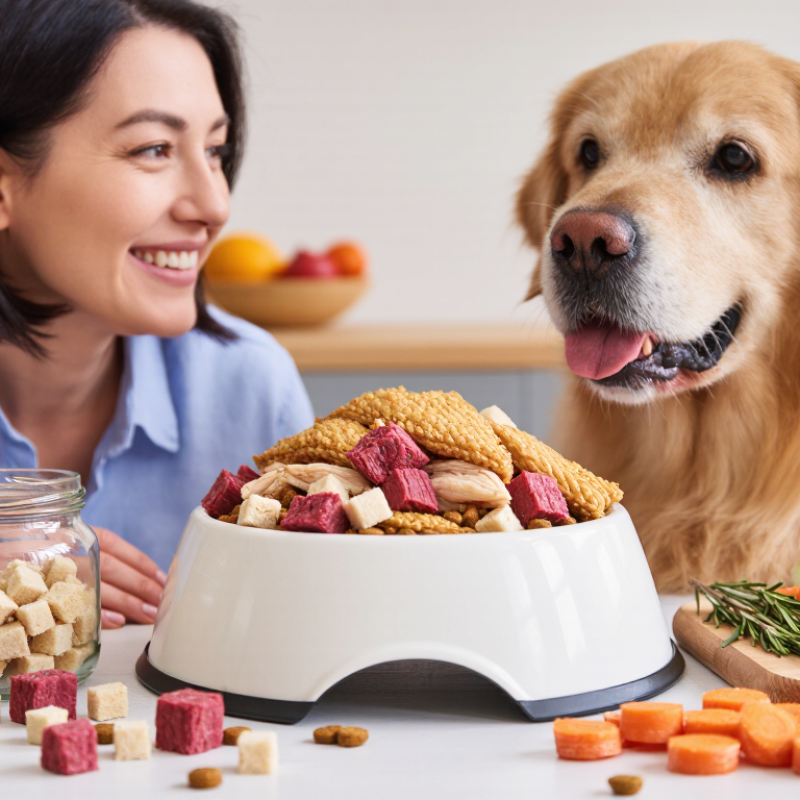
What Freeze-Dried Raw Dog Food Is and How It Is Made
Freeze-dried raw dog food starts with uncooked animal ingredients selected for canine nutrition. It may include muscle meat, organs, edible bone, and selected produce. Unlike conventional kibble, it is not baked into a dry pellet. The process removes water while preserving much of the original shape and aroma.
Manufacturers first inspect and chill ingredients, then grind and portion the mixture under controlled hygienic conditions. The food is rapidly frozen, often forming small ice crystals. Inside a vacuum chamber, gentle heat changes ice directly into vapor. This is called sublimation. Moisture drops sharply, but the product remains uncooked. That detail matters. Freeze-drying does not automatically destroy every pathogen. Reliable production therefore requires validated testing, sanitation, traceability, and clear handling instructions.
At home, owners often crumble nuggets over a bowl and add measured water. Rehydration improves texture, yet warm, damp food should not sit out for hours. A nutritionally complete recipe needs more than meat; mineral balance and essential vitamins require professional formulation. In practice, the biggest mistake is treating “natural” as proof of safety or completeness. Some dogs thrive on it. Others develop loose stools or reject the texture. A gradual transition and veterinary guidance are sensible, especially for puppies, seniors, or dogs with medical conditions.
Key Standards for Evaluating Global Freeze-Dried Dog Food Suppliers
When comparing the top 10 global freeze-dried raw dog food suppliers, I look beyond polished catalogs. Ingredient traceability is a practical test. Each meat, organ, and plant ingredient should have a documented origin. Lot codes must connect raw materials to finished bags. Suppliers should explain their recall process clearly. Vague answers are a warning sign. They happen.
Food safety controls deserve close inspection. A credible facility should use validated hazard-control procedures, sanitation records, and environmental monitoring. Ask for recent testing for Salmonella, Listeria, and relevant indicator organisms. Testing should cover ingredients and finished products. Moisture and water activity results also matter. They influence shelf stability. Packaging should block oxygen and moisture, with seal checks recorded. Independent laboratory reports add useful confidence, but certificates alone prove little. Audits can miss problems between visits.
Nutrition requires more than a guaranteed analysis panel. Formulas should identify life-stage suitability and feeding directions. An experienced supplier can explain nutrient formulation, batch variation, and storage limits clearly. Look for qualified nutrition oversight and documented corrective actions. Export experience matters too. Labels, claims, and documents must fit the destination market. I would request a small trial order. Check odor, texture, seal integrity, and customer-service response. A supplier may meet formal standards yet provide inconsistent pieces. That weakness deserves discussion, not automatic rejection. Reliability is built through evidence, communication, and repeat performance.
Top Freeze-Dried Raw Dog Food Suppliers by Product and Market Focus
A useful worldwide ranking should compare product expertise and market reach, not packaging alone. The strongest suppliers usually serve one clear need. Some specialize in single-protein recipes for sensitive dogs. Others focus on organ-rich blends, puppy formulas, treats, or meal toppers. Novel proteins can support limited-ingredient diets, but suitability still depends on veterinary advice. Details matter.
Market focus separates the top ten supplier profiles. Several target specialty pet retailers with premium, traceable recipes. Others build large e-commerce operations with small trial bags and subscription delivery. Some serve veterinary channels, where feeding guidance and laboratory records matter more than colorful claims. Private-label manufacturers support regional distributors and export buyers. Their strengths include scalable production, multilingual labels, and documented cold-chain procedures.
Reliable suppliers should explain ingredient origins, batch testing, pathogen controls, and storage instructions. Independent testing can verify microbial safety, nutrient levels, and moisture consistency. Compliance with relevant feed regulations also deserves review in every destination market. A strong supplier provides practical evidence, not vague promises. I would still question any company that hides its processing limits. Freeze-drying reduces moisture, but it does not make careless handling harmless. Cold-chain discipline matters. Product quality may change after repeated opening, warm shipping, or poor household storage. My own assessment would compare recent certificates, recall records, customer support, and feeding transparency before placing any supplier among the leading ten.
Top 10 Freeze-Dried Raw Dog Food Suppliers Worldwide - Top Freeze-Dried Raw Dog Food Suppliers by Product and Market Focus
Comparative supplier profiles organized by product category, regional demand, distribution model, and formulation focus
| Rank | Supplier Profile | Primary Market Region | Core Freeze-Dried Raw Product Focus | Common Protein Portfolio | Market Positioning | Main Distribution Channels | Formulation and Compliance Focus | Typical Commercial Formats |
|---|---|---|---|---|---|---|---|---|
| 1 | Global Complete-Diet Supplier | North America and selected export markets | Complete and balanced freeze-dried raw meals for adult dogs, puppies, and multi-life-stage feeding | Chicken, beef, turkey, lamb, fish, and mixed-animal recipes | Premium daily feeding with high convenience and extended ambient shelf life | Specialty pet retailers, veterinary channels, e-commerce, and distributor networks | Nutritional adequacy claims commonly aligned with AAFCO profiles or equivalent local requirements; pathogen-control and traceability programs are important | Resealable pouches, bags, trial packs, and multi-serving cartons |
| 2 | European Raw-Nutrition Supplier | Western Europe and the European Union | Freeze-dried complete meals and complementary raw-food recipes designed for European pet-food buyers | Beef, poultry, venison, rabbit, salmon, and white fish | Natural-ingredient, species-appropriate, and premium nutrition positioning | Independent pet shops, online retailers, raw-feeding specialists, and regional wholesalers | EU feed-hygiene, labeling, traceability, and animal-by-product requirements; complete diets should meet applicable nutritional standards | Small pouches, family-size bags, feeding-plan bundles, and sampler boxes |
| 3 | Freeze-Dried Topper Specialist | North America, Europe, and Asia-Pacific | Raw meal toppers, supplemental crumbles, and nutrient-dense additions for conventional kibble or wet food | Beef, chicken, liver, salmon, egg, and organ-meat blends | Entry-level raw feeding and functional meal enhancement | Mass e-commerce, grocery-adjacent pet retail, specialty stores, and subscription platforms | Clear distinction between complete diets and complementary products; allergen labeling and feeding directions are central | Shaker bottles, sprinkle pouches, jars, and single-serve sachets |
| 4 | Single-Protein Diet Supplier | North America, Europe, and Australia | Limited-ingredient and single-animal-protein freeze-dried recipes for rotation feeding or dietary exclusion | Turkey, duck, rabbit, lamb, venison, white fish, and novel proteins | Simplified ingredient lists, protein rotation, and sensitivity-conscious feeding | Veterinary-oriented retailers, specialty pet stores, online marketplaces, and nutrition consultants | Ingredient transparency, cross-contact controls, accurate protein declarations, and appropriate complementary-diet labeling | Compact pouches, resealable bags, trial sizes, and rotation packs |
| 5 | Functional Raw-Nutrition Supplier | North America and selected European markets | Freeze-dried raw meals and supplements positioned around digestive, skin, coat, joint, or immune support | Beef, poultry, fish, green-lipped mussel, egg, and organ meats | Premium nutrition combined with targeted functional ingredients | Specialty retail, direct-to-consumer websites, veterinary practices, and subscription services | Functional claims require careful substantiation; ingredient safety, dosage guidance, and claim-compliant labeling are priorities | Meal bags, supplement pouches, measured scoops, and monthly subscription boxes |
| 6 | Private-Label Manufacturing Partner | North America, Europe, and Asia-Pacific export markets | Contract-produced freeze-dried meals, toppers, treats, and customized formulas for pet-food retailers | Poultry, beef, lamb, fish, pork, and customer-specified proteins | Flexible manufacturing, custom recipes, and retailer-exclusive product development | Brand owners, distributors, supermarket groups, specialty chains, and online sellers | Batch documentation, supplier approval, quality systems, export documentation, and market-specific labeling support | Custom pouches, tubs, bags, cartons, and assorted case configurations |
| 7 | Premium Treat and Training Supplier | North America, Europe, Japan, and Australia | Freeze-dried raw treats, training rewards, meal bites, and high-protein snack products | Beef liver, chicken breast, salmon, shrimp, duck, and organ meats | High-value treats emphasizing minimal processing and strong palatability | Pet boutiques, grooming businesses, training centers, online retail, and gift-oriented channels | Treat or complementary-feed labeling, moisture control, shelf-life validation, and transparent ingredient declarations | Small pouches, canisters, resealable bags, and single-protein snack packs |
| 8 | Sustainable Protein Supplier | Europe, North America, and environmentally focused urban markets | Freeze-dried recipes featuring lower-impact proteins, responsibly sourced fish, or carefully managed animal ingredients | Insects, poultry, fish, mussels, rabbit, and selected red meats | Sustainability, responsible sourcing, and reduced packaging or transport impact | Ethical pet retailers, eco-focused e-commerce, direct sales, and specialty distributors | Environmental claims should be supported by sourcing records or life-cycle evidence; standard feed-safety and labeling rules still apply | Lightweight pouches, recyclable-material packs, trial boxes, and subscription bundles |
| 9 | Regional Premium Supplier | Australia, New Zealand, and nearby Asia-Pacific markets | Freeze-dried raw meals, air-dried and freeze-dried combinations, and locally sourced protein recipes | Lamb, beef, chicken, kangaroo, fish, and other regionally available proteins | Local sourcing, premium animal proteins, and outdoor or active-dog nutrition | Independent pet stores, rural retailers, online shops, breeders, and export distributors | Country-specific feed controls, biosecurity requirements, export permits, and ingredient traceability are significant considerations | Pouches, bulk bags, mixed-protein boxes, and breeder-size cases |
| 10 | Veterinary and Specialty Diet Supplier | North America, Europe, and selected developed markets | Carefully portioned freeze-dried recipes for controlled-ingredient feeding, senior dogs, or professionally guided nutrition plans | Turkey, fish, lamb, rabbit, chicken, and limited-ingredient protein blends | Specialist nutrition, controlled formulations, and professional recommendation | Veterinary clinics, specialist pet retailers, nutrition practices, and controlled online sales | Conservative product claims, professional feeding guidance, nutritional analysis, and strict traceability expectations | Measured pouches, portion-controlled packs, starter kits, and feeding-plan cartons |
Ingredient Quality, Safety Controls, and Nutritional Transparency
Top 10 Freeze Dried Raw Dog Food Suppliers Worldwide
Ingredient quality, safety controls, and nutritional transparency should guide supplier evaluation. Named meat, liver, and fish provide clearer sourcing than vague “animal ingredients.” Look for harvest dates, country-of-origin details, and traceable lot numbers. Freeze-drying removes moisture, but it does not reliably eliminate pathogens. An FDA survey of 196 raw pet food samples found Salmonella in 15 samples and Listeria monocytogenes in 32 samples. Those figures remain a useful warning when reviewing safety claims.
Reliable suppliers should document pathogen testing, environmental monitoring, sanitation procedures, and corrective actions. A certificate of analysis helps, but it is only a snapshot. Independent laboratory results are more convincing when linked to a specific production lot. Nutritional labels should list calories, moisture, protein, fat, calcium, and phosphorus. They should also state whether the recipe is complete and balanced under recognized nutrient profiles, such as the AAFCO Dog Food Nutrient Profiles, 2024 edition. Nutrient adequacy statements deserve careful reading. Marketing language can sound stronger than the evidence.
Tips: Ask for recent test records, not generic promises. Compare nutrients on a dry-matter basis. Check preparation instructions carefully. Rehydrated food can spoil quickly at room temperature. Remember that “natural” does not automatically mean safer or nutritionally complete. Some supplier pages still omit organ proportions and micronutrient details. That gap should invite questions, not assumptions.
How to Compare Suppliers for Different Dogs and Buying Needs
Comparing freeze-dried raw dog food suppliers starts with the dog, not the catalog. A small senior dog may need smaller pieces and controlled calories, while an active working dog may require denser nutrition. Puppies need diets formulated for growth. Ask suppliers for complete ingredient panels, feeding directions, calorie data, and the intended life stage. Vague phrases such as “premium meat” are not enough.
Reliable suppliers should explain where ingredients come from and how each batch is tested. Look for documented pathogen controls, lot numbers, expiration dates, and clear storage instructions. A supplier that answers slowly or avoids technical questions deserves caution. Packaging matters too. Strong, sealed bags help protect texture during shipping, especially in warm climates. Request samples when possible. A product can look excellent online but arrive dusty, oily, or difficult to portion.
Buying needs also change the comparison. Individual owners may value small packs, resealable packaging, and flexible delivery. Kennels, retailers, and distributors may need stable case quantities, export documents, predictable lead times, and transparent minimum orders. Check whether the supplier can maintain the same formula across batches. I have learned that low pricing can hide weak documentation or costly freight. Still, higher pricing does not automatically prove better quality. Compare the full landed cost, ingredient consistency, testing records, and customer support. For dogs with allergies or medical concerns, ask a qualified veterinarian before changing diets. Some supplier pages make confident promises; those claims should be verified, not simply trusted.