10 Best Rubber Roll Suppliers for Global Buyers
Choosing the right Rubber Roll supplier can influence production speed, product quality, and long-term operating costs. Global buyers often compare suppliers across different regions, currencies, standards, and shipping conditions. A low quotation may look attractive, yet poor surface finish or inconsistent hardness can create costly downtime.
This guide presents 10 leading Rubber Roll suppliers for international purchasing teams. It examines manufacturing experience, material options, dimensional accuracy, customization, quality control, export capability, and after-sales support. The review also considers practical details, such as rubber hardness, roll diameter, working width, core design, temperature resistance, and abrasion performance. These factors matter in printing, steel processing, packaging, textiles, and conveyor applications. Real purchasing decisions need more than catalog photos.
Supplier communication matters, too. A dependable manufacturer should provide clear drawings, technical data, inspection records, and realistic lead times. Sample testing can reveal problems that a sales brochure will not mention. Packaging deserves attention. Heavy rolls need protected surfaces, reinforced cores, and moisture-resistant crates during international transport.
No ranking fits every factory. Some suppliers excel at custom engineering, while others offer stronger pricing for standard products. Information can also change as factories update equipment, certifications, or export markets. Buyers should verify current credentials, production capacity, warranty terms, and delivery commitments before placing an order. That step is easy to overlook.
This article is a practical starting point, not a final purchasing decision. Use it to build a shortlist, ask sharper questions, and match each supplier with your actual operating conditions.
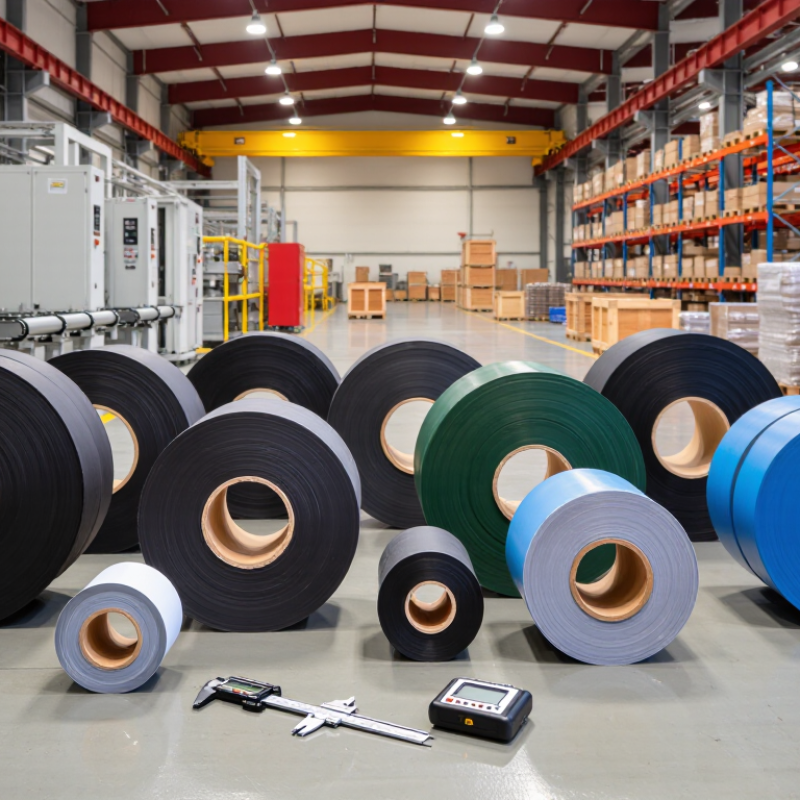
Rubber Roll Types: EPDM, NBR, Silicone, Polyurethane, and Shore A Hardness
Choosing rubber roll suppliers for global buyers requires more than comparing prices. Material selection should match the working environment, load, and expected service life.
EPDM performs well against weather, ozone, and outdoor moisture. It suits conveyor, printing, and general industrial applications. NBR resists mineral oils and many petroleum-based fluids. It is often selected for contact with oily materials. Silicone remains flexible across wide temperature ranges and supports clean processing environments. Polyurethane offers strong abrasion resistance and load-bearing performance. It can handle repeated contact with rough surfaces, but it may not suit every chemical exposure.
Shore A hardness affects grip, compression, and surface wear. A 50 Shore A roll feels softer and can improve contact on uneven materials. A 70 Shore A roll provides firmer support and better dimensional stability. Harder grades may reduce marking, though they can transmit more vibration. I have seen buyers choose hardness from a catalog value alone, then adjust after testing. That approach is risky. Test samples should run at the actual speed, temperature, pressure, and chemical exposure. Surface finish matters too. A smooth roll may reduce drag, while a textured finish can improve traction. Suppliers should provide compound data, hardness tolerance, roll dimensions, core details, and inspection records. Small gaps in documentation often create larger installation problems.
Rubber Roll Material Comparison for Global Buyers
Typical Shore A hardness ranges for commonly specified rubber roll materials. Actual values vary by formulation, reinforcement, temperature, and manufacturing requirements.
Global Rubber Roll Demand: Key Manufacturing Regions and Export Trends
Global rubber roll demand follows manufacturing, logistics, printing, steel, and packaging activity. The International Rubber Study Group’s World Rubber Industry Outlook placed total global rubber consumption at about 31 million tonnes in 2024. Its outlook indicates further growth in 2025. Demand is uneven, however. Automotive production supports large-volume orders, while packaging plants need smaller, highly customized rolls.
Asia-Pacific remains the main manufacturing center, with China, India, Japan, and South Korea supplying major industrial markets. UN Comtrade data under HS 4016, a broad category for vulcanized rubber articles, consistently identifies Asian and European economies as important exporters. Germany and Italy remain significant for engineered industrial components. Export shipments increasingly move toward Southeast Asia, Mexico, Eastern Europe, and the Middle East. Shorter supply chains matter more now.
Freight costs still distort comparisons. A low factory price may hide expensive inland transport, protective crating, or import duties. Buyers should examine roll hardness, surface tolerance, rubber compound, shaft design, and replacement lead time. A 0.05 millimeter surface error can affect coating uniformity in sensitive production lines. That detail matters. Forecasts also have limits, because HS trade codes rarely isolate rubber rolls from other products. Supplier rankings should therefore combine trade data, factory audits, test certificates, and verified production experience. Mistakes remain possible, especially when suppliers report capacity instead of completed export orders.
Supplier Standards: ISO 9001, ASTM D2000, and Material Traceability
10 Best Rubber Roll Suppliers for Global Buyers
Supplier Standards: ISO 9001, ASTM D2000, and Material Traceability
A reliable rubber roll supplier should show more than a polished certificate. The ISO Survey 2023 recorded 1,265,216 ISO 9001 certificates across 189 countries and economies. That figure signals broad adoption, not automatic quality. Buyers should check the certificate scope, audit status, and manufacturing location. Does it cover rubber compounding and roll production? Ask directly.
ASTM D2000 is a material classification system, not a supplier certification. It defines elastomer types, grades, test requirements, and performance codes. A capable supplier should translate your application into a clear D2000 callout. Request hardness, tensile strength, elongation, compression set, and temperature data. Test reports should identify the compound and laboratory method. Numbers without test conditions are weak evidence.
Material traceability connects each roll to its production history. Look for batch numbers, raw-material records, mixing dates, cure conditions, and final inspection results. A traceable roll should carry a label that matches its certificate of analysis. Simple details matter. During supplier audits, buyers can compare physical labels with digital records and retained samples. The system may still contain gaps. That is worth admitting. A certificate can become shelf decoration if staff cannot retrieve records quickly. Strong suppliers welcome questions, disclose limitations, and provide corrective-action evidence rather than vague assurances.
10 Best Rubber Roll Suppliers Compared by Capacity, Tolerance, and Lead Time
Global rubber roll buyers rarely need the largest supplier; they need predictable output. This comparison examines ten suppliers by production capacity, dimensional tolerance, and lead time. Capacity means more than machine count. It includes monthly tonnage, roll diameter range, core options, and quality staffing. A plant producing 500 rolls monthly may suit standard orders. Complex calendering rolls need different evidence. Ask for recent production records, not polished claims. Some suppliers answer slowly. That matters.
Tolerance should be checked against actual drawings. A stated ±0.05 mm may apply only to short, rigid rolls. Long rubber-covered rolls can change after curing, grinding, or temperature shifts. Request inspection reports showing hardness, concentricity, surface roughness, and final diameter. Samples help, but they cannot replace a controlled trial. In my experience, vague tolerance language creates more rework than a higher quoted price. It is easy to overlook runout at the journal ends. Do not.
Lead time must separate engineering, material preparation, molding, machining, inspection, and packing. Stock components may ship within days, while custom rolls can require six to ten weeks. Confirm the calendar starts after approved drawings and payment. Also check capacity during seasonal peaks. A supplier with spare equipment may still lack skilled finishing technicians. That weakness is rarely visible online. Compare corrective-action records, packaging photos, and communication during one sample order. The ranking should remain flexible; an attractive capacity figure cannot excuse unstable tolerance or missed dispatch dates.