

Top 10 Screen Printing Binder Suppliers Worldwide
Choosing a Binder For Screen Printing is a production decision, not a label-shopping exercise. The right formulation helps pigment grip the fabric, keeps the printed hand comfortable, and withstands the intended wash cycle. The wrong match can leave a stiff patch, dull color, or a print that cracks after wear. Small tests matter.
Screen-printing educator Andy MacDougall offers a useful principle: “A binder must suit the fabric, the print, and the process.” That practical idea guides this look at ten suppliers serving buyers worldwide. The list is a starting point, not a universal ranking; availability, product ranges, and technical support vary by region. A supplier’s datasheet should be checked against the actual textile, pigment, mesh, and curing setup.
Look closely. A sample swatch can reveal more than a brochure. Compare softness after curing, color strength under consistent lighting, and film flexibility when the fabric is stretched. Ask suppliers about solids content, recommended curing conditions, storage, and compatibility with your existing ink system. Record the results. Then test again on production equipment, where humidity, screen tension, and line speed can change the outcome.
Not every claim is easy to compare. That’s worth admitting. This guide introduces supplier differences and the questions that help narrow a shortlist, while leaving final selection to documented trials and verified technical guidance. A careful choice saves rework—and sometimes reveals that the first favorite was not the best fit.
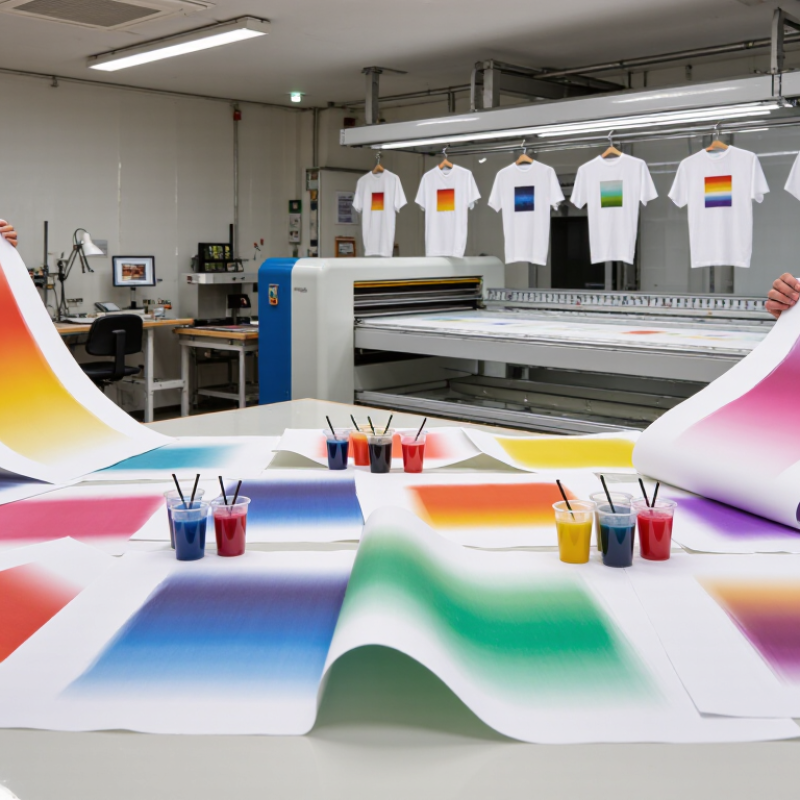
What Screen Printing Binders Are and How They Function
Screen printing binders are the film-forming components that help pigments stay attached to fabric after printing. In water-based systems, the binder surrounds pigment particles and forms a flexible layer as water evaporates and the print is cured. Without a suitable binder, a bright image may crack, rub off, or fade quickly in washing. Ink passes through mesh openings, so binder viscosity and flow also affect edge sharpness and coverage. Small details matter.
A useful binder must match the substrate, pigment, and curing conditions. Cotton absorbs moisture differently from polyester, while blended fabrics can behave unpredictably. Some formulations emphasize softness and stretch; others prioritize abrasion resistance or a matte finish. There is a trade-off. A thicker film may improve durability but feel stiff on lightweight fabric. Test samples should be cured at the specified time and temperature, then checked for hand feel, adhesion, rubbing, and wash performance. Do not judge only by the wet print.
When comparing suppliers, review technical data such as solids content, recommended dosage, curing range, storage stability, and compatibility with the intended ink system. Request a sample and test it on the actual fabric and production equipment. Lab results help, but they cannot reproduce every workshop condition. Even experienced printers may need to adjust mesh, squeegee pressure, or drying time after a binder change. That uncertainty is worth documenting.
Top 10 Screen Printing Binder Suppliers Worldwide – What Screen Printing Binders Are and How They Function
A practical guide to ten commonly sourced binder chemistries and product categories
How to read this table: A binder is the film-forming component that holds pigment or other colorants on a printed surface. The entries below describe widely used binder types—not ranked suppliers or company-specific products. Performance depends on the complete ink formulation, substrate, print conditions, and curing process.
| # | Binder type | How it functions | Common screen-printing applications | Typical curing approach | Key points to check when sourcing |
|---|---|---|---|---|---|
| 1 | Water-based acrylic | Acrylic polymer particles coalesce as water evaporates, forming a continuous film that anchors pigment to the substrate. | Textiles, paper, and selected coated or rigid surfaces, depending on the formulation. | Drying and, where specified, heat curing to develop the intended film properties. | Substrate compatibility, minimum film-forming temperature, hand feel, wash or rub resistance, and curing requirements. |
| 2 | Styrene-acrylic | A copolymer latex forms a pigment-holding film; the balance of polymer components can influence hardness, adhesion, and water resistance. | Paper, packaging, and selected textile or porous-surface ink systems. | Water evaporation followed by film formation; additional heat or crosslinking may be required by the product specification. | Flexibility, adhesion to the intended surface, water resistance, and compatibility with pigments and additives. |
| 3 | Polyurethane (PU) | Forms a flexible polymer film that binds colorant and can provide abrasion resistance and adhesion on suitable substrates. | Textiles, synthetic materials, and specialty graphics where a flexible film is needed. | Water-based grades generally dry and may require heat curing; solvent-based or reactive grades follow their specified process. | Flexibility, adhesion, chemical and abrasion resistance, curing schedule, and any handling precautions for reactive components. |
| 4 | Silicone elastomer | A silicone polymer cures into an elastic film that can retain flexibility on stretchable substrates. | Stretch textiles and other applications requiring a soft, elastic printed layer. | Usually heat-cured; some systems require a catalyst or other specified mixing components. | Substrate preparation, catalyst ratio, pot life, cure conditions, stretch performance, and compatibility with other ink layers. |
| 5 | PVC plastisol | PVC resin particles are dispersed in plasticizer; heating causes the resin to fuse into a continuous film that holds pigment. | Textile printing, especially on compatible fabrics. | Heat curing to the formulation’s specified temperature and time so the film fuses adequately. | Substrate compatibility, cure verification, hand feel, applicable chemical regulations, and the product’s plasticizer and safety documentation. |
| 6 | UV-curable acrylate | Reactive acrylate components polymerize under ultraviolet light, creating a solid film that binds the colorant to the surface. | Graphics on suitable paper, plastic, and other compatible rigid or flexible substrates. | Exposure to a matched UV source; cure depends on lamp output, ink film thickness, color, and line speed. | Substrate adhesion, lamp and photoinitiator compatibility, cure depth, surface safety requirements, and residual tack. |
| 7 | Epoxy resin system | Resin and curing agent react to form a crosslinked film that can provide strong adhesion and chemical resistance. | Specialty industrial and durable graphic applications on compatible substrates. | Two-component chemical cure, sometimes supported by heat; working time and full-cure time vary by formulation. | Mix ratio, pot life, substrate preparation, cure schedule, chemical resistance, and required personal protective measures. |
| 8 | Polyester-based binder | Polyester resins form a film or crosslinked network that can bind pigments in purpose-formulated printing inks. | Selected industrial, specialty, and graphic-printing systems. | Depends on the resin: systems may use heat, a chemical crosslinker, or another specified curing process. | Resin type, crosslinker requirements, adhesion, flexibility, chemical resistance, and substrate-specific performance data. |
| 9 | Polyamide-based binder | Polyamide resin contributes film formation and adhesion in ink systems designed for compatible surfaces. | Selected packaging, film, and specialty graphic applications, depending on the ink formulation. | Often relies on solvent evaporation; exact drying and any post-treatment depend on the product system. | Compatibility with the printed film, adhesion, blocking resistance, drying conditions, and applicable food-contact or packaging requirements. |
| 10 | Natural or synthetic latex | Latex particles merge as the carrier evaporates, forming a flexible film that can hold pigment on suitable substrates. | Selected textile and porous-substrate applications. | Drying and film formation, with heat curing or crosslinking where required by the formulation. | Latex type, allergy and handling considerations, film flexibility, wash durability, substrate compatibility, and storage stability. |