

Top Stainless Steel Door Hinge Manufacturers and Suppliers?
Choosing reliable stainless steel door hardware is rarely as simple as comparing prices. This guide examines the top stainless steel door hinge manufacturers and suppliers through practical, measurable details. We consider grade, load capacity, pin design, bearing performance, surface finish, certifications, and production consistency. A hinge may look polished in a product photograph. Its real value appears after thousands of openings, temperature changes, cleaning cycles, and occasional misuse.
Architectural hardware consultant John T. McCarthy describes the principle clearly: “A hinge is a small component carrying a large responsibility.” That observation matters when evaluating Door Hinge Stainless Steel products for homes, hotels, hospitals, workshops, and commercial entrances. A 304 stainless steel hinge may suit ordinary indoor conditions. Coastal projects may require 316 stainless steel, especially near salt spray. Weld quality, knuckle alignment, and screw-hole accuracy also deserve close inspection. Small errors become visible at the door edge.
This overview connects supplier claims with field experience. It looks beyond attractive catalogs and broad promises. Factory audits, material traceability, testing records, warranty terms, and technical support can separate dependable suppliers from ordinary traders. Still, no ranking is perfect. Project conditions differ, and even a respected manufacturer may offer uneven product lines. That is worth admitting. Buyers should verify samples, drawings, and corrosion requirements before placing large orders. The strongest supplier is not always the cheapest or most famous. It is the one that consistently matches the hinge to the door, environment, duty cycle, and installation reality.
What Are Stainless Steel Door Hinges and Why Are They Used?
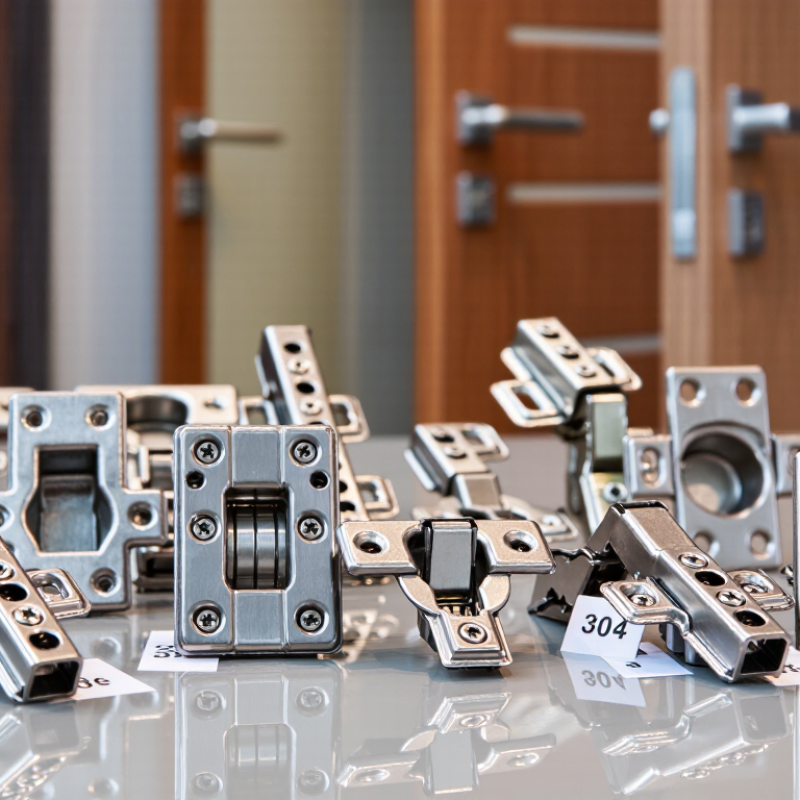
Stainless steel door hinges are load-bearing fittings that connect a door leaf to its frame. They usually contain stainless steel leaves, a pin, and knuckles. Their job seems simple. It is not.
Stainless steel resists moisture, staining, and many cleaning chemicals better than ordinary carbon steel. This makes it practical for coastal buildings, hospitals, kitchens, workshops, and public entrances. The International Stainless Steel Forum reported approximately 58.4 million tonnes of stainless steel production in 2023. That scale supports broad material availability and established fabrication expertise. However, not every stainless hinge performs equally. Grade, thickness, pin design, weld quality, and surface finishing all matter.
For buyers comparing manufacturers and suppliers, hinge selection should begin with the environment. Grade 304 often suits indoor and general commercial use. Grade 316 offers stronger resistance in salt-rich or chemically demanding areas. Door weight and opening frequency also affect performance. A lightweight residential hinge may fail on a busy metal door. It happens.
The worldstainless industry group reports that recycled scrap supplies roughly 60% of stainless steel production inputs globally. This supports the material’s resource efficiency, although recycling content alone does not prove product quality. I would still request load ratings, corrosion-test results, dimensional drawings, and installation guidance. A polished finish looks convincing, but hidden tolerances often decide whether the door closes quietly after years of use.
Top Stainless Steel Door Hinge Manufacturers and Suppliers? - What Are Stainless Steel Door Hinges and Why Are They Used?
| Evaluation Dimension | Common Specification or Data | Why It Matters for Stainless Steel Door Hinges |
|---|---|---|
| Basic Definition | A mechanical bearing device that connects a door to its frame and allows controlled rotation around a hinge pin. | The hinge transfers the door weight and operating forces to the frame while maintaining alignment. |
| Most Common Stainless Steel Grades | AISI 304 for general indoor and outdoor use; AISI 316 for marine, coastal, chemical, and high-chloride environments; AISI 201 for lower-cost indoor applications. | The grade affects corrosion resistance, service life, cost, and suitability for demanding environments. |
| Typical Hinge Types | Butt hinges, ball-bearing hinges, spring hinges, continuous hinges, lift-off hinges, weld-on hinges, and concealed hinges. | Different designs address load distribution, self-closing requirements, security, installation method, and appearance. |
| Common Door Hinge Sizes | Typical butt-hinge heights are approximately 75 mm, 100 mm, 102 mm, 114 mm, or 127 mm; common widths are approximately 63 mm to 102 mm. | Correct dimensions help match the hinge to the door thickness, frame preparation, screw pattern, and required load rating. |
| Load Capacity | Light-duty hinges may support lightweight interior doors, while heavy-duty ball-bearing or continuous hinges are used for heavier commercial and industrial doors. Capacity must be confirmed from the product test rating. | Door weight, width, frequency of use, number of hinges, fasteners, and installation quality all influence actual performance. |
| Recommended Hinge Quantity | Two hinges are commonly used on light interior doors; three or more are often specified for taller, heavier, high-use, fire-rated, or security doors. | Additional hinges can improve weight distribution and reduce sag, but the manufacturer’s installation instructions should control. |
| Surface Finishes | Brushed satin, polished, matte, bead-blasted, and passivated finishes are commonly available. | The finish influences appearance, cleanability, surface protection, and resistance to visible fingerprints or scratches. |
| Corrosion Resistance | 304 stainless steel generally suits normal indoor and outdoor conditions; 316 stainless steel provides improved resistance to chlorides and marine exposure. | Stainless steel forms a protective chromium-oxide film, but contamination, poor drainage, salt, and harsh chemicals can still cause staining or corrosion. |
| Bearing Options | Plain bearing, washer bearing, ball bearing, and concealed bearing arrangements are commonly used. | Ball-bearing and other low-friction designs are useful for heavy doors and frequent traffic because they reduce operating resistance. |
| Fastener Compatibility | Stainless steel screws are typically selected for stainless steel hinges; fastener size and thread type depend on the door and frame material. | Compatible fasteners reduce galvanic corrosion risk and help maintain the required pull-out and shear strength. |
| Typical Applications | Residential entrances, commercial buildings, hospitals, food-processing areas, hotels, schools, public facilities, marine locations, and industrial enclosures. | Stainless steel is selected where durability, hygiene, moisture resistance, and a clean architectural appearance are important. |
| Hygiene and Cleanability | Smooth stainless steel surfaces can be cleaned with suitable neutral detergents and soft materials. | The material is non-porous and easy to maintain, making it suitable for healthcare, catering, and food-related environments. |
| Standards and Testing | Depending on the market and application, buyers may request testing or compliance related to architectural hardware, fire doors, accessibility, corrosion resistance, and cycle durability. | Verified testing provides evidence that the hinge meets performance requirements rather than relying only on material descriptions. |
| Supplier Qualification Criteria | Material certificates, dimensional drawings, load ratings, inspection records, finish samples, quality-control procedures, and traceability documentation. | These documents help purchasers compare suppliers objectively and confirm consistency between samples and production batches. |
| Customization Options | Custom height and width, hole patterns, corner profiles, thickness, pin design, finish, bearing type, and packaging are commonly available. | Customization allows the hinge to fit special doors, frames, architectural requirements, and installation constraints. |
| Maintenance Requirements | Inspect screws and alignment periodically, remove corrosive deposits, and lubricate only when recommended for the specific bearing design. | Routine maintenance helps prevent noise, binding, loose fasteners, premature wear, and door sag. |
Note: Hinge dimensions, load ratings, finishes, and compliance requirements vary by design and application. Always verify the supplier’s technical drawing, test documentation, and installation instructions before purchase.