

Blog
Blog
Blog
Top 10 Trade Show Booth Rental Alternatives
A booth can be a stage, a meeting room, or simply a few well-lit square feet. The right choice depends on what your team needs visitors to do there. Renting is convenient, but it is not the only route. This guide explores ten Trade Show Booth Rental Alternative options, from reusable modular displays to custom builds and portable exhibits.
The decision deserves more than a quick price comparison. CEIR’s 2024 Index to the U.S. Exhibition Industry tracked the sector’s ongoing recovery and performance across multiple event metrics. That context matters: exhibition spending is tied to a changing market, while a booth’s real value depends on leads, conversations, and follow-up. CEIR CEO Cathy Breden’s industry work emphasizes the importance of understanding exhibition performance. In practical terms, measure outcomes—not just square footage. A cheaper display can still cost more if it takes longer to install or fails to fit your show schedule.
There is no universal winner. A compact tabletop display may suit a small team with two cases and a tight setup window. A custom booth can make a stronger visual statement, but storage, transport, and labor deserve honest attention. Reusable systems also need care. They are not automatically greener or cheaper if components sit unused between events. The options ahead compare flexibility, control, and likely trade-offs. Use them to ask better questions before signing a contract. The details count. And sometimes, the best alternative is still a rental.
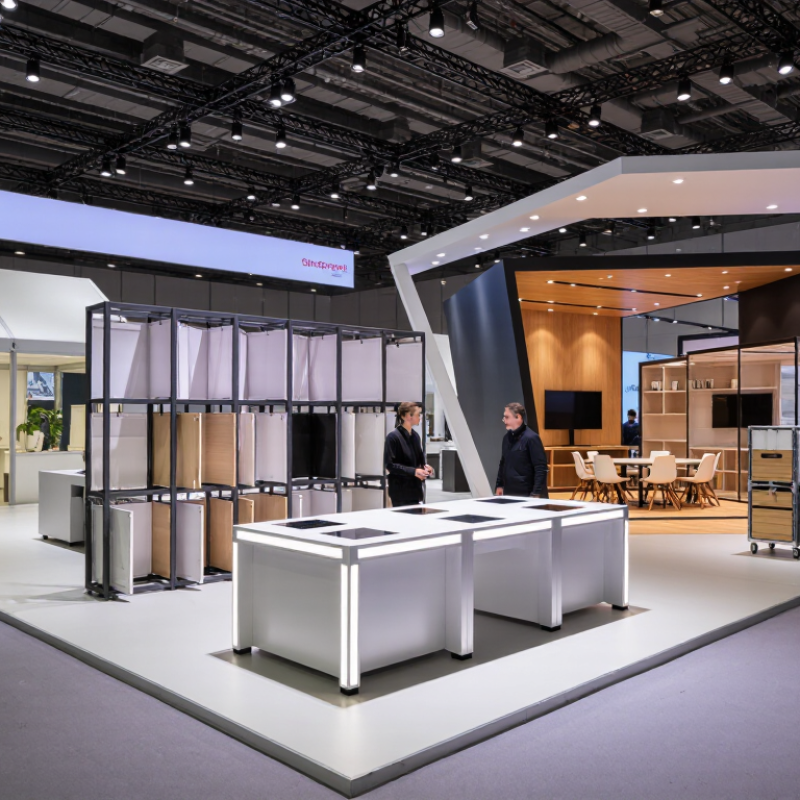
What Trade Show Booth Rental Alternatives Include
Trade show booth rental alternatives include portable pop-up displays, modular systems, reusable custom booths, and hybrid exhibit programs. Portable displays use lightweight frames, fabric graphics, and cases that fit through standard venue doors. They suit small footprints and frequent travel, though they offer less room for storage or private conversations.
Freeman’s 2023 attendee research reported that 77% of attendees see in-person events as an effective way to discover new products and services. That makes clear product displays and staff interaction worth planning, whatever the structure.
Still, the right alternative depends on event frequency, labor, and freight costs; a modular booth may look economical until storage and handling are counted. CEIR’s 2023 industry index placed exhibition performance at 68.4% of its 2019 level in 2022, reflecting a market still recovering.
Plans need some slack. A display that works on paper can feel cramped once visitors arrive.
Ten Alternatives to Renting a Trade Show Booth
A rented booth is convenient, but it is not the only way to meet buyers in person. CEIR’s 2023 economic-impact study estimated that U.S. business-to-business exhibitions generated $15.58 billion in direct spending in 2019. The scale is substantial. Still, a standard booth may not suit every team, budget, or product. I have seen small displays work well when staff can explain the product clearly.
Consider ten alternatives:
- buy a modular exhibit;
- choose a portable tabletop display;
- commission a reusable custom structure;
- rent only selected display components;
- share exhibit space with a noncompeting partner;
- sponsor a show-floor lounge;
- book a nearby meeting room;
- stage a small product demonstration off the floor;
- bring a mobile demonstration setup;
- or skip the booth and arrange meetings with attendees.
Each option changes the trade-off. A tabletop setup is easy to carry, but it offers little room for several conversations.
Before choosing, compare storage, shipping, setup labor, and staff time—not just the booth quote. A purchased structure can become expensive if it sits unused between events. A shared space can reduce costs, though both teams need clear schedules and messaging. Off-floor meetings feel calmer, but visitors may never find them without advance invitations. The imperfect part is forecasting attendance: even careful plans can miss. Test a smaller format at one event, then review qualified conversations and total costs.
How Booth Options Differ in Cost, Setup, and Flexibility
Trade show booth options differ most in three areas: price, setup time, and how easily they adapt to a new floor plan. A shell-scheme booth is usually a lower-cost starting point, while tabletop displays and banner stands suit small spaces and lighter budgets.
Pop-up walls pack into compact cases and can be assembled quickly. They offer less room for product demonstrations, though. Portable hardwall displays look more substantial but need extra transport space. Modular rentals let exhibitors change layouts between events, often with higher design and labor costs.
Custom rental booths can create a tailored look without purchasing every structure, but detailed designs may require longer planning. Turnkey rentals bundle services such as delivery, installation, and dismantling; check what labor and storage fees are included. Hybrid booths combine rented frames with reusable graphics, balancing convenience and repeat use.
Shared pavilion spaces reduce the footprint and staffing needs, but offer less control over placement. A simple inline booth may need fewer materials than an island layout, which often requires more lighting and rigging.
Setup varies, too. Some displays take minutes; others need trained crews and scheduled access. One easily missed cost is shipping crates between venues. Ask for an itemized estimate, then compare the total with your expected setup hours and how often the design can be reused. A cheaper option can become awkward if its graphics do not fit next year’s floor plan.
Choosing a Booth Alternative for Your Brand and Event Goals
Choosing a booth alternative starts with the job the space must do. A product launch needs room for demonstrations, while a small sales team may need only a clear meeting point. Write down the event goal, expected visitor flow, and number of staff before comparing options. Keep it practical.
A modular display can adapt to different floor plans and be reused across several events. A tabletop setup is easier to transport, but may offer little space for hands-on demos. Portable backdrops work well for simple messaging, though they can look bare in a large hall. That matters. Check setup time, storage needs, lighting, and venue requirements before committing. A beautiful design that takes two hours to assemble may not suit a one-day event.
Match the alternative to your team’s capacity, not just the artwork. If staff must carry everything, test the packed weight and assembly steps in advance. For a lead-generation goal, position a small counter where visitors can stop without blocking the aisle. For brand awareness, prioritize readable graphics and a strong sightline from nearby walkways. A compact booth can feel polished, but it may also feel sparse; review a mock-up at full scale and ask someone outside the project what they notice first.
| Alternative | Typical Format | Relative Upfront Cost | Best Suited To | Setup and Transport | Customization | Key Consideration |
|---|---|---|---|---|---|---|
| Portable Pop-Up Display | Collapsible frame with a printed fabric or panel backdrop | Low to moderate | Small teams, first-time exhibitors, and recurring events with a compact footprint | Usually designed for tool-light assembly and transport in carry cases | Moderate; graphics can often be replaced without replacing the frame | Check packed dimensions, graphic replacement options, and whether the display fits the assigned space. |
| Tabletop Display | Small display placed on an event-provided or separately sourced table | Low | Conferences, tabletop showcases, and events with limited exhibit space | Lightweight and easy to carry; typically needs little setup | Low to moderate; branding is mainly on the backdrop and tabletop materials | Confirm table size, height limits, and what furniture the event includes. |
| Banner Stand Collection | One or more retractable or tension-pole banners arranged as a backwall | Low | Budget-conscious exhibitors who need a simple, flexible branded presence | Compact and portable; individual stands can be set up quickly | Moderate; banners can be rearranged or updated individually | Several narrow banners may look less cohesive than a continuous backdrop, so plan the layout carefully. |
| Reusable Modular Exhibit | Reconfigurable frames and panels assembled into different booth layouts | Moderate to high | Organizations attending multiple events with changing space requirements | Requires packing, inventory control, and setup planning; transport needs depend on the system | High; components can be combined in different configurations | Compare purchase, storage, shipping, maintenance, and labor costs over the planned period of use. |
| Custom-Built Reusable Exhibit | Purpose-designed structure built for repeated use and tailored to a specific brand experience | High | Established exhibitors with consistent event schedules and a long-term exhibit strategy | Typically needs professional packing, freight coordination, and skilled installation | Very high; layout, materials, lighting, and integrated features can be tailored | Assess storage, repair, refurbishment, and future reconfiguration before committing to a design. |
| Fabric Tension Display | Printed stretch fabric fitted over a lightweight frame | Low to moderate | Exhibitors seeking a clean, continuous graphic backdrop that is relatively portable | Frames and fabric often pack into cases; assembly depends on frame design | Moderate; fabric graphics can commonly be changed or reprinted | Review fabric care, replacement availability, and lighting conditions that may affect graphic visibility. |
| Portable Hard-Wall Display | Lightweight rigid panels or framed walls with shelves or product displays | Moderate | Brands that need a more structured presentation for products, demonstrations, or samples | More components than a banner setup; handling and packing requirements vary | Moderate to high; panels, shelves, and graphics can often be configured to suit the display | Confirm freight dimensions, weight, assembly time, and any venue rules for wall height or fixtures. |
| Branded Counter and Backdrop | Compact counter paired with a backdrop, signage, or digital screen | Low to moderate | Lead capture, product sampling, short conversations, and demonstrations in a small area | Usually simpler to transport than a large exhibit; screen equipment adds handling needs | Moderate; branding can be applied to the counter, backdrop, and presentation content | Plan staff positions, accessible circulation, power needs, and a secure place for supplies. |
| Meeting-Space or Conference-Room Presence | Scheduled meetings in an event venue or nearby meeting room, supported by digital or printed materials | Low to moderate | Account-based outreach, confidential conversations, and appointment-led programs | Minimal exhibit freight; room booking, scheduling, and presentation setup may be needed | High for meeting content and room setup; limited by the venue and room arrangement | It offers less walk-up visibility than an exhibit floor presence, so outreach and appointment scheduling matter. |
| Off-Floor Experiential Activation | Hosted demonstration, workshop, sampling activity, or scheduled experience outside a conventional booth | Variable | Brands aiming for focused engagement, education, product trial, or a memorable audience experience | Depends on the activity, venue, equipment, staffing, and any required permits | High; the format can be designed around the audience and event objectives | Check event policies, venue approval, attendee access, safety requirements, and any sponsorship restrictions. |
Planning Logistics for a Non-Rental Booth Display
A non-rental booth gives you more control, but it also makes you responsible for every moving part. Start with the venue’s exhibitor manual: check delivery windows, dock access, booth dimensions, electrical limits, and required material ratings. Record deadlines in one shared schedule. Small details matter.
Plan the shipment around the booth’s actual packed dimensions and weight, not its floor footprint. Create an inventory with item names, quantities, package numbers, and setup locations. Keep tools, fasteners, graphics, and printed instructions together in a clearly marked case. Build a buffer. Freight queues and late deliveries can disrupt even a careful plan.
Before shipping, assemble the display once at your workshop or office. Photograph each stage, note which parts need two people, and test lighting and monitor connections. Then estimate return freight, storage, replacement parts, and labor alongside the original build cost. A reusable booth may save money over time, but only if its components survive handling and fit future spaces. One planning assumption often fails: a neat timeline on paper does not account for tired crews or a crowded loading area. Leave room for adjustments, and assign one person to confirm shipments and venue requirements.