

Blog
Blog
Blog
7 Vanity Sink Buying Tips for Global Buyers
Buying a Vanity sink for an international project involves more than choosing a polished shape or attractive price. Buyers must compare dimensions, materials, installation methods, drainage compatibility, and supplier reliability. A product that fits a showroom may fail in a hotel bathroom with different plumbing connections. Small details matter.
This guide shares seven practical buying tips based on common sourcing and installation considerations. It explains how to assess ceramic, stone, glass, and engineered materials under daily use. It also considers basin depth, splash control, countertop alignment, packaging quality, and replacement-part availability. These points can help importers, distributors, designers, and property developers reduce avoidable mistakes.
Global buyers should also review product specifications carefully. Confirm measurements in millimeters, clarify tap-hole positions, and request clear drawings before placing an order. Regional plumbing practices differ, even when products appear similar. Ask suppliers about quality inspections, moisture resistance, load capacity, and warranty conditions. Reliable manufacturers should provide consistent documentation, responsive communication, and realistic lead times.
A checklist helps, but it is not perfect. I have seen attractive samples hide weak packaging or inconvenient maintenance details. That is why photographs alone should never decide a purchase. Request a sample when possible. Examine the glaze, edges, overflow design, and underside finish by hand. Also calculate shipping volume, breakage risk, import costs, and after-sales support. The cheapest Vanity sink may become expensive after delays or replacements. Careful comparison creates stronger purchasing decisions and more dependable bathroom results.
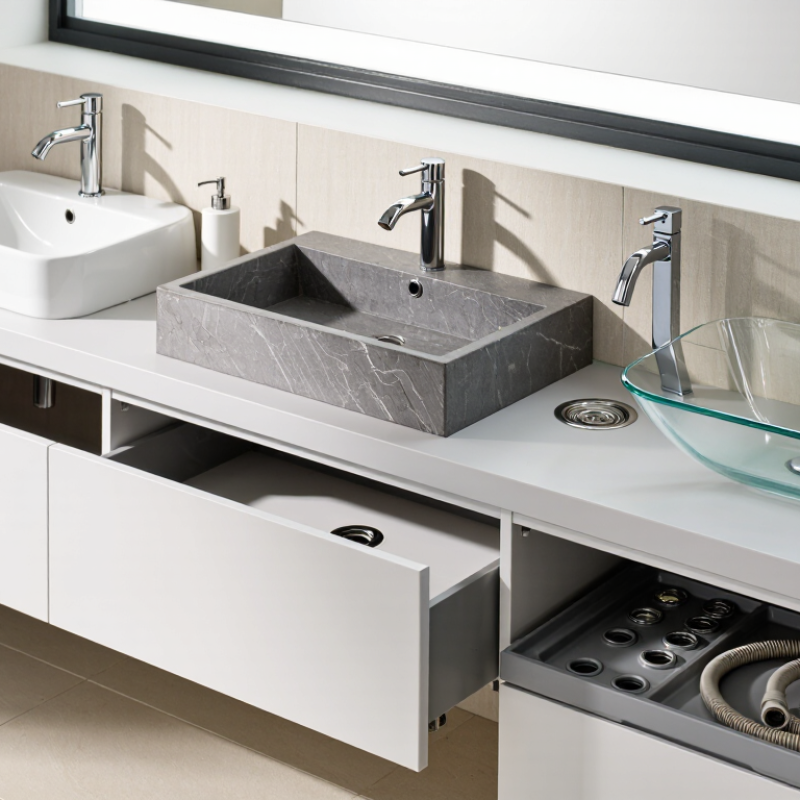
Understanding Vanity Sink Types and Global Market Requirements
7 Vanity Sink Buying Tips for Global Buyers
Understanding Vanity Sink Types and Global Market Requirements
Choosing a vanity sink starts with the bathroom layout, not appearance. Countertop sinks create a strong visual feature but need a stable, water-resistant surface. Undermount sinks are easier to wipe clean, while wall-mounted models save floor space. Measure twice. Check the drain position, faucet holes, basin depth, and cabinet clearance before ordering.
Global buyers should confirm plumbing compatibility early. Drain sizes, overflow designs, faucet connections, and installation methods can differ between markets. A sink that fits one region may require adapters elsewhere. Ask suppliers for dimensional drawings, installation instructions, material specifications, and test documentation. Ceramic, stainless steel, solid surface, and glass each have different cleaning and durability needs. Smooth glazing helps reduce stains, but careless packaging can still cause damage.
Think beyond the sample unit. Confirm carton strength, moisture protection, pallet loading, spare parts, and replacement procedures. Export packaging should protect corners and drainage fittings during long transport. I once underestimated cabinet tolerance by a few millimeters; installation became unnecessarily difficult. That mistake still matters. Review color consistency across production batches, especially for large projects. Buyers should also consider local water quality, cleaning habits, climate, accessibility, and customer expectations. Certifications and safety documents should match the destination market, because requirements are not identical everywhere. A lower purchase price may hide higher installation or after-sales costs. Compare the complete supply chain, not just the sink.
Measuring Bathroom Space and Selecting the Right Sink Size
7 Vanity Sink Buying Tips for Global Buyers
Measuring Bathroom Space and Selecting the Right Sink Size
Measure the finished bathroom, not the architectural drawing. Record wall width, door swing, toilet projection, radiator position, and pipe locations in millimetres. Then measure twice. A 10 mm error can disrupt installation. The NKBA Bathroom Planning Guidelines recommend about 533 mm of clearance in front of a lavatory. For accessible projects, ADA guidance requires a 762 × 1,219 mm clear floor space, subject to local regulations.
Choose the sink width after checking movement around it. A 600 mm vanity often suits compact bathrooms, while 750–900 mm models provide better storage and counter space. Depth matters too. A 500 mm-deep cabinet may make a narrow walkway uncomfortable. One assumption deserves questioning: bigger is not always better. A wide basin can reduce door clearance and create awkward splash zones. Test the footprint with masking tape before ordering.
Check faucet-hole positions, drain alignment, countertop thickness, and cabinet height. Vessel sinks need extra attention because their rim raises the final basin height. Leave room for cleaning around the back edge. The U.S. Environmental Protection Agency’s WaterSense specification limits bathroom faucet flow to 5.7 litres per minute, compared with older 8.3-litre-per-minute standards. Sink size does not control flow, but a correctly matched faucet helps prevent splashing. Local plumbing codes still decide the final installation details.
Comparing Materials, Finishes, Durability, and Maintenance Needs
7 Vanity Sink Buying Tips for Global Buyers
Material affects daily comfort, not just appearance. Vitreous china resists stains and cleans easily, but dropped tools can chip its surface. Solid surface feels warm and allows small scratches to be refinished. Natural stone offers unique veining, although porous varieties may absorb toothpaste, dye, or hard-water minerals.
I once assumed heavier sinks were always stronger. That was not accurate. Mounting support and material quality matter more than weight alone.
Finish changes maintenance demands. A high-gloss surface shows water spots quickly, especially in areas with mineral-rich water. Matte finishes hide minor marks, but some cleaners can leave cloudy patches. Ask whether the finish tolerates acidic products, abrasive pads, and frequent disinfecting. Request care instructions in clear language. This small step prevents costly misunderstandings across regions.
Durability also depends on temperature changes, drainage design, and installation accuracy. Check the basin depth, overflow system, and waste fitting compatibility before ordering. A thin rim may look elegant, but it can feel fragile during installation. Sealed stone needs periodic protection, while glazed ceramic usually needs less attention.
However, “low maintenance” never means maintenance-free. Wipe standing water after use, inspect sealant lines, and avoid harsh powders. Local water quality, cleaning habits, and replacement-part access should influence the final choice.
Checking Plumbing Compatibility, Installation Methods, and Accessories
7 Vanity Sink Buying Tips for Global Buyers
Check the rough-in before choosing a vanity sink. Measure the wall, floor, drain centerline, supply outlets, and available door clearance.
A useful admission: drawings can still miss a pipe by 20 millimeters.
Photograph the existing plumbing and confirm local codes with a licensed installer.
Compare installation methods carefully. Wall-mounted vanities need solid blocking, accurate brackets, and concealed pipework. Floor-standing units are more forgiving, but their cabinet base must clear the P-trap.
Confirm whether the basin includes an overflow, mounting hardware, drain, and tap holes.
For international projects, specify thread standards, shutoff-valve sizes, and flexible hose certifications. Small mismatches create expensive delays.
Water performance deserves evidence. The U.S. EPA WaterSense specification limits bathroom faucets to 1.5 gallons per minute, about 30% below the common 2.2-gallon standard, while requiring performance testing (EPA WaterSense, Bathroom Faucet Specification).
Choose a compatible aerator, bottle trap, pop-up waste, and accessible isolation valves.
UN-Water reported that only 57% of the global population used safely managed sanitation services in 2022 (UN-Water, 2024).
That figure makes installation quality more than a design detail.
Test every joint before sealing the cabinet. Leave service access. It is often overlooked.
Evaluating Suppliers, Costs, Certifications, and Shipping Conditions
Global buyers should assess a vanity sink through seven practical checks: supplier capability, landed cost, certifications, materials, quality control, shipping conditions, and after-sales support. Request factory photos, production capacity, inspection records, and two recent export references. A low quotation can look attractive. It may hide weak packaging or expensive replacement costs.
Calculate the complete landed cost, including tooling, testing, inland transport, insurance, duties, and port charges. UNCTAD’s Review of Maritime Transport 2023 reports that over 80% of global merchandise trade moves by sea. Freight delays therefore affect project schedules. Ask for carton dimensions, pallet strength, moisture protection, loading photos, and agreed Incoterms. The World Bank’s 2023 Logistics Performance Index compares 139 economies, showing why destination logistics deserve supplier evaluation.
Verify certifications against the destination market, not a generic certificate folder. Check test scope, expiry dates, factory address, and whether the model number matches. Confirm ceramic thickness, basin dimensions, overflow design, surface finish, and water-resistance requirements. Approve a production sample before mass manufacturing. Then use an independent inspection for quantity, color consistency, cracks, and packaging damage. Request clear warranty terms and spare-part availability. This is often overlooked. My own caution is simple: never treat a polished sample as proof of stable production. Suppliers can improve packaging, but buyers must document every expectation in the purchase contract.
7 Vanity Sink Buying Tips for Global Buyers
Evaluate suppliers, landed costs, certifications, and shipping conditions before placing an international order.
The chart summarizes two responsibilities under selected Incoterms® 2020 rules. “1” means the seller performs the responsibility, while “0” means the buyer does. Always confirm the named place, insurance scope, customs requirements, and local import regulations in the sales contract.
- Confirm basin dimensions, tap-hole configuration, overflow design, mounting method, material, finish, and tolerance requirements.
- Evaluate suppliers using factory capability, quality-control procedures, production capacity, inspection records, and sample consistency.
- Calculate total landed cost, including product price, packaging, inland transport, freight, insurance, duties, taxes, brokerage, and destination charges.
- Request relevant compliance documents for the destination market. ISO 9001 indicates a quality-management system; it does not replace product-specific safety or plumbing requirements.
- Choose the shipping term only after clarifying who handles export clearance, main carriage, insurance, import clearance, duties, and delivery.
- Check export packaging, palletization, moisture protection, carton markings, drop-test requirements, and spare-part availability.
- Use pre-shipment inspection and verify commercial invoices, packing lists, certificates of origin, test reports, and shipping documents before release of payment.