What Is Non Powered Amusement Equipment?
Non Powered Amusement Equipment refers to recreational structures that operate without motors or powered mechanisms. Users supply the movement, or gravity does. Examples include playground slides, swings, climbing frames, seesaws, outdoor fitness stations, and some rope-course elements. The category sounds straightforward. In practice, its boundaries can blur: a moving feature may still be non-powered when people drive its motion.
The design matters beyond the equipment itself. A child’s hands grip a cool metal rung; shoes meet a rubber surface; a caregiver checks sightlines from a nearby bench. Each detail affects how people use a space. The U.S. Consumer Product Safety Commission’s Public Playground Safety Handbook offers practical guidance on hazards, surfacing, and equipment layout. For broader context, the National Recreation and Park Association’s 2023 Engagement With Parks report found that 84% of U.S. residents viewed local parks and recreation as an important service. That figure reflects public value, not equipment performance. Keep the distinction clear.
Play researcher Dr. Stuart Brown, founder of the National Institute for Play, has said, “The opposite of play is not work—it’s depression.” His point is about play’s importance, not a product specification. Still, it helps explain why thoughtful equipment planning deserves attention. This guide defines the category, outlines common types, and examines the practical choices behind selection and upkeep. No single design fits every site. A compact courtyard and a busy public park ask different things of the same equipment. That deserves a second look.
What Qualifies as Non-Powered Amusement Equipment?
What Qualifies as Non-Powered Amusement Equipment?
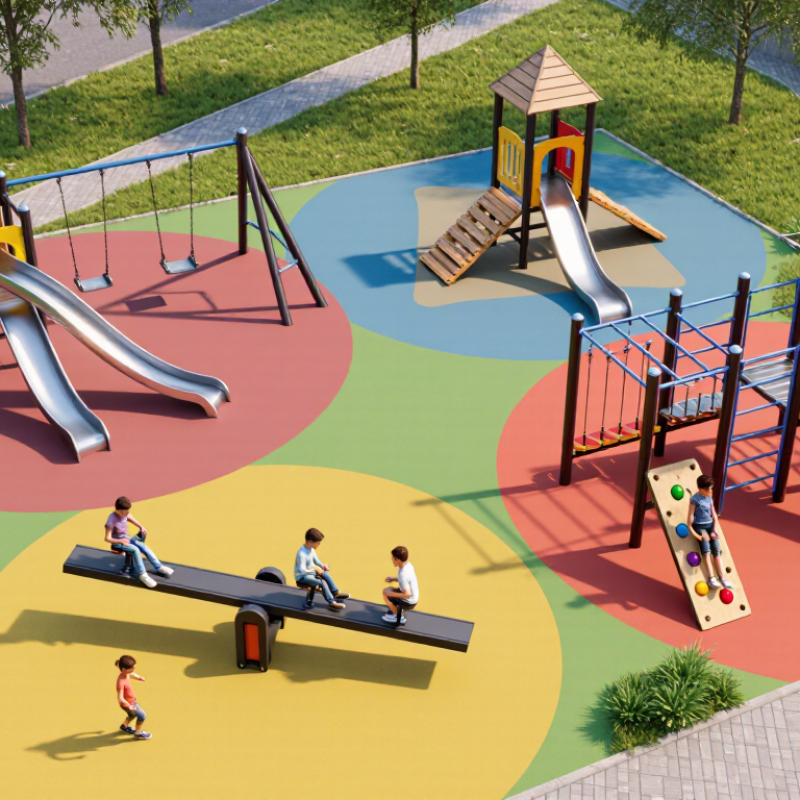
Non-powered amusement equipment is designed for play without a motor or powered drive controlling its movement. A child pushes a swing, gravity carries a rider down a slide, or a person climbs a fixed structure using their own effort. Simple examples include seesaws, climbing frames, rope bridges, and manually operated play panels. The key question is where the movement comes from. If people or gravity provide it, the equipment is generally considered non-powered.
Look closely at the whole setup. A structure may be non-powered even when it includes moving parts, such as a pivoting seesaw or a hand-operated wheel. Check how it is anchored, what surfaces surround it, and whether users could fall onto hard edges or collide with one another. These details matter as much as the equipment’s name. A slide, for instance, still needs a clear landing area and a stable platform.
The boundary can feel fuzzy. A play area might combine fixed climbing equipment with a powered feature, so it is better to assess each part separately. Keep records of inspections, repairs, and any unusual movement or wear. A loose bolt can change how a structure behaves. Even a familiar piece of playground equipment deserves a careful look.
How Non-Powered Attractions Generate Movement
Non-powered attractions create movement through gravity, body weight, momentum, and direct human effort. A slide converts a child’s height into downward motion; smooth, well-maintained surfaces help keep that motion predictable. On a seesaw, riders shift their weight around a central pivot. A swing stores energy as it rises, then releases it as it moves back through its lowest point. Gravity does the rest.
The design sets the movement’s limits. Inclines, pivot locations, seat shapes, and flexible connections affect speed and range. Climbing nets and rope bridges respond to each step, so their motion changes with the user’s balance and pace. This can feel wonderfully simple, but “simple” does not mean maintenance-free. Loose fittings or worn surfaces can change how an attraction moves.
Tips: Watch how the equipment responds under ordinary use. Check for unexpected jolts, excessive sway, or surfaces that slow movement unevenly. Keep age, size, and ability in mind when choosing an activity, and follow posted supervision guidance. A quick visual check helps, though it cannot replace scheduled inspections by qualified staff.
Common Types and Where They Are Used
What Is Non Powered Amusement Equipment?
Common Types and Where They Are Used
Non-powered amusement equipment offers active play without motors or electrical systems. Children create the movement themselves. Common examples include swings, slides, seesaws, climbing nets, balance beams, and sand-play tables. Each encourages different skills: swings support coordination, while low beams invite children to practice balance. Materials and construction matter. Smooth edges, stable supports, and surfaces suited to outdoor weather can make equipment more comfortable to use and easier to inspect.
These features appear in public parks, schoolyards, childcare centers, campgrounds, and shared residential courtyards. A neighborhood park might combine slides and climbing structures for varied ages. A schoolyard may favor open layouts that allow teachers to see across the play area. Smaller childcare spaces often benefit from low platforms and simple equipment that fits the available room. Still, a layout can look spacious on a plan and feel crowded during recess. Check sightlines, access routes, and the space around each activity. Match equipment to children’s ages, abilities, and likely play patterns.
Tips: Inspect fasteners, surfaces, and landing areas regularly. Keep clear routes nearby, and follow the equipment maker’s maintenance guidance. A quick visual check helps, but it does not replace scheduled inspections.
Materials, Design, and Installation
What Is Non Powered Amusement Equipment?
Materials, Design, and Installation
Non-powered amusement equipment uses movement created by users, gravity, or simple mechanical action rather than motors. Examples include climbing frames, slides, and balance elements. Material choice affects comfort, durability, and upkeep. Coated steel can resist corrosion, while treated timber offers a warmer feel but needs regular checks for cracks and splinters. High-density plastic parts are easy to clean, though sunlight and temperature changes can affect them over time. No material is maintenance-free.
Good design considers who will use the equipment and how people move through the space. Clear sightlines help caregivers supervise, while well-placed handholds support children as they climb. Designers should avoid sharp edges and openings that can trap fingers or clothing. Surfaces beneath and around equipment matter, too. They should suit the equipment’s height and use. Small details matter. Even a bench or path can shape how crowded an area feels.
Installation begins with a prepared, stable base and careful attention to drainage. Standing water can weaken surfaces and create slippery spots. Anchors must match the equipment specifications and the ground conditions; assumptions about soil can lead to problems later. Keep required clearances around moving or climbing areas, and check every connection after assembly. A qualified installer can verify alignment and fastening. I would still revisit the layout after opening: real visitor flow can reveal blind spots that drawings missed.
Safety, Supervision, and Accessibility Considerations
Non-powered amusement equipment relies on movement from users, gravity, or manual effort. That does not make it risk-free. Before opening, staff can check handrails, fasteners, landing areas, and nearby surfaces. A wobbly step or exposed bolt deserves attention. Small defects matter. Record repairs and temporarily close equipment when a fault could cause injury.
Supervision should match the activity and the people using it. Staff need clear sightlines, a practical way to respond, and guidance on age or size limits. Caregivers may help, but they should not have to guess where support is needed. That is not enough. Posted instructions should use plain words and simple diagrams. Still, signs cannot replace attentive staff, especially near climbing features or crowded entrances.
Accessibility starts before someone reaches the equipment. Provide a firm, continuous route, enough space to turn, and reachable entry points where the design allows. Consider transfer platforms, supportive seating, and varied ways to play. People differ. A feature labeled accessible may not work for every visitor, so invite feedback and observe how people actually use it. On busy days, even a well-planned route can be blocked by bags or waiting groups. Clear space matters.
Selected accessibility dimensions for play areas (inches)
These ADA standards offer useful reference points when planning accessible routes and play components. A 36-inch route width is the general minimum, with limited exceptions; turning space may be a 60-inch-diameter circle; and transfer platforms are 11–18 inches high. Applicable requirements depend on the design and context.