

Blog

blog

Blog

blog

Blog

blog

Why Choose a Patio Louvered Pergola?

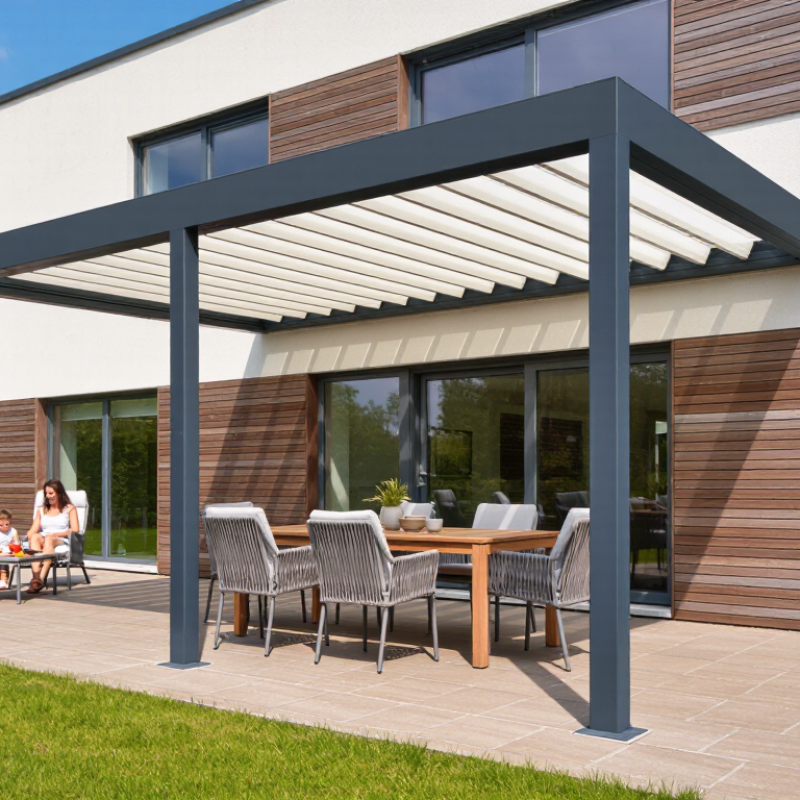
A patio should offer more than a patch of shade. It should feel usable when the sun shifts, a light shower begins, or dinner runs late. A Patio Louvered Pergola can help create that flexibility, with adjustable roof slats that open for daylight and close for shelter. The change is practical and visible: sunlight reaches the table at noon, then the louvers tilt as the afternoon grows hotter.

Industry research points to steady interest in outdoor living. The American Society of Landscape Architects’ 2024 Residential Landscape Architecture Trends Survey tracks outdoor living spaces among widely requested residential design features. Houzz’s 2024 U.S. Outdoor Trends Study also examines homeowners’ outdoor upgrades and project choices. These reports describe broad demand, not proof that every pergola improves comfort or home value. That distinction matters.

A well-planned pergola depends on details. Check the louver mechanism, drainage path, material finish, and local wind requirements before choosing a model. Ask how water exits when the roof is closed. Confirm that the structure suits the patio’s dimensions and your home’s exterior. Shade is not automatic. Orientation and nearby walls affect the result. A louvered roof can also need cleaning and periodic maintenance, especially where leaves collect. I would not treat it as a maintenance-free roof or assume it will keep every raindrop out. With realistic expectations and careful installation, it can make a patio more adaptable—and more inviting on ordinary days.
Why Choose a Patio Louvered Pergola?

What a Patio Louvered Pergola Is and How It Works

A patio louvered pergola is an outdoor structure with a roof made of adjustable slats, called louvers. The slats sit across a supporting frame and rotate together, usually by hand crank or motor. Open them, and sunlight and moving air reach the patio. Tilt them partway for dappled shade. Close them when stronger cover is needed. That movement matters.

When rain begins, closed or angled louvers direct water toward channels in the frame. Depending on the design, it then drains through posts or downspouts. Water management varies, so a louvered roof should not automatically be treated as fully waterproof. Seals, drainage paths, installation, and wind exposure all affect performance. Picture a table beneath the pergola: a slight misalignment or blocked channel could still leave water where you do not want it. The trade-off is easy to overlook.

The system gives you more control than a fixed shade roof, but it also has moving parts that need occasional inspection. Check that louvers turn smoothly and that leaves are cleared from gutters and outlets. A closed roof can feel reassuring, yet severe weather may call for opening it or following the structure’s operating guidance. Even then, comfort is not perfectly predictable; the sun shifts, and breezes change.

Why Choose a Patio Louvered Pergola? — What It Is and How It Works

Feature How It Works Practical Benefit What to Consider
Adjustable louvers Rotating slats in the roof can be tilted to change how much sunlight and airflow pass through. Lets you adapt the patio’s shade and ventilation to changing conditions. The available tilt range and control method vary by design.
Open-roof position The louvers rotate apart to leave gaps in the roof. Allows more direct sunlight and an open-air feel. Provides less protection from rain and direct sun while open.
Closed-roof position The louvers meet or overlap to form a roof surface. Can provide shade and, on systems designed for it, help direct rainwater toward gutters. Rain resistance depends on the louver design, seals, installation, and drainage system; it should not automatically be treated as fully waterproof.
Manual or motorized operation Louvers may be adjusted with a hand-operated mechanism or an electric motor, depending on the model. Offers a choice between simpler manual adjustment and powered operation. Motorized options require a suitable power supply and may need controls or sensors.
Airflow and heat Opening or angling the louvers changes the path for air movement and the amount of overhead shade. Can make an outdoor seating area more adaptable than a fixed, solid roof. It does not provide climate control; comfort still depends on weather, orientation, and surrounding conditions.
Frame and installation A supporting frame holds the roof slats and transfers loads to its supports and mounting surface. Creates a defined covered area for outdoor activities. Check local building requirements, the mounting surface, wind exposure, and the manufacturer’s structural guidance before installation.
Maintenance Moving parts, drainage channels, and surfaces need periodic inspection and cleaning. Routine care can help keep the louvers operating smoothly and prevent debris from obstructing drainage. Follow the product’s care instructions, especially after severe weather or when leaves and dirt accumulate.
Best suited for Patios where occupants want adjustable overhead shade and ventilation. Provides more control over roof openness than a fixed pergola roof. Consider a different or additional shade solution if full enclosure, insulation, or guaranteed all-weather protection is required.

How Adjustable Louvers Control Sunlight, Shade, and Rain

A patio louvered pergola lets you adjust overhead cover as the weather changes. Turn the louvers open, and sunlight can reach the table or garden below. Close them partway to soften glare without making the space feel shut in. Small changes matter. The right angle often depends on the sun’s direction and the time of day.

Adjustable louvers can also help manage light rain. When closed, they direct water toward built-in channels and downspouts, keeping much of it away from the seating area. Check that the structure is level and drainage paths stay clear; leaves can collect in them after a windy day. Heavy rain, strong gusts, or wind-driven water may still reach beneath the pergola. It is useful cover, not a fully enclosed roof.

In everyday use, the benefit is control. You can open the roof for a bright morning, then tilt the slats when afternoon sun hits the patio doors. The movement should feel smooth, and the mechanism needs occasional inspection. Not perfectly effortless. Louvers do not remove the need to plan for drainage, suitable installation, or local weather conditions, but they make outdoor shade easier to adjust as conditions shift.

Why Choose a Patio Louvered Pergola?

How Adjustable Louvers Control Sunlight, Shade, and Rain

Tilting louvers changes how much of each blade projects horizontally, helping adjust overhead shade and sunlight. The chart shows the geometric projection of a 150 mm-wide blade, calculated as blade width × cosine of the tilt angle from horizontal. It is an illustration, not a measurement of total pergola shade, which also depends on blade spacing and the sun’s position. Louvers can be closed to help shelter the patio from rain; drainage and weather performance depend on the pergola’s design.

Key Benefits for Comfort and Flexible Outdoor Use

Why Choose a Patio Louvered Pergola?

Key Benefits for Comfort and Flexible Outdoor Use

A patio louvered pergola lets you adjust overhead shade as the day changes. Tilt the louvers to soften harsh midday sun, or open them to welcome winter light. Small shifts matter. On a warm afternoon, a little airflow can make a dining table feel noticeably more comfortable. The changing pattern of light also helps define a reading nook or a place for outdoor meals without adding permanent walls. Unlike a fixed cover, adjustable louvers give you more control over brightness and ventilation.

Comfort depends on more than the louvers. A well-planned layout considers the sun’s path, nearby walls, drainage, and how people move through the space. When closed, many systems direct rain toward built-in channels, but wind-driven showers may still reach the patio. Not fully enclosed. Check that water can drain safely, and follow the manufacturer’s guidance for cleaning and seasonal care. Furniture may need to move during strong winds or heavy weather. That can feel like one more task, honestly. Still, flexible shade, open-air light, and a dry place for everyday seating can make a patio useful across more hours of the day.

Materials, Features, and Design Options to Compare

A patio louvered pergola can balance sun, shade, and airflow, but its materials affect upkeep. Powder-coated aluminum is light and generally resists rust, though its finish can scratch. Wood brings warmth and visible grain, but usually needs regular sealing or staining. Check fasteners, coatings, and drainage details, not just the frame. Small parts matter.

Compare how the louvers open and close. Manual controls are simple, while motorized systems need a suitable power source and careful installation. Look for clear guidance on wind limits and rain management; adjustable louvers are not automatically a watertight roof. Orientation matters, too. Afternoon sun from the west can call for different louver angles than morning light. One detail people may overlook is where runoff will land.

Tips: Measure the patio and note nearby doors, branches, and furniture before choosing a size. Ask how the structure should be anchored to your specific surface. A larger pergola may look impressive, but it can make a compact patio feel crowded.

Practical Factors to Consider Before Choosing One

Why Choose a Patio Louvered Pergola?

Before choosing a patio louvered pergola, watch how sunlight moves across your space. Morning shade may matter more than afternoon shade, especially beside a west-facing window. Measure the patio, including door swings and walking paths, not just the footprint for the posts. Small details matter. Check the planned location for strong gusts, nearby trees, and a clear route for rainwater. Adjustable louvers can provide useful control, but they do not guarantee a dry space in every storm. Ask how the structure handles runoff and whether the installation suits your local conditions.

Consider materials, operation, and upkeep together. Aluminum can be relatively low-maintenance, while timber may need periodic cleaning or protective treatment. Either way, inspect joints and moving parts as part of routine care. Decide whether manual or powered adjustment fits your habits, and ask what happens during a power interruption if you choose a motorized system. Leave room in your budget for installation, drainage work, and any required site checks. A pergola that looks simple in a showroom may need extra clearance at home. I would measure twice, then revisit the plan; patio layouts have a way of revealing one awkward corner late.