

Blog
Blog
Blog
10 Best Interior Fabrics for Furniture and Home Decor
Choosing the right interior fabrics can change how a room feels, functions, and ages. A velvet sofa may add richness, while tightly woven linen can create a cooler, relaxed appearance. The best choice depends on more than color.
Fabric performance matters. Consider abrasion resistance, fiber content, cleaning instructions, lightfastness, and daily use. A busy family room needs different upholstery from a formal guest room. Pets, children, sunlight, humidity, and frequent spills also influence the decision. Small details matter.
Textile designer William Morris offered practical guidance: “Have nothing in your houses that you do not know to be useful, or believe to be beautiful.” His advice still suits modern decorating. Beautiful material is valuable, but it should also support real life. That means checking samples beside flooring, testing texture under natural light, and reading the care label before ordering.
This guide explores ten interior fabrics for furniture and home decor, including cotton, linen, wool, velvet, chenille, leather, performance blends, and more. Each option has strengths and limitations. No fabric wins everywhere. That is the uncomfortable part.
Some rankings may change by room, budget, and lifestyle. A luxurious fabric can fail in a sunny space. A practical blend may look less distinctive, yet perform better over time. We will examine appearance, durability, maintenance, comfort, and design flexibility. The goal is not to chase a perfect material. It is to choose one that remains convincing after everyday life leaves its marks.
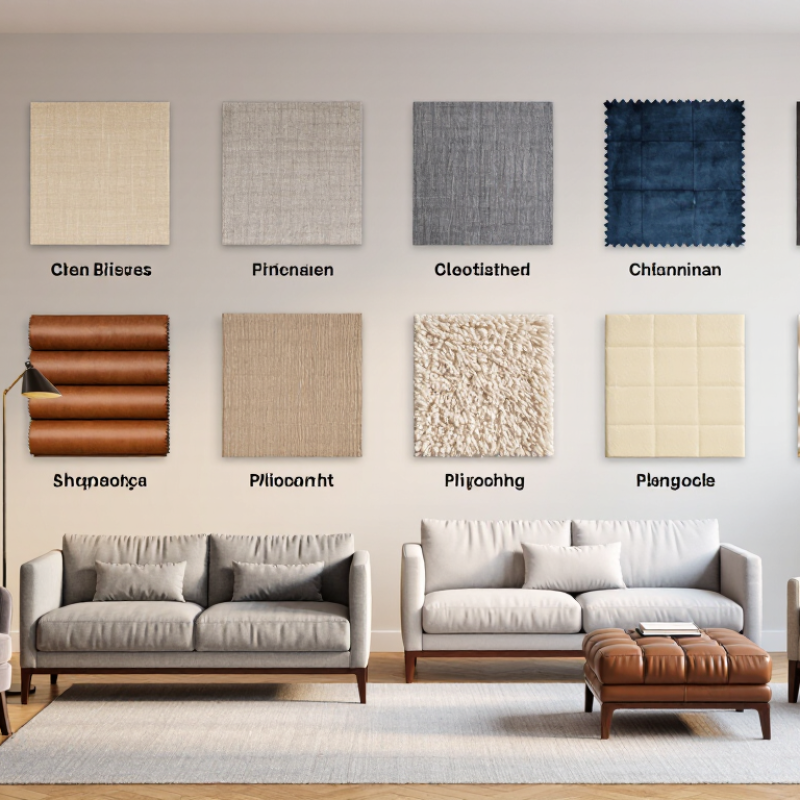
How to Compare the 10 Best Interior Fabrics by Durability and Use
Choosing the best interior fabric depends on abrasion, cleaning, sunlight, and daily habits. ACT upholstery guidelines commonly reference 15,000 double rubs for light use, 30,000 for general use, and 45,000 for heavy use. ASTM D4157 Wyzenbeek testing measures abrasion, but results do not predict every home environment.
Cotton feels breathable and suits curtains or low-use seating, yet it stains easily. Linen offers texture and airflow, but wrinkles and weakens under rough use. Wool resists crushing and supports busy rooms. Velvet looks rich, although its pile can show pressure marks. Chenille feels soft, but looped yarn may snag.
Polyester provides strong color retention and practical cleaning. Nylon improves abrasion resistance when blended with other fibers. Microfiber handles spills well and works for family seating. Leather cleans easily, though sunlight can dry its surface. Solution-dyed acrylic performs well near windows and in covered outdoor areas.
The 2024 Textile Exchange Materials Market Report states that polyester represented about 57% of global fiber production in 2023. That scale supports its availability, not automatic quality. Check the fabric’s test method, finish, backing, and cleaning code. Martindale results should not be compared directly with Wyzenbeek numbers. I have seen a high-rub fabric fail early when sharp furniture edges met heavy use. Testing is useful, but installation details still matter. Ask for a sample and rub it against your own clothing. The answer may be less perfect than the specification sheet.
Cotton, Linen, and Wool: Natural Fibers with Distinct Performance Profiles
10 Best Interior Fabrics for Furniture and Home Decor
Cotton, linen, and wool each bring a different balance of comfort, strength, and maintenance. Cotton feels familiar and soft, making it practical for cushions, curtains, and lightly used chairs. It accepts color well, but direct sunlight can gradually weaken darker shades. It may also wrinkle more than expected.
Linen offers a cooler, textured surface with visible slubs that add character. It suits relaxed sofas, dining chairs, and loose covers. However, linen can crease easily and may show abrasion on busy seating. Before ordering, rub a fabric sample against a rough surface and inspect the change. Small tests prevent expensive disappointment.
Wool performs strongly where warmth, resilience, and stain resistance matter. Its natural structure helps upholstery recover after repeated use, especially on armchairs and family-room sofas. Wool can feel scratchy in some weaves, so touch the sample against your forearm first. Dense construction usually supports longer wear, but it can increase cost.
Blends deserve attention too. Cotton-linen blends may reduce wrinkling, while wool blends can soften the hand. Check cleaning instructions, lightfastness, and abrasion results before choosing. A beautiful fabric is still the wrong choice if nobody wants to maintain it. Personally, I would choose texture over perfect smoothness, but that preference is not universal.
Velvet, Chenille, and Jacquard: Texture, Wear, and Design Applications
Choosing interior fabric means balancing touch, wear, and visual character. Velvet offers a dense, light-catching surface that makes lounge chairs and headboards feel luxurious. Its pile can show pressure marks, especially where people sit repeatedly. Rotate cushions and brush the surface gently to keep shading even. Test it under real lighting, not only in a showroom.
Chenille feels softer and more relaxed. Its raised yarns hide minor marks well, making it suitable for family sofas, reading chairs, and decorative pillows. However, loose loops may catch on sharp objects or rough clothing. A tight weave and dependable backing usually improve everyday performance. I once preferred a very soft chenille, but it flattened sooner than expected. Comfort alone was not enough.
Jacquard creates detailed patterns through woven construction rather than surface printing. It can bring structure to dining seats, curtains, and accent cushions without overwhelming a room. Geometric designs suit modern spaces, while botanical motifs add a quieter, collected feeling. Check the reverse side and seam stability before ordering large quantities. Texture can deceive. A beautiful sample may feel different across a full sofa. Fabric weight, light exposure, cleaning habits, and household use should guide the final choice.
10 Best Interior Fabrics for Furniture and Home Decor
Typical upholstery durability varies by fiber, weave, finish, and construction. The chart shows representative midpoints of commonly published Wyzenbeek double-rub ranges, so actual performance may differ between fabrics.
Design note: Velvet and chenille provide strong visual texture, while jacquard offers woven pattern depth. For high-traffic furniture, canvas, microfiber, leather, and performance-treated fabrics are generally practical choices; linen, cotton, boucle, and decorative velvet are often better suited to lighter-use settings.
Polyester, Acrylic, and Olefin: High-Performance Synthetic Options
Polyester, acrylic, and olefin offer practical solutions for furniture and home decor. Each resists daily wear better than many natural fibers. In busy living rooms, polyester upholstery handles repeated sitting, light spills, and regular vacuuming well. Its broad texture range includes smooth weaves, soft velvets, and tightly woven fabrics. Yet polyester can hold oily marks, especially on pale surfaces. Repeated rubbing may also create visible pilling on lower-quality cloth.
That trade-off matters.
Acrylic feels light and often resembles wool without the same moisture concerns. It works well for cushions, sunrooms, and selected outdoor pieces. Strong sunlight can still weaken color over time.
Olefin performs especially well around moisture, children, and casual outdoor seating. It absorbs little water and dries quickly after cleaning. Static can occur.
Not always.
For dependable selection, inspect abrasion results, colorfastness data, seam strength, and cleaning instructions. These tests reveal more than appearance alone. During upholstery projects, I check fabric samples beside windows and under warm indoor lighting. A color that looks calm in a showroom may appear harsh at home. I also press a damp white cloth against the sample, using gentle pressure. This simple test can expose loose dye, although it cannot replace professional testing. Synthetic fabrics are not maintenance-free; dust still settles into textured weaves, and harsh cleaners can damage finishes. Choose construction for the room’s actual demands, not only its first impression.
Fabric Selection Standards: Martindale Ratings, Lightfastness, and Sustainability Data
Choosing interior fabric is more technical than matching a sofa to a paint chip. Martindale testing, covered by ISO 12947, measures abrasion resistance through repeated rubbing cycles. Higher numbers generally suit heavier use, but the figure is not universal. A tightly woven 40,000-cycle fabric may outlast a looser fabric with the same result. I inspect seams, pile direction, and snag risk too. Small details matter.
Light exposure needs separate attention. ISO 105-B02 uses the Blue Wool Scale, graded from 1 to 8. For sunlit upholstery, grades 6 or above are a sensible specification, though window glass and fabric color still change performance. Dark blue and red shades can reveal fading quickly. A showroom lamp cannot reproduce afternoon sunlight. That is an imperfect test.
Sustainability claims should include measurable evidence, not vague words such as “green.” Textile Exchange reported global fiber production at about 124 million tonnes in 2023, with growth projected toward 160 million tonnes by 2030. Ask for recycled-content percentages, fiber origin, chemical-management records, and a life-cycle assessment. Product-specific Environmental Product Declarations can add useful carbon data. Yet recycled fiber is not automatically better; durability, washing needs, transport, and end-of-life options also influence impact. My selection sheet includes these uncertainties, because ignoring them makes a polished specification less reliable.
10 Best Interior Fabrics for Furniture and Home Decor — Fabric Selection Standards: Martindale Ratings, Lightfastness, and Sustainability Data
| Fabric | Common Fiber Composition | Recommended Interior Uses | Typical Martindale Abrasion Rating | Typical Lightfastness ISO 105-B02 |
Key Performance Characteristics | Sustainability Profile | Care Considerations |
|---|---|---|---|---|---|---|---|
| Linen | 100% flax fiber or blended with cotton, viscose, or polyester | Curtains, occasional chairs, cushions, light-to-medium-use upholstery | 15,000–30,000 cycles | Grade 4–6 / 8 | Cool hand feel, breathable, distinctive natural slubs, moderate resilience, wrinkles naturally | Made from a renewable flax crop and generally biodegradable in untreated form. Agricultural impacts vary with farming and processing practices. | Can shrink or crease; use professional cleaning for tailored upholstery. |
| Cotton | 100% cotton or cotton blended with synthetic or cellulosic fibers | Slipcovers, cushions, curtains, low-to-medium-use seating | 15,000–30,000 cycles | Grade 3–5 / 8 | Soft, breathable, widely available, comfortable, but can crease, fade, and absorb stains | Renewable and potentially biodegradable. Water, pesticide, and land impacts vary substantially by farming method; recycled and organically certified options are available. | Pre-shrink where possible; protect from direct sunlight and moisture. |
| Wool | 100% wool or wool blended with nylon, polyester, or other fibers | Sofas, lounge chairs, dining chairs, blankets, acoustic panels | 30,000–50,000 cycles | Grade 4–6 / 8 | Highly resilient, naturally flame-resistant, soil-resistant, warm, and effective at hiding minor wear | Renewable, durable, and biodegradable as untreated natural fiber. Environmental performance depends on grazing management, animal welfare, processing, and product lifespan. | Professional cleaning is usually preferred; avoid excessive heat and agitation. |
| Hemp | 100% hemp or hemp blended with cotton, linen, or recycled polyester | Upholstery, cushions, curtains, wall coverings, casual furniture | 20,000–40,000 cycles | Grade 4–6 / 8 | Strong bast fiber, textured appearance, breathable, becomes softer with use | Renewable and potentially biodegradable. Hemp can require relatively low pesticide input, but irrigation, retting, processing, and transport still influence total impact. | May wrinkle and soften; check shrinkage and blend content before washing. |
| Recycled Polyester | Usually polyester made partly or fully from recycled PET or pre-consumer textile waste | High-use sofas, dining chairs, cushions, contract interiors, outdoor-adjacent spaces | 30,000–100,000 cycles | Grade 5–7 / 8 | Strong, quick-drying, abrasion-resistant, color-stable, and available in many textures | Diverts suitable plastic or textile waste from disposal and reduces reliance on virgin feedstock. It is not biodegradable and may release microfibers during washing; recycled content should be verified by chain-of-custody documentation. | Vacuum regularly; use low-temperature cleaning and avoid unnecessary washing. |
| Polyester | Virgin polyester, often textured, solution-dyed, or blended with other fibers | Heavy-use upholstery, cushions, curtains, performance textiles | 30,000–100,000 cycles | Grade 5–7 / 8 | High strength, good dimensional stability, low moisture absorption, and strong color retention | Fossil-derived and not biodegradable, but durable and technically recyclable in some mono-material constructions. Solution dyeing can reduce water use compared with piece dyeing. | Generally easy to clean; heat can cause glazing, melting, or permanent deformation. |
| Acrylic | Solution-dyed or spun acrylic fiber; sometimes blended with polyester | Sunrooms, conservatories, outdoor-influenced interiors, cushions, awnings | 20,000–50,000 cycles | Grade 5–7 / 8 | Excellent color retention, low moisture absorption, mildew resistance, and soft wool-like handle | Synthetic and fossil-derived, not biodegradable, and difficult to recycle in mixed constructions. Long service life and solution dyeing can improve resource efficiency. | Clean promptly; avoid high heat, solvents, and abrasive brushing. |
| Viscose | Regenerated cellulose from wood pulp or other cellulose feedstocks | Decorative cushions, drapery, low-use seating, velvet and chenille blends | 10,000–30,000 cycles | Grade 3–5 / 8 | Silky appearance, excellent drape, rich color depth, but lower wet strength and resilience than many synthetics | Cellulose-based and potentially biodegradable. Sustainability depends on responsible forestry, chemical recovery, water management, and traceable sourcing; recycled-cellulose options may reduce pressure on virgin feedstock. | Often requires professional cleaning; moisture can cause shrinkage, marking, or distortion. |
| Olefin | Polypropylene, commonly solution-dyed | High-use seating, family rooms, dining areas, sunlit rooms, indoor-outdoor furniture | 30,000–100,000 cycles | Grade 6–8 / 8 | Very low moisture absorption, strong stain resistance, lightweight construction, and excellent colorfastness | Fossil-derived and not biodegradable, but it can be solution-dyed with comparatively low dye-water use. Polypropylene is technically recyclable where suitable collection and processing systems exist. | Use low-temperature cleaning; excessive heat may permanently flatten or melt fibers. |
| Velvet | Construction rather than a single fiber; commonly cotton, polyester, viscose, or blended pile | Accent chairs, sofas, headboards, cushions, curtains, decorative panels | 20,000–100,000 cycles | Grade 3–6 / 8 | Luxurious pile, strong visual depth, comfortable touch; performance varies greatly by fiber, backing, and pile construction | Sustainability depends primarily on the fiber content and backing. Durable recycled polyester velvet can reduce virgin material demand; natural-fiber velvet may offer biodegradability if finishes and backings allow it. | Brush or vacuum gently in the pile direction; avoid crushing, rubbing, and uncontrolled steam. |
Reference note: Martindale values and ISO 105-B02 lightfastness grades are typical ranges for commercially available interior fabrics, not universal properties of every fiber. Always request the specific fabric’s laboratory test report, fiber composition, finish details, cleaning code, and sustainability documentation before specifying it for a project.
Related Posts
-
The Ultimate Guide to Choosing the Perfect Interior Fabrics for Your Home Decor
-
How to Choose the Perfect Interior Fabrics for Your Home Decor Needs
-
How to Choose the Best Interior Fabrics for Your Home?
-
Top 10 Interior Fabrics to Discover at Canton Fair 2026
-
Top 10 Sofa Fabric Materials for Global Buyers to Consider
-
What Are the Best Upholstery Materials for Your Needs?