
Blog
Blog
Blog
10 Tips for Choosing Furniture Upholstery Fabric
Choosing furniture upholstery fabric is not simply a color decision. It is a practical design investment that affects comfort, durability, cleaning, and the room’s character.
Textile designer Lori Weitzner has said, “Texture is the new color.” Her observation matters when selecting upholstery. A nubby linen blend can make a quiet chair feel inviting. A tightly woven performance fabric may better suit a busy family room. Small details matter. Check the fabric’s rub count, fiber content, cleaning code, lightfastness, and pattern repeat before ordering.
The wrong sample can look perfect in a showroom. Then it may flatten, fade, or show every mark near a sunny window. I have learned that a fabric’s beauty does not guarantee practical success. Pets, children, humidity, and daily friction can change the decision completely. That uncomfortable truth deserves attention.
These ten tips for choosing furniture upholstery fabric will help connect style with real-life performance. They cover fabric weight, weave, color, texture, maintenance, and professional installation. You will also see why a swatch should be tested at home, beside your flooring and under your actual lighting.
There is no flawless choice.
A durable fabric may feel less luxurious. A delicate textile may create the most beautiful finish. The goal is not to eliminate every compromise. It is to understand each one clearly, then choose upholstery that supports how the furniture will truly be used.
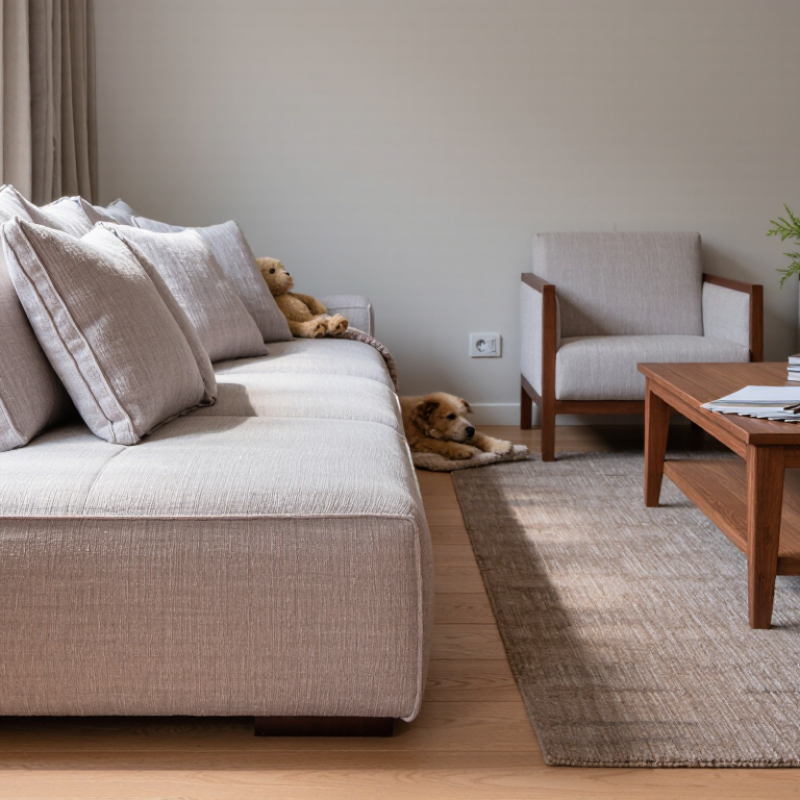
Define Room Use and Traffic Levels with Wyzenbeek 15,000–30,000 Rub Benchmarks
Define the room before choosing upholstery fabric. A quiet reading chair needs less abrasion resistance than a family-room sofa. Count daily users, pets, children, and how often people sit in the same place. A 15,000 double-rub Wyzenbeek rating can suit light residential traffic. For busy seating, consider 30,000 rubs or higher. These figures guide decisions, but they do not predict every stain, tear, or color change.
Tip: Match the fabric to real movement. Dining chairs may experience short, repeated contact, while a sectional faces longer sitting and sliding. Look closely at the weave. Tight, balanced constructions often handle friction better than loose textures. Ask for a sample, then rub it against clothing, inspect the reverse side, and sit on it for several minutes. Small details matter.
Tip: Treat Wyzenbeek results as one piece of evidence. Testing conditions differ, and a high number does not guarantee lasting beauty. I have seen durable fabrics lose their appeal because they showed soil quickly. Light colors can demand more cleaning than expected. Consider sunlight, cleaning instructions, seam placement, and cushion construction. If the room is heavily used, choosing only by appearance is a tempting mistake. Recheck the fabric after practical testing, even when the specification looks impressive.
Compare Fiber Performance Using ASTM D4157 and Martindale Abrasion Results
When choosing upholstery fabric, compare abrasion results by test method, not by headline number alone. ASTM D4157 uses the Wyzenbeek method, rubbing fabric against a specified abradant. Martindale testing, covered by ISO 12947, uses a circular rubbing motion and wool or standard abradants. The results are not interchangeable. A fabric rated 50,000 double rubs does not automatically outperform one rated 50,000 Martindale cycles.
Industry guidance gives useful benchmarks, but it is not a universal law. The Association for Contract Textiles’ upholstery guidelines commonly reference about 15,000 Wyzenbeek double rubs for light use, 30,000 for general use, and higher levels for demanding environments. Comparable Martindale recommendations often begin near 20,000 cycles for domestic upholstery and rise beyond 40,000 for commercial seating. Always check the report’s exact method, abradant, pressure, and endpoint. Small details matter. ASTM D4157 also warns that abrasion results can vary with fabric construction and laboratory conditions. In practical testing, a tightly woven polyester blend may resist visible wear, while a softer fiber can develop fuzz sooner. That does not make the softer fabric unusable. It may simply need gentler placement. I would also inspect seam slippage, pilling, colorfastness, and cleaning performance. Abrasion is only one risk. A high score can still disappoint beside a sunny window or a frequently used dining chair. The numbers help, but they need context.
Evaluate Cleanability Through ACT Codes, W Ratings, and Colorfastness Data
10 Tips for Choosing Furniture Upholstery Fabric
Cleanability starts with reading performance data, not touching a fabric sample. ACT guidelines can indicate durability, seam strength, pilling, and flammability performance. They are useful benchmarks, but they do not predict every household accident. A busy sofa near a kitchen needs different protection from a decorative lounge chair. Ask for the cleaning code. “W” usually permits water-based cleaning, while “S” requires solvent-based products. “WS” allows both, but always follow the manufacturer’s instructions.
Check the W rating carefully. In upholstery testing, Wyzenbeek double-rub results estimate abrasion resistance, while some suppliers use “W” to describe water-cleaning suitability. These are not the same measurement. Higher abrasion results can help in active homes, yet they cannot prevent fading, snagging, or staining.
Colorfastness data matters near sunny windows. Look for test results covering light exposure, wet crocking, and dry crocking. A dark navy fabric may transfer dye onto pale clothing when damp. It may also fade along one cushion edge.
I learned this after choosing a beautiful fabric that looked practical in the showroom. It was not.
Test a sample with clean water, a white cloth, and gentle blotting. Then inspect it under daylight. Small tests reveal uncomfortable truths. Ask how the fabric behaves after repeated cleaning, not just once. Some data may be missing, and that uncertainty deserves attention before ordering.
Match Fabric Construction, Lightfastness, and Pilling Resistance to Daily Use
10 Tips for Choosing Furniture Upholstery Fabric
Match fabric construction, lightfastness, and pilling resistance to daily use, not showroom appearance. In practice, tightly woven fabrics often handle repeated sitting better than loose bouclé surfaces. The ACT Upholstery Performance Guidelines commonly classify 15,000 double rubs for general residential use and 30,000 for heavy traffic. Treat these figures carefully. Double-rub results compare abrasion, not comfort, seam strength, or long-term appearance. A fabric can pass the test and still flatten beside a favorite chair.
Light matters too. A sofa near a south-facing window needs tested color stability. AATCC TM16.3 evaluates lightfastness through controlled xenon-arc exposure, while ACT guidance often uses a minimum color-change grade for upholstery applications. Ask for the exact test method and exposure duration. “Fade resistant” is too vague. Pilling deserves equal attention. ASTM D3511 rates surface fuzz and pills after controlled rubbing; a higher rating usually indicates better resistance, but fiber blend and fabric construction still matter.
Check the sample at home. Rub it with a sleeve, inspect the reverse side, and place it under daylight for several days. Look for loose yarns, early fuzz, or color shifts. I once trusted a high abrasion number too much. That was a mistake. Daily use is uneven: children drag across cushions, pets press against arms, and sunlight reaches one corner first. Choose performance evidence that matches those specific stresses.
10 Tips for Choosing Furniture Upholstery Fabric - Match Fabric Construction, Lightfastness, and Pilling Resistance to Daily Use
| No. | Fabric Construction | Typical Fiber Content | Abrasion Resistance (Martindale cycles) |
Lightfastness (Blue Wool scale, 1–8) |
Pilling Resistance (Grade 1–5) |
Cleaning Practicality | Best Daily-Use Application | Key Selection Advice |
|---|---|---|---|---|---|---|---|---|
| 1 | Tightly woven polyester | 100% polyester or polyester-rich blend | 40,000–80,000 | 4–6 | 4–5 | Usually easy to vacuum and spot-clean; check the care code before using water-based products. | Busy family sofas, dining chairs, and general residential seating | Choose a dense weave with a clear cleaning code and a pilling grade of at least 4. |
| 2 | Performance polyester chenille | Polyester, sometimes blended with acrylic or nylon | 40,000–70,000 | 4–6 | 3–4 | Soft surface may hold dust; vacuum with an upholstery attachment and blot spills promptly. | Everyday sofas where softness and durability are both important | Inspect the pile direction and seams; textured yarns can show wear before the base fabric fails. |
| 3 | Solution-dyed acrylic | Acrylic fibers colored throughout before spinning | 20,000–50,000 | 6–8 | 4–5 | Often suitable for regular cleaning; many constructions tolerate moisture better than natural fibers, but the label controls. | Sunrooms, bright rooms, covered outdoor furniture, and high-light spaces | Prioritize this construction when color retention is more important than a natural hand feel. |
| 4 | Polyester velvet | Polyester pile with a woven or knitted ground | 20,000–50,000 | 4–5 | 4–5 | Blot spills without rubbing; restore the pile with gentle brushing after drying. | Accent chairs, occasional seating, and decorative sofas | Evaluate crush marks, seam direction, and shading in daylight; appearance changes are normal for pile fabrics. |
| 5 | Wool or wool-rich plain weave | Wool, often blended with nylon, polyester, or acrylic | 30,000–60,000 | 4–6 | 3–4 | Vacuum regularly; use professional cleaning when the care instructions require it. | Long-term seating in moderate-to-heavy residential use | Look for a firm, compact weave and a tested pilling grade; loose woolen yarns may fuzz more readily. |
| 6 | Cotton-linen blend | Cotton and linen, sometimes blended with synthetic fibers | 15,000–35,000 | 3–5 | 3–4 | Can show water marks or shrinkage if improperly cleaned; follow the supplier’s recommended method. | Low-to-moderate traffic rooms and relaxed, natural interiors | Use blinds or curtains in strong sunlight and select a synthetic-rich blend for more frequent use. |
| 7 | Cotton velvet | Cotton pile with a woven cotton ground | 15,000–30,000 | 2–4 | 3–4 | More sensitive to moisture, crushing, and rubbing; professional care may be preferable. | Occasional chairs, formal rooms, and decorative upholstery | Avoid direct sun and heavy friction; inspect the pile for shading before approving a large installation. |
| 8 | Acrylic chenille | Acrylic, frequently blended with polyester | 20,000–40,000 | 5–7 | 3–4 | Generally practical for routine vacuuming and careful spot treatment; pile can flatten in high-contact areas. | Family rooms and seating exposed to moderate daylight | Select a compact construction and test a sample for texture change after simulated rubbing. |
| 9 | Microfiber polyester | Very fine polyester filaments with a dense surface | 30,000–60,000 | 4–6 | 4–5 | Usually easy to maintain, but liquids can leave rings if spread during cleaning; blot rather than scrub. | Households seeking a smooth, practical surface for frequent use | Check the fabric’s nap and color consistency from different angles before purchase. |
| 10 | Leather | Animal hide; corrected-grain, top-grain, or aniline finishes | 30,000–50,000+ | 4–6 | Not typically rated for textile pilling | Wipe spills promptly; use only products compatible with the finish and condition as recommended. | High-use sofas, lounge chairs, and settings where wipeability matters | Finish level affects stain resistance, breathability, surface variation, and how naturally the material develops character. |
Balance Safety, Sustainability, Warranty Terms, and Lifecycle Cost Before Buying
Choosing upholstery fabric is not just a color decision. Safety, sustainability, warranty coverage, and replacement cost matter more over time. I inspect the sample under bright light, then rub it with a clean cloth. A beautiful fabric can still reveal weak dye transfer or loose yarns.
Ask for documented flammability testing and clear chemical disclosures. Do not accept “safe” as a complete answer. Textile Exchange’s Materials Market Report 2024 states that global fiber production reached 124 million tonnes in 2023. It may reach 160 million tonnes by 2030. Recycled content helps, but durability prevents more frequent replacement. Check fiber origin, recycled percentages, and whether the supplier provides traceability evidence. I sometimes overvalue texture. That is a mistake.
Read the warranty before buying. Confirm coverage for seam failure, fading, abrasion, pilling, foam compression, and cleaning damage. Many warranties exclude normal wear, incorrect maintenance, and commercial use. The U.S. Environmental Protection Agency reported 12.1 million tons of furniture and furnishings entered the U.S. municipal waste stream in 2018. About 80% went to landfill. Lifecycle cost deserves attention. Divide the purchase price by expected service years, then add cleaning, repairs, shipping, and disposal. Cheap is not cheap. A slightly higher-priced fabric may cost less if it survives children, pets, sunlight, and repeated cleaning. Still, durability claims require test methods, not confident sales language.
10 Tips for Choosing Furniture Upholstery Fabric
Balance safety, sustainability, warranty terms, and lifecycle cost before buying.
Typical minimum abrasion benchmarks shown in Martindale cycles: light domestic use is commonly around 15,000 cycles, general domestic use around 20,000–25,000 cycles, heavy domestic use around 30,000–40,000 cycles, and commercial use around 50,000 cycles or more. Abrasion performance is only one purchasing factor and does not guarantee service life.
Check applicable flammability requirements, seam construction, cleaning instructions, and chemical disclosures for the intended location.
Review recycled content, responsible fiber sourcing, repairability, take-back options, and verified environmental documentation.
Confirm coverage length, exclusions, commercial-use limits, colorfastness terms, and whether labor or replacement fabric is included.
Compare purchase price, cleaning frequency, expected replacement interval, repair cost, and disposal impact rather than price alone.
Related Posts
-
What Are Upholstery Fabrics and How Do You Choose Them?
-
China Top 10 Furniture Upholstery Manufacturers
-
2026 Top Durable Sofa Fabric for Global Buyers?
-
Top 5 Furniture Upholstery Fabric Choices for Stylish Home Décor
-
Innovative Solutions for Enhancing Durability and Comfort in Furniture Fabric Selection
-
Why Choosing the Right Sofa Upholstery Fabric Can Transform Your Living Space