
Blog

blog

Blog

blog

Blog

blog

What Are the Top 10 Types of Outdoor Fabrics?

Outdoor fabrics do more than soften a patio chair. They face ultraviolet light, rain, humidity, abrasion, and repeated cleaning. A cushion left in full sun can fade, while trapped moisture may encourage mildew or weaken stitching. The best choice depends on where the fabric will be used, how often it gets wet, and how much care its owner can provide.

Material choices also sit within a larger textile industry. Textile Exchange’s Materials Market Report 2024 estimates that global fiber production reached 124 million tonnes in 2023, with production projected to rise to 160 million tonnes by 2030. These figures cover the wider fiber market, not outdoor textiles specifically. That distinction matters: broad production data cannot tell us which fabric will last longest on a damp balcony. It does, however, underline why fiber sourcing and product performance deserve closer attention.

For practical comparisons, look beyond a fabric’s name. Check its fiber content, construction, colorfastness, water resistance, and care instructions. A tightly woven acrylic may suit a sun-exposed awning, while solution-dyed polyester can be a useful option for cushions that need regular cleaning. Neither is automatically best. Seams, coatings, ventilation, and exposure conditions can change real-world results. Look closely.

This guide introduces ten common types of outdoor fabrics and explains where each may fit. It will weigh durability, comfort, maintenance, and typical applications without treating marketing claims as guarantees. Some trade-offs remain; that is worth acknowledging. A fabric that resists fading may cost more, and a water-resistant surface is not necessarily waterproof. The useful choice is the one that matches the setting, budget, and care routine.
What Are the Top 10 Types of Outdoor Fabrics?

How Outdoor Fabrics Are Classified and Compared

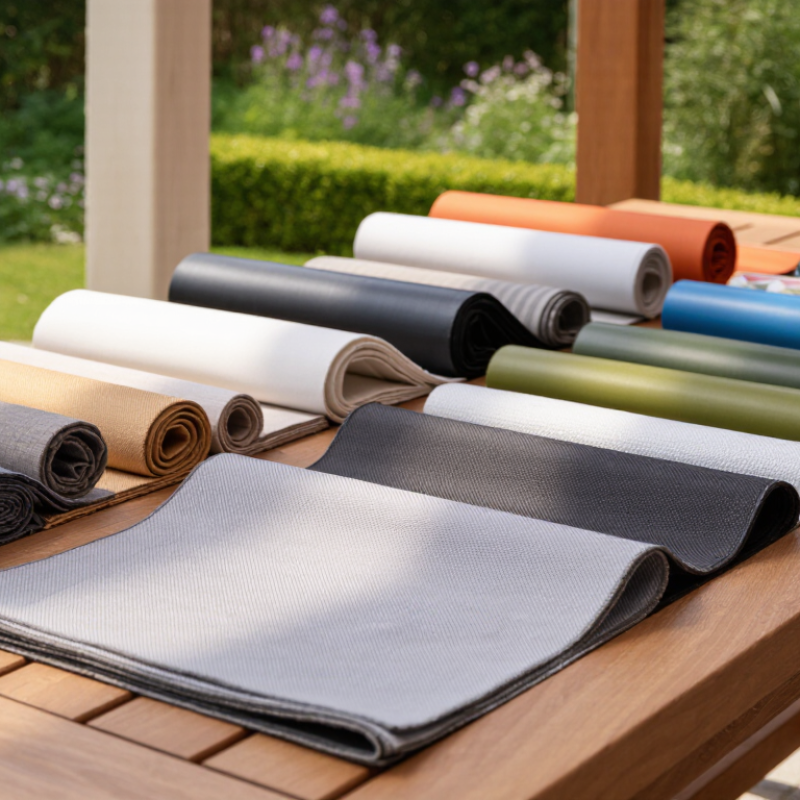
Outdoor fabrics are easier to compare by fiber, construction, and finish than by a single “best” label. Common types include solution-dyed acrylic, regular acrylic, polyester, recycled polyester, olefin, cotton canvas, linen blends, vinyl-coated polyester, PVC mesh, and polyurethane-coated fabric. These categories can overlap: a woven polyester cloth may also have a water-repellent coating. Details matter.

Fiber affects color retention, weight, and feel. Construction affects airflow and strength. A loose mesh dries quickly but offers little privacy; a tightly woven canvas feels substantial but can stay damp longer. Finishes may resist water or stains, yet they can wear with cleaning and sun exposure. Check the care instructions, seam quality, UV performance, abrasion rating, and whether the fabric breathes. Small details count.

A swatch helps. Leave it outdoors for several days and compare its feel after sun and rain. That test is imperfect, but useful. No material wins every time: a shaded patio chair has different needs from cushions exposed to strong afternoon sun. Rank options against the actual exposure, cleaning routine, and comfort you want. A low-cost fabric may be perfectly adequate, though replacing it sooner can change the real value.

Natural-Fiber Options: Cotton Canvas and Linen

Cotton canvas and linen bring a natural texture to outdoor spaces, but neither is automatically weatherproof. Cotton canvas is a tightly woven, sturdy option for cushion covers, shade panels, and removable seat pads. Its substantial feel handles regular use, while its breathable weave can feel more comfortable than some coated fabrics on warm days.

The trade-off is moisture: untreated cotton absorbs rain and may take a long time to dry. Damp fabric left folded or shaded can develop mildew.

Linen feels lighter and has a relaxed, slightly irregular surface. It suits covered patios and low-exposure areas, where its airy texture can soften a space without feeling heavy. Yet linen can wrinkle, fade in strong sun, and weaken with repeated wetting, depending on its weave and finish.

Check care instructions and look for fabric specifically prepared for outdoor use; a finish may improve water resistance, but it does not make fabric immune to weather. Small details matter. Test a sample in the intended spot, and notice how it feels after a sunny afternoon.

I once underestimated how quickly pale cloth showed dust near a garden path. That was a useful, if slightly annoying, reminder: natural fibers reward thoughtful placement and regular drying.

Everyday Synthetics: Polyester, Nylon, and Polypropylene

Polyester, nylon, and polypropylene are common choices for outdoor cushions, covers, and lightweight shade fabrics. They dry quickly. Polyester often keeps its shape and resists stretching, making it useful for cushions that face regular use. Nylon is notably strong for its weight, but it can absorb more moisture than polypropylene and may stretch under a heavy load.

Polypropylene absorbs very little water, so a damp fabric can feel dry again quickly. That quality suits items exposed to splashes or brief showers. Still, “water-resistant” does not mean waterproof; seams, coatings, and fabric construction matter. Sun exposure matters too. UV resistance depends on more than fiber type, so check care guidance and performance details rather than relying on the material name alone.

For a practical comparison, place fabric samples outside and watch how they feel after morning dew and afternoon sun. A small swatch cannot predict years of wear, though—it may not reflect the finished fabric’s coatings or stitching. Polyester can be a balanced everyday option, nylon fits strength-focused uses, and polypropylene is appealing when low moisture uptake is important. The trade-offs are easy to miss. Color fading, abrasion, and cleaning needs can vary even within the same fiber family.

Moisture Regain in Everyday Synthetic Fibers

Moisture regain is the percentage of a fiber’s dry weight absorbed as moisture under standard conditions. Polypropylene and polyester absorb very little moisture, while nylon absorbs more. Actual performance varies with fiber construction, fabric treatments, and conditions.

Weather-Resistant Fabrics: Acrylic, Olefin, and Vinyl-Coated Polyester

What Are the Top 10 Types of Outdoor Fabrics?

Weather-Resistant Fabrics: Acrylic, Olefin, and Vinyl-Coated Polyester

Outdoor fabric performance depends on more than its fiber name. Solution-dyed acrylic holds color well because pigments are added before the fibers are formed. Olefin absorbs little moisture, so spills often stay near the surface. Vinyl-coated polyester pairs a woven polyester base with a protective coating; it is tough and easy to wipe, but can feel less breathable. Small trade-offs matter. Dark fabrics may grow hot in direct sun, and no option is maintenance-free.

Check test results, not just sales descriptions. ASTM G154 exposes materials to fluorescent UV light and moisture under controlled conditions, helping compare weathering resistance. It does not give a reliable conversion from test hours to years outdoors. AATCC TM16.3 evaluates colorfastness to light, while the U.S. EPA’s UV Index guidance classifies readings of 6–7 as high exposure—useful context for sunny patios.

For cushions, feel the fabric and inspect seams after repeated wetting and drying. One detail is easy to miss: a water-resistant surface may still trap heat or develop mildew when stored damp. Ask for the actual test method and result; “weather-resistant” alone is vague.

Open-Weave Choices: Outdoor Mesh and Textilene

Open-weave outdoor fabrics let air and water pass through their structure. That makes mesh seating feel cooler on a warm patio and helps rain drain instead of pooling. Textilene commonly uses polyester yarns coated with PVC, creating a firm surface that resists stretching. Still, an open weave is not a promise of long life. Coating quality, yarn thickness, and edge finishing matter just as much.

The Textile Exchange Materials Market Report 2024 estimates global fiber production reached 124 million tonnes in 2023, with polyester accounting for 57 percent. That figure describes the wider fiber market, not outdoor-fabric quality. When comparing samples, check the maker’s UV-exposure and colorfastness test results, including methods such as ASTM G154. Look closely at the weave, too: uneven gaps can catch crumbs, while a tight weave may feel less breezy. A small test helps. Press a damp cloth against a sample, then leave it in the sun and inspect it later. Mesh can dry quickly, but dirt still settles into its openings. I would not judge durability by touch alone.

What Are the Top 10 Types of Outdoor Fabrics? - Open-Weave Choices: Outdoor Mesh and Textilene

Fabric type Typical construction Airflow and water behavior Advantages Common uses and considerations
PVC-coated polyester open mesh (Textilene-style) Polyester yarns coated with PVC and woven into an open mesh. Air and water pass through the openings, so the fabric dries more readily than a solid cover. Dimensionally stable, easy to wipe clean, and well suited to exposed outdoor seating. Used for sling chairs, loungers, and outdoor screens. Mesh provides limited privacy and does not create a fully waterproof surface.
Open-weave polyester mesh Polyester yarns formed into a breathable woven or knitted mesh; coatings vary by product. The open structure allows ventilation and drainage; coating and mesh size affect water behavior. Lightweight, versatile, and available in a range of mesh openings and weights. Used for patio screens, gear pockets, and some furniture panels. Check the product’s UV rating and intended outdoor exposure.
Knitted HDPE shade mesh Knitted high-density polyethylene strands, often manufactured with a specified shade factor. Air and rain can pass through; the amount of shade depends on the fabric’s construction and rating. Low weight, good airflow, and useful sun reduction without a solid canopy. Used for garden shade, privacy screens, and some awnings. It is not a rainproof fabric, and installation should account for wind loads.
Solution-dyed acrylic Acrylic fibers are colored during fiber production and woven into an outdoor textile. Usually breathable; water resistance depends on the weave and any applied finish. Typically offers good color retention in sunlight and a soft, fabric-like feel. Common for cushions, umbrellas, and awnings. It may need periodic cleaning, and it is not automatically waterproof.
Solution-dyed olefin fabric Woven polypropylene-based fibers colored during fiber production. The textile may be breathable or more tightly woven; water performance varies with construction and finish. Lightweight and often quick to dry; solution-dyed fibers can help with color retention. Used for outdoor cushions and casual upholstery. Follow care instructions, since heat tolerance can be lower than that of some other fibers.
Outdoor polyester woven fabric Woven polyester, sometimes treated with a water-repellent or UV-resistant finish. A tight weave can shed light rain, but seams and prolonged exposure may allow water through. Widely available, relatively lightweight, and offered in many colors and patterns. Used for cushions, covers, and umbrellas. UV durability varies, so check the fabric specification for outdoor use.
Vinyl-coated polyester A polyester base fabric coated with vinyl, usually PVC, to form a continuous surface. Generally resists liquid water across the coated surface; seams and stitching remain potential entry points. Wipe-clean surface and a strong fabric base, with options for heavier-duty applications. Used for protective covers, enclosures, and some outdoor seating. It is less breathable and can feel warm in direct sun.
Marine vinyl Flexible PVC-based upholstery material, typically supported by a textile backing. The surface resists water; stitching, seams, and drainage design affect the finished seat’s performance. Smooth, easy to wipe down, and suited to upholstery that needs regular cleaning. Used for boat and outdoor seating. It can retain heat, and ventilation or drainage details matter for cushions.
Polypropylene woven fabric Woven polypropylene yarns; some outdoor textiles made from this fiber are sold as olefin. Water absorption is generally low, but the weave determines how readily rain drains or passes through. Lightweight and quick drying, with a useful range of woven constructions. Used for outdoor rugs, cushions, and utility textiles. Long-term sunlight exposure can affect performance unless the product is designed for UV exposure.
Treated cotton canvas Heavy cotton canvas with a water-repellent or other protective finish. The finish can help shed water, but it may wear over time; untreated or damaged canvas can absorb moisture. Durable, substantial hand and a traditional look that can be repaired or re-treated. Used for some awnings, covers, and outdoor accessories. It needs cleaning and thorough drying to help prevent mildew.