
Blog

blog

Blog

blog

Blog

blog

China Top 10 Durable Sofa Fabric Suppliers for Global Buyers

A sofa can look pristine in a showroom and still disappoint after a year of daily use. For global buyers, durable sofa fabric is not a single fiber or finish; it is a combination of abrasion resistance, colorfastness, pilling performance, cleanability, and construction quality. Those details matter when sunlight reaches one armrest, denim rubs against the seat, and a family uses the same cushions every evening.

The scale of the materials market helps explain the choices suppliers offer. Textile Exchange’s Materials Market Report 2024 states that polyester represented 57% of global fiber production in 2023. That figure describes the wider fiber market, not sofa upholstery alone, but it signals why polyester blends appear so often in furniture textiles. Textile sustainability researcher Dr. Subramanian Senthilkannan Muthu’s published work provides a useful reminder: material choices should be assessed in relation to their intended use and broader impacts. This is a paraphrase, not a direct quotation.

For buyers, supplier claims need evidence. Ask for test methods and results, not just words such as “heavy-duty” or “easy-care.” Abrasion ratings can help compare fabrics, but they do not predict every home’s wear. Neither does a high score guarantee good color retention or easy cleaning. Small details matter. This guide introduces ten durable sofa fabric suppliers for global buyers, with attention to product range, performance documentation, customization, and export readiness. The comparison is a starting point, not a substitute for requesting samples and checking current specifications.
China Top 10 Durable Sofa Fabric Suppliers for Global Buyers

How Martindale Testing Measures Sofa Fabric Abrasion Under ISO 12947

Martindale testing gives sofa-fabric buyers a controlled way to compare abrasion resistance. Under ISO 12947, a mounted fabric sample is rubbed against a standard abrasive surface in repeated movements. The machine records the number of cycles until a defined change or breakdown occurs. Small details matter.

The result is not a direct prediction of how many years a sofa will last. Fabric construction, yarn type, surface finish, cleaning, and everyday use all affect wear. A tightly woven sample may behave differently from a loose weave, even when both show similar cycle counts. Check which ISO 12947 procedure was used and what endpoint the laboratory recorded. Yarn breakage, mass loss, and visible appearance changes are not interchangeable results.

For supplier comparisons, request the test report, not just a cycle figure. Confirm the sample matches the fabric construction and finish being quoted, and ask whether the test was performed by a qualified laboratory. Then consider the intended setting: a lightly used guest room has different demands from a busy family sofa. It is easy to overvalue one impressive number; I would treat it as useful evidence, not the whole decision. A small swatch can also reveal texture and finish, though it cannot reproduce years of use.

Typical Martindale Abrasion Benchmarks for Upholstery

Martindale results are reported as abrasion cycles. These figures are indicative market benchmarks, not pass limits set by ISO 12947; suitable requirements depend on the fabric, intended use, and buyer specification. ISO 12947 describes the test method used to assess abrasion resistance.

Durability Benchmarks: 20,000–30,000 Martindale Rubs for Upholstery

For global sofa buyers, Martindale results offer a useful starting point when comparing durable upholstery fabrics. The Association for Contract Textiles’ performance guidelines list 20,000 Martindale cycles as a benchmark for woven upholstery. A 30,000-cycle target can provide extra screening headroom for sofas facing frequent daily use. It is a purchasing choice, not a universal pass mark.

Check the test method, not just the headline number. ISO 12947-2:2016 describes how fabric breakdown is assessed in the Martindale abrasion test. Ask suppliers for test reports showing the standard, cycle count, and failure endpoint. Keep comparisons consistent. Different methods do not produce directly interchangeable results.

A high number can still mislead. A tightly woven sample may resist rubbing, yet snag on a belt buckle or show flattened pile on a favorite seat. Fabric construction, backing, colorfastness, seam strength, and cleaning instructions also affect service life. Request a sample and inspect it under daylight; rub a seat area gently and check how its texture recovers. The test is valuable, but it cannot reproduce every home, and that limitation deserves attention.

China’s Top 10 Durable Sofa Fabric Suppliers: Fibers, Finishes, and Capacity

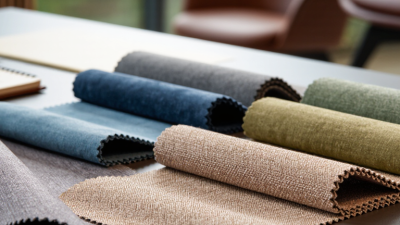
China’s leading sofa-fabric suppliers vary in fiber options, finishing equipment, and production capacity. Polyester and polyester blends are common choices for busy living rooms, while textured yarns can add depth without relying on delicate surface details. Ask for abrasion, pilling, and colorfastness test results, and check which test methods were used. A number alone is not enough.

Finishes matter in daily use. A stain-resistant treatment may help with small spills, but it does not make fabric maintenance-free. Request a sample and inspect its reverse, seams, and color under warm and cool light. Suppliers may offer different widths, minimum order quantities, and monthly output. Confirm whether weaving, dyeing, and finishing happen in-house or through partners. A neat sample can still hide batch variation.

Tips: Compare the same color across several production lots when possible. Ask about lead times, repeat-order consistency, and care instructions in writing. Test a swatch against your own use conditions. One detail is easy to miss: a durable fabric can feel too stiff for the sofa design, so balance performance with comfort.

How to Compare Suppliers Using Colorfastness, Pilling, and Tensile-Test Data

When comparing durable sofa fabric suppliers, request test reports for the exact fabric construction, color, and finish you plan to buy. A report for a similar-looking sample may not represent your order. Check the test date, laboratory, method, and conditioning details. Small differences matter.

For colorfastness, review separate results for rubbing, light exposure, and washing where relevant. A strong lightfastness result does not guarantee that dark dye will not transfer onto pale clothing. Ask whether rubbing was tested dry, wet, or both. For pilling, compare results only when suppliers used the same method and rating scale. Look closely at the stated cycle count and surface changes, not just a single grade. Request a larger swatch. Inspect it under ordinary room light.

Tensile data can show how well a fabric resists breaking under load, but the number needs context. Ask whether testing covered both warp and weft directions, and confirm the specimen width and method. A high result alone cannot predict seam slippage, abrasion, or performance on a particular sofa frame. I would not treat one passing report as proof of long service life. Test a sample on a mock-up, especially around corners and cushion seams, then compare its results with the supplier’s production batch records. Some reports are incomplete; that is a reason to ask more, not to guess.

China Top 10 Durable Sofa Fabric Suppliers for Global Buyers — How to Compare Suppliers Using Colorfastness, Pilling, and Tensile-Test Data

Buyer comparison template: The entries below are anonymous supplier slots, not a verified ranking. Supplier-specific test results are not provided or implied. Request current laboratory reports for the exact fabric construction, color, and finish before comparing or approving a supplier.

Comparison Slot Fabric Construction & Weight Colorfastness Data to Request Pilling Data to Request Tensile Data to Request Report Details to Verify Current Data Status
Anonymous Supplier 01 Enter fiber composition, weave or knit, and mass (g/m²). Light: ISO 105-B02, grade on the blue wool scale (1–8). Rubbing: ISO 105-X12, dry and wet grades (1–5). ISO 12945-2, report the test method, exposure, and grade (commonly assessed on a 1–5 scale). ISO 13934-1, report breaking force in newtons (N) in both warp and weft directions. Test date, laboratory, specimen color, conditioning, method edition, and pass criteria. Supplier report required
Anonymous Supplier 02 Enter fiber composition, weave or knit, and mass (g/m²). Light: ISO 105-B02, grade on the blue wool scale (1–8). Rubbing: ISO 105-X12, dry and wet grades (1–5). ISO 12945-2, report the test method, exposure, and grade (commonly assessed on a 1–5 scale). ISO 13934-1, report breaking force in newtons (N) in both warp and weft directions. Test date, laboratory, specimen color, conditioning, method edition, and pass criteria. Supplier report required
Anonymous Supplier 03 Enter fiber composition, weave or knit, and mass (g/m²). Light: ISO 105-B02, grade on the blue wool scale (1–8). Rubbing: ISO 105-X12, dry and wet grades (1–5). ISO 12945-2, report the test method, exposure, and grade (commonly assessed on a 1–5 scale). ISO 13934-1, report breaking force in newtons (N) in both warp and weft directions. Test date, laboratory, specimen color, conditioning, method edition, and pass criteria. Supplier report required
Anonymous Supplier 04 Enter fiber composition, weave or knit, and mass (g/m²). Light: ISO 105-B02, grade on the blue wool scale (1–8). Rubbing: ISO 105-X12, dry and wet grades (1–5). ISO 12945-2, report the test method, exposure, and grade (commonly assessed on a 1–5 scale). ISO 13934-1, report breaking force in newtons (N) in both warp and weft directions. Test date, laboratory, specimen color, conditioning, method edition, and pass criteria. Supplier report required
Anonymous Supplier 05 Enter fiber composition, weave or knit, and mass (g/m²). Light: ISO 105-B02, grade on the blue wool scale (1–8). Rubbing: ISO 105-X12, dry and wet grades (1–5). ISO 12945-2, report the test method, exposure, and grade (commonly assessed on a 1–5 scale). ISO 13934-1, report breaking force in newtons (N) in both warp and weft directions. Test date, laboratory, specimen color, conditioning, method edition, and pass criteria. Supplier report required
Anonymous Supplier 06 Enter fiber composition, weave or knit, and mass (g/m²). Light: ISO 105-B02, grade on the blue wool scale (1–8). Rubbing: ISO 105-X12, dry and wet grades (1–5). ISO 12945-2, report the test method, exposure, and grade (commonly assessed on a 1–5 scale). ISO 13934-1, report breaking force in newtons (N) in both warp and weft directions. Test date, laboratory, specimen color, conditioning, method edition, and pass criteria. Supplier report required
Anonymous Supplier 07 Enter fiber composition, weave or knit, and mass (g/m²). Light: ISO 105-B02, grade on the blue wool scale (1–8). Rubbing: ISO 105-X12, dry and wet grades (1–5). ISO 12945-2, report the test method, exposure, and grade (commonly assessed on a 1–5 scale). ISO 13934-1, report breaking force in newtons (N) in both warp and weft directions. Test date, laboratory, specimen color, conditioning, method edition, and pass criteria. Supplier report required
Anonymous Supplier 08 Enter fiber composition, weave or knit, and mass (g/m²). Light: ISO 105-B02, grade on the blue wool scale (1–8). Rubbing: ISO 105-X12, dry and wet grades (1–5). ISO 12945-2, report the test method, exposure, and grade (commonly assessed on a 1–5 scale). ISO 13934-1, report breaking force in newtons (N) in both warp and weft directions. Test date, laboratory, specimen color, conditioning, method edition, and pass criteria. Supplier report required
Anonymous Supplier 09 Enter fiber composition, weave or knit, and mass (g/m²). Light: ISO 105-B02, grade on the blue wool scale (1–8). Rubbing: ISO 105-X12, dry and wet grades (1–5). ISO 12945-2, report the test method, exposure, and grade (commonly assessed on a 1–5 scale). ISO 13934-1, report breaking force in newtons (N) in both warp and weft directions. Test date, laboratory, specimen color, conditioning, method edition, and pass criteria. Supplier report required
Anonymous Supplier 10 Enter fiber composition, weave or knit, and mass (g/m²). Light: ISO 105-B02, grade on the blue wool scale (1–8). Rubbing: ISO 105-X12, dry and wet grades (1–5). ISO 12945-2, report the test method, exposure, and grade (commonly assessed on a 1–5 scale). ISO 13934-1, report breaking force in newtons (N) in both warp and weft directions. Test date, laboratory, specimen color, conditioning, method edition, and pass criteria. Supplier report required

Global Buyer Checks: MOQ, Lead Time, Compliance, Samples, and Quality Control

For global buyers comparing China’s top durable sofa fabric suppliers, confirm the minimum order quantity by fabric type and color. A quoted MOQ may apply per color, not across the full order. Ask for separate timelines for lab dips, sample approval, bulk production, and shipping. Get the schedule in writing, including what happens if a material is unavailable.

Check compliance against the requirements of your destination market and intended use. Request current, traceable test reports and confirm which fabric batch they cover. Review samples for abrasion, pilling, seam slippage, and colorfastness. Check the fabric under warm and cool lighting, then feel its backing and stretch. A small swatch can still mislead. Before shipment, agree on inspection points for shade variation, roll width, and visible defects, and keep approved samples for comparison.

Tips: Send one written specification to every supplier. Include color codes, performance targets, packing needs, and inspection criteria. Ask for dated sample photos and label each physical swatch. Small details prevent expensive confusion.