
Blog
Blog
Blog
China Top Upholstery Supplies Suppliers for Global Buyers
China has become a major sourcing destination for global upholstery supplies, from woven fabrics and leather alternatives to foam, webbing, springs, trims, and furniture hardware. Its supplier network covers large export manufacturers and smaller specialized workshops. Quality can vary widely. Careful screening remains essential.
William Morris, a leading textile designer and furniture reformer, wrote, “Have nothing in your houses that you do not know to be useful, or believe to be beautiful.” His principle still matters when buyers assess upholstery supplies. A soft chenille may look attractive under showroom lighting, yet fail after repeated cleaning. A foam cushion may feel comfortable today, but lose shape within months. Reliable suppliers should provide clear material specifications, abrasion results, colorfastness data, fire-safety documentation, packaging details, and consistent samples.
Practical experience also changes the buying decision. Request a sample set. Test the fabric by hand. Examine the backing, stitching, edge finish, and adhesive smell. Compare the approved sample with the bulk production batch. Small differences can become expensive problems.
No supplier is flawless. Even strong factories may face delays, dye-lot variation, or communication gaps. Buyers should discuss tolerances, inspection procedures, replacement terms, and shipping responsibilities before placing orders. Product certifications must be checked independently, not accepted from a casual email alone.
This guide introduces China’s leading upholstery supplies suppliers for global buyers. It focuses on manufacturing capability, product depth, quality control, export experience, and practical suitability. Rankings are useful, but never final. Your project, market, and testing standards should decide.
Types of Upholstery Supplies Offered by Chinese Suppliers
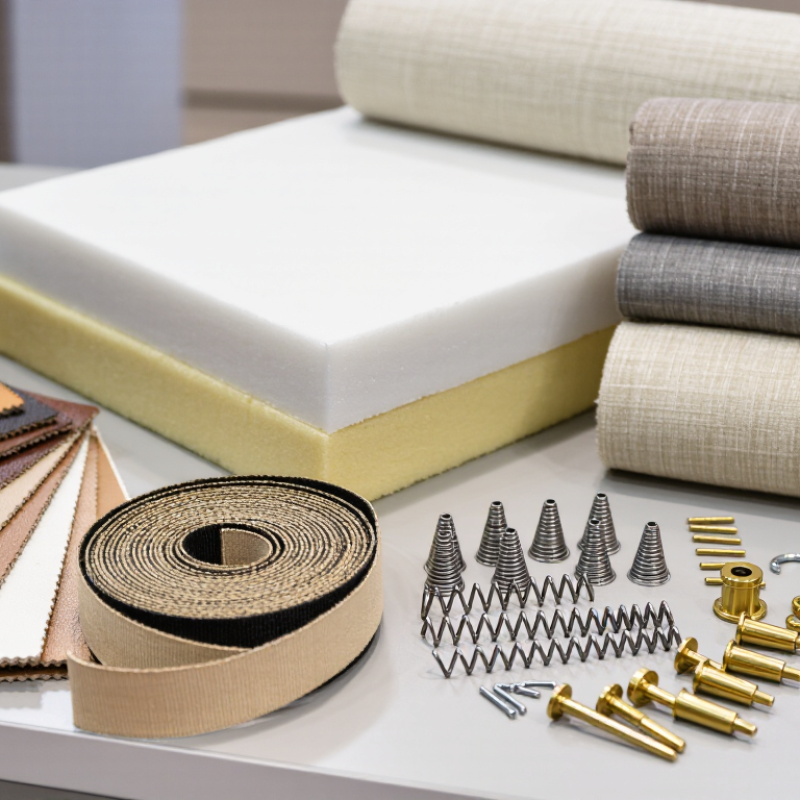
Chinese suppliers offer a broad range of upholstery supplies for furniture makers, repair shops, and contract projects. Common options include woven polyester, cotton blends, velvet, faux leather, and performance fabrics with stain-resistant finishes. Buyers can request swatches to check texture, color, and backing before placing larger orders. A fabric that looks smooth in a photo may feel stiff in person.
Suppliers also provide foam in different densities, batting, webbing, springs, and upholstery nails. Foam samples help buyers compare firmness and recovery; webbing width and stretch affect seat support. Small details matter. For example, a sturdy zipper or neatly finished backing can save time during assembly. Some suppliers can cut materials to specified sizes, though tolerances should be confirmed in writing.
For project planning, ask about composition, usable width, abrasion results, color consistency, packaging, and lead times. Request current test reports when performance claims matter, and clarify whether they apply to the exact fabric being purchased. Samples are useful, but they cannot show every production variation. That uncertainty deserves attention, especially for repeat orders. A clear specification sheet and a small trial run can reveal issues before materials reach the workshop.
China Top Upholstery Supplies Suppliers for Global Buyers: Types of Upholstery Supplies Offered
Typical listed roll widths vary by product and supplier. The figures below are illustrative examples in centimeters, not market averages or supplier-specific data; confirm specifications before ordering.
Key Regions and Supplier Categories in China
China’s upholstery supply network is shaped by regional clusters, each with different strengths. Guangdong, especially the Foshan area, has a dense furniture industry and access to upholstery fabrics, trims, and workshop services. Zhejiang’s textile centers offer broad fabric choices, from woven patterns to faux leather. Nearby Jiangsu also has textile and component manufacturers. These regions overlap, though. A supplier’s location alone does not prove product quality.
Supplier categories include fabric mills, foam and filling producers, sewing workshops, and hardware or trim vendors. Some factories handle several steps; others specialize in one material. Ask for current specifications, sample swatches, minimum order quantities, and production lead times. Compare color consistency under natural light, not only in catalog photos. Small differences matter. One detail buyers sometimes overlook is packaging: tightly folded fabric can arrive with creases, while damp storage may affect materials.
Tips: Shortlist suppliers by material and region, then request labeled samples from each. Confirm whether quoted prices include testing, packing, and inland transport. Visit the production site when practical, or arrange a live video walkthrough. A polished showroom is useful, but it is not the factory floor. Supplier records can be incomplete, so verify details rather than assuming.
How to Evaluate China’s Upholstery Supply Manufacturers
China Top Upholstery Supplies Suppliers for Global Buyers
How to Evaluate China’s Upholstery Supply Manufacturers
Choosing an upholstery supplier takes more than comparing prices. Ask how fabrics, foam, thread, and hardware are checked before shipment. Request technical sheets for fabric composition, abrasion performance, colorfastness, and care instructions. For foam or other materials, confirm dimensions and density against your intended use. A clear answer matters. So does a sample that matches the written specifications.
Tips: Send the same product brief to several manufacturers. Compare samples under consistent conditions, such as the same light and cleaning method. Check stitching, backing, edges, and color across multiple pieces, not just one. Ask for recent inspection records and clarify how defects are handled. Small trial orders can reveal packing quality and communication gaps before larger commitments.
Experience is useful, but claims need evidence. Ask how the supplier manages changes in raw materials and production schedules. Verify its facility details through a live video walkthrough or an independent audit where practical. Keep specifications and approvals in writing. Even careful checks can miss issues; an attractive sample does not guarantee every production batch will be identical.
Step-by-Step Process for Sourcing Upholstery Supplies
China Top Upholstery Supplies Suppliers for Global Buyers
Step-by-Step Process for Sourcing Upholstery Supplies
Begin by defining the project: furniture type, expected order volume, fabric weight, color, and performance needs. A dining chair may need abrasion-resistant fabric, while a decorative cushion may prioritize texture. Prepare a written specification with measurements and acceptable color variation. Vague requests often lead to mismatched samples.
Request samples from several suppliers and compare them under natural and indoor lighting. Check the backing, stitching, hand feel, and color consistency. Ask for technical data, available stock, minimum order quantities, lead times, and packaging details. Confirm whether the quoted price includes sample costs and freight. Small details matter.
Tips: Test a sample on the intended furniture, not just in your hand. Rub it with a clean cloth and inspect seams after repeated handling. Keep dated notes and photos; memory gets fuzzy. Before placing a bulk order, approve a final sample and confirm the production timeline in writing. Allow extra time for color corrections. Even careful checks cannot remove every surprise, so leave room in the schedule for a modest delay.
China Top Upholstery Supplies Suppliers for Global Buyers — Step-by-Step Process for Sourcing Upholstery Supplies
| Step | Sourcing Stage | Products and Details to Check | Buyer Action | Useful Records |
|---|---|---|---|---|
| 1 | Define requirements | Identify the required upholstery fabrics, foam, webbing, springs, zippers, thread, adhesives, or other components. Specify intended use, dimensions, performance needs, target quantity, and destination market. | Prepare a written specification and distinguish required features from preferences. For fabrics, include fiber content, construction, color, width, and any applicable performance requirements. | Product specification, drawings, reference samples, estimated order quantity |
| 2 | Build a supplier shortlist | Assess whether a prospective supplier handles the relevant product category, can provide export documentation, and has production or sourcing capacity that matches the project. | Request a company profile, product catalogue, factory or production information where relevant, and details of the supplier’s role in the transaction. | Supplier questionnaire, business documents, product catalogue |
| 3 | Confirm specifications and compliance | Check applicable requirements for the product and destination, such as chemical restrictions, labeling, flammability, or restricted-substance requirements. These vary by material and market. | Ask which test methods and standards are available, confirm the exact product version being tested, and verify whether reports are current and applicable to the order. | Technical data sheets, test reports, safety data sheets where applicable |
| 4 | Request samples | Compare color, hand feel, thickness, construction, finish, dimensions, and workmanship. For foam or other performance materials, check the properties stated in the product specification. | Request labeled samples and record the sample reference, date, and agreed specifications. Approve a production sample before placing a bulk order. | Sample request, sample approval record, inspection checklist |
| 5 | Compare quotations | Review unit price, minimum order quantity, setup or customization charges, packaging, lead time, payment terms, and quotation validity. Compare offers on the same specification and delivery basis. | Ask suppliers to itemize costs and state the applicable Incoterms® rule and named place. Confirm whether duties, freight, insurance, or local charges are included. | Comparable quotation sheet, pro forma invoice, agreed trade terms |
| 6 | Place and confirm the order | Confirm product code or description, material composition, color, dimensions, quantity, tolerances, packaging, delivery schedule, and remedies for nonconforming goods. | Ensure the purchase order and supplier confirmation match the approved sample and specification. Agree on change-control procedures before production begins. | Purchase order, sales contract, approved specification |
| 7 | Monitor production and quality | Check that production follows the approved specification and that inspection criteria are agreed in advance. Inspection timing and sampling plans should suit the product and order risk. | Arrange appropriate pre-shipment inspection when needed. Document defects, corrective actions, and approval to release the goods. | Inspection plan, inspection report, corrective-action record |
| 8 | Arrange shipping and import clearance | Confirm packaging, carton or roll markings, shipment dimensions and weight, booking details, and the documents required by the carrier and destination customs authority. | Coordinate shipment responsibilities under the agreed Incoterms® rule. Check document details for consistency before dispatch. | Commercial invoice, packing list, transport document, certificate of origin if required |
| 9 | Receive and review the goods | Check received quantity, packaging condition, product identity, and visible quality against the order and approved sample. Record any discrepancy promptly. | Keep incoming inspection records and notify the supplier of issues within the time limits set out in the contract. | Goods-received record, photographs, claim or discrepancy report |
Quality Standards, Certifications, Shipping, and Trade Terms
For global buyers, upholstery supplies should be checked against the demands of their intended use. Ask for fabric composition, usable width, weight, abrasion results, and colorfastness data. Request a sample from the production lot when possible. It can reveal differences in texture or shade that a specification sheet may miss. Small details matter.
Certifications can support supplier evaluation, but their scope should be verified. Check the issuing body, product category, test date, and whether the document covers the material being quoted. A certificate for one fabric does not automatically apply to every color or finish. Request current test reports and clarify any limits before placing a bulk order.
Shipping terms affect both cost and responsibility. Confirm whether prices cover export packing, inland transport, insurance, and destination charges. Under FOB, buyers generally arrange the main carriage; under CIF, the seller arranges freight and insurance to the named port, while other obligations remain. Put the exact port, delivery schedule, payment milestones, and claims process in writing. Upholstery rolls need dry, protective packaging, and a few damp cartons can compromise an otherwise sound shipment. Even experienced buyers can overlook this. Check tracking updates and inspect cartons promptly after arrival.
Related Posts
-
Top 10 Types of Upholstery Supplies for Global Buyers
-
How to Choose the Best Upholstery Accessories?
-

Top 10 Upholstery Supplies You Need for Your Next Project?
-
How to Choose Upholstery Accessories for Global Sourcing
-

Top 10 Upholstery Canvas Manufacturers in China
-

Best Upholstery Fabrics for Global Buyers in 2026?