
Blog
Blog
Blog
Why Is Sofa Fabric Material Important for Buyers?
Choosing a sofa is not only about color, shape, or showroom appeal. The sofa fabric material affects comfort, durability, maintenance, and the room’s long-term character. A pale boucle may feel warm and luxurious, yet it can reveal crumbs, pet hair, and daily friction quickly. A tightly woven polyester blend may look less dramatic, but it often handles busy family life better.
Furniture designer Charles Eames once said, “The details are not the details. They make the design.” His observation applies directly to upholstery. A fabric’s weave, fiber content, abrasion resistance, texture, and cleaning requirements can change the ownership experience. Buyers should touch the sample under natural light. They should also inspect the reverse side, seams, and cushion edges. These small checks often expose weaknesses that photographs hide.
There is no perfect fabric. That matters. Linen can soften beautifully, but it may wrinkle. Velvet can create depth, but it may show pressure marks. Leather is practical for some homes, yet it can feel cold or expensive. Even performance fabrics need sensible care. Consider children, pets, sunlight, food habits, and cleaning time before choosing. A reliable decision connects the sofa fabric material with real household behavior, not temporary showroom excitement. Buyers should ask for test results and care instructions from the manufacturer. Claims deserve evidence. Personal taste still matters, but practical reflection protects that investment.
What Is Sofa Fabric and Why Does Its Fiber Content Matter?
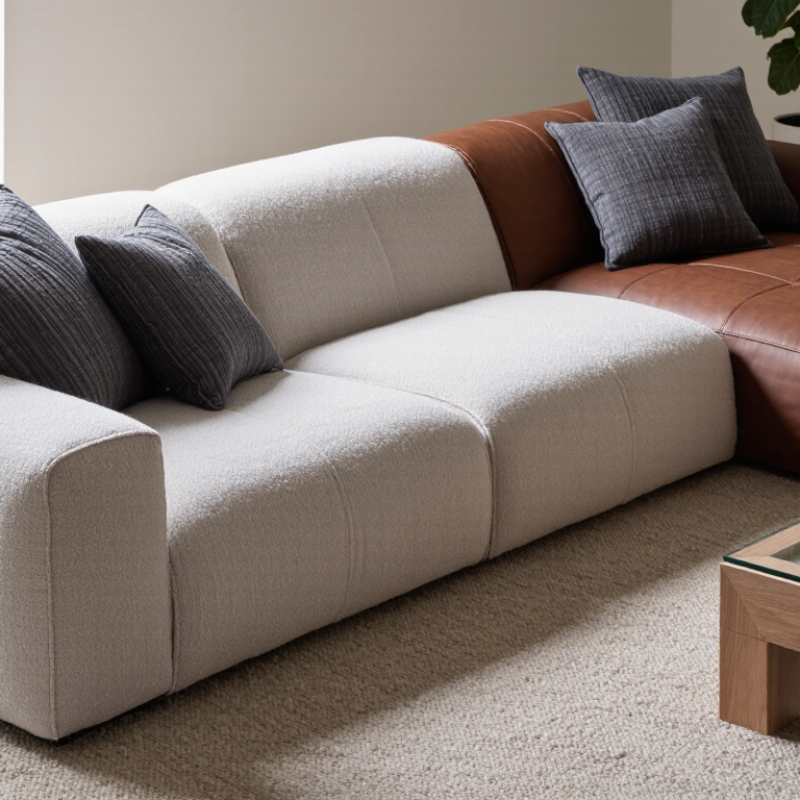
Sofa fabric is the woven or knitted surface covering a sofa’s frame and cushions. Its fiber content describes the materials used to make that covering. This detail matters because fibers affect comfort, durability, cleaning, color retention, and everyday appearance. A showroom sample may feel excellent, yet home use can reveal different weaknesses.
Cotton often feels soft and breathable, but it may crease, fade, or absorb spills quickly. Linen has a cool, textured hand, although it can wrinkle and show wear in busy rooms. Polyester usually resists stains and stretching, making it practical for households with children or pets. Wool offers natural resilience and warmth, but it may cost more and require careful maintenance. Blended fabrics can balance these traits, but their performance depends on the actual fiber percentages and weave.
Do not judge by touch alone. Check the fiber label, cleaning code, abrasion information, and colorfastness guidance. Rub the sample gently and inspect whether loose fibers appear. Ask how the fabric reacts to sunlight, moisture, and repeated sitting. In my experience, a tightly woven fabric often handles daily friction better than a loosely textured one. Still, that is not a perfect rule. I have seen attractive fabrics disappoint because their maintenance needs were underestimated. Buyers should match fiber content with real habits, not an idealized living room. A pale, absorbent fabric may be beautiful, but it needs quicker spill response and more disciplined care.
How Do Martindale Ratings Above 20,000 Cycles Indicate Durability?
Sofa fabric is not merely a colour choice. It affects comfort, maintenance, and replacement costs. In daily showroom testing, fabric with a tight weave often feels firmer and resists visible fuzzing. However, texture alone cannot prove durability.
A Martindale rating above 20,000 cycles shows meaningful abrasion resistance. The Martindale method, defined by ISO 12947-2, rubs fabric against a standard abrasive surface under controlled pressure. Each cycle represents repeated contact, not one year of household use. The European textile sector often treats 20,000 cycles as a practical threshold for regular domestic upholstery. Higher-use seating may require 30,000 cycles or more, according to guidance commonly referenced by furniture testing laboratories and upholstery professionals.
Still, the number needs context. A 25,000-cycle fabric may handle denim, keys, and daily sitting well. It may perform poorly against pet claws or sharp hardware. A softer chenille can also show pile changes before the fabric actually fails. That distinction matters.
Ask for the test standard, pressure setting, and failure definition. These details can change the comparison. ISO 12947-2 also notes that laboratory results do not reproduce every household condition. That is easy to overlook. Sunlight, cleaning chemicals, body oils, and loose stitching may shorten service life. Buyers should inspect seams and backing, not just the headline rating. A durable sofa begins with evidence, but careful use still matters.
Why Do ACT Flammability Standards Matter When Choosing Sofa Fabric?
Why Is Sofa Fabric Material Important for Buyers?
Sofa fabric affects comfort, durability, cleaning, and fire performance. ACT flammability guidelines help buyers assess these risks more consistently. They reference recognized tests, including NFPA 260 and related cigarette-resistance methods. These tests examine how upholstery fabrics and filling systems react to ignition sources. They do not make a sofa fireproof. That distinction matters.
NFPA’s Home Fires Involving Upholstered Furniture report, covering 2017–2021, estimates 6,800 home fires annually involving upholstered furniture in the United States. These fires caused about 480 civilian deaths, 810 injuries, and 282 million dollars in direct property damage each year. The figures explain why fabric selection deserves more than a color comparison. In practice, buyers should also check the complete upholstery system. Fabric, foam, batting, thread, and frame construction can influence results. A fabric certificate alone may not represent the finished sofa. This is where many purchasing decisions become less certain.
Tips: Ask for the exact test method and report date. Confirm whether testing covered the finished furniture assembly. Choose tightly woven, durable fabric for busy rooms. Keep ignition sources away from cushions. Do not treat a compliance label as a guarantee of safety. ACT guidance is valuable, but it should support careful product review, not replace it.
Why Is Sofa Fabric Material Important for Buyers?
Sofa fabric affects durability, appearance, comfort, maintenance, and fire safety. ACT performance guidelines help buyers compare upholstery fabrics using standardized tests rather than relying only on fiber names or visual appearance.
The chart shows commonly referenced upholstery performance benchmarks: heavy-use fabrics are often selected at approximately 30,000 Wyzenbeek double rubs or 40,000 Martindale cycles, while colorfastness and crocking are commonly evaluated on standardized 1–5 grey-scale ratings. Flammability is a pass/fail safety requirement and should be verified through the applicable ACT-recognized or regulatory test report; abrasion performance alone does not prove fire safety.
How Do Fabric Weave and GSM Affect Comfort, Strength, and Longevity?
When buyers touch a sofa, they often judge softness first. However, fabric weave strongly shapes comfort, strength, and daily maintenance. A tightly woven plain weave feels stable and resists snagging from frequent use. Twill weaves usually offer better surface coverage and can hide small marks. Looser weaves feel airier, but their raised loops may catch on keys, pet claws, or rough clothing. Run your hand across the fabric. Notice both smoothness and firmness.
GSM means grams per square meter. It indicates fabric weight, not complete quality. Higher GSM often suggests a denser, more substantial material. This can improve abrasion resistance and reduce early thinning. Yet heavy fabric may feel warm or stiff in a poorly ventilated room. Lower GSM can feel cooler and softer, but it may wear faster on a busy family sofa. GSM alone is not enough.
I once treated high GSM as a reliable durability shortcut. That judgment was too simple. Fiber type, yarn strength, weave tightness, backing, and finishing also matter. Ask for abrasion-test information when available. Check the fabric under bright light for uneven gaps. Sit on the sofa in ordinary clothing, not only with your fingertips. A comfortable cover should flex without sounding brittle. It should also recover after repeated pressure. For homes with children or pets, a tight weave and practical cleaning resistance may matter more than maximum softness.
How Do Colorfastness Ratings of 4 or Higher Support Practical Buying Decisions?
Sofa fabric affects more than appearance. It influences cleaning, comfort, durability, and daily maintenance. In my experience, colorfastness deserves special attention in bright living rooms. A rating of 4 or higher usually indicates good resistance to fading on a five-point scale. This matters when sunlight reaches the sofa for several hours each day.
Buyers should still check the testing method behind that number. Different laboratories may use different light exposure times, fabric conditions, or rating systems. Ask whether the result covers artificial light, washing, rubbing, or moisture. A high lightfastness score may not guarantee strong resistance to wet cleaning. The label can be helpful, but it is not magic.
Look closely at the room before choosing a fabric. Place a sample near a window and compare it in morning and afternoon light. Dark blue may look elegant at first, yet uneven fading can become visible on cushions. A 4-plus rating supports practical decisions, especially for homes with children, pets, or large windows. Still, use curtains or blinds when sunlight is intense. I once underestimated a bright corner. The fabric faded more quickly than expected, despite a respectable rating. That mistake taught me to consider placement, cleaning habits, and actual exposure together. Ask for a sample. Test it gently.
Related Posts
-
What Are the Top Sofa Upholstery Suppliers in China?
-
7 Best Upholstery Materials for Sofas for Global Buyers
-
2026 Top Sofa Upholstery Types for Global Buyers
-
How to Choose Sofa Upholstery for Global Sourcing?
-
10 Tips for Choosing Upholstery Canvas Fabric?
-
How to Find the Best China Furniture Upholstery Suppliers?